
The Rise of Autonomous AI Agents in the Maritime Industry
The AI in maritime industry is undergoing one of its most significant technological shifts. In 2026, the focus shifted from simple automation to “Autonomous AI Agents”—intelligent, agentic systems capable of planning, deciding, and executing complex maritime tasks with minimal human intervention. Unlike traditional software that requires constant oversight, these agents act as proactive digital assistants, managing everything from engine health to port logistics.
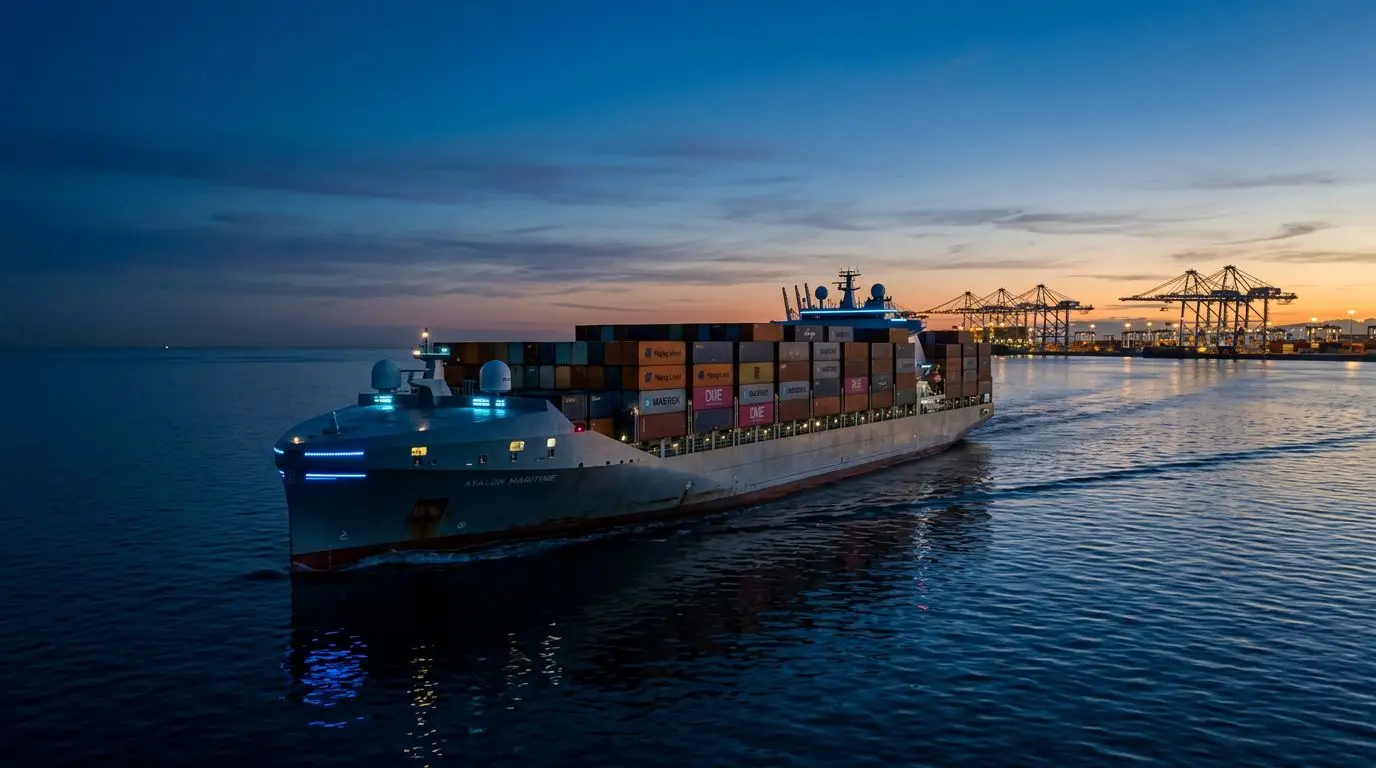
The maritime industry is currently working and investing in uncrewed ships, and we are certainly far from the time when ships will sail without a crew. However, the first serious steps are already here, and many organisations are investing heavily in new technologies. The question is how quickly these developments will progress when autonomous AI becomes fully functional. Instead of humans running research and development programmes, these programmes will be run by autonomous AI agents.
1. The Operational “Agentic” Shift
Autonomous AI agents are currently being deployed to handle high-stakes, complex operational situations. Rather than just providing data, these agents can trigger actions:
• Dynamic Port Operations: Agents now autonomously manage berth allocation, crane scheduling, and yard slot optimization by ingesting real-time data from AIS feeds, tidal levels, and truck arrival patterns. When conditions change—such as a delayed vessel—the agent replans the entire terminal schedule in minutes, a task that once took hours of human coordination.
• Predictive Maintenance: These agents monitor sensor telemetry (vibration, heat, pressure) across the ship’s critical machinery. Instead of following a rigid, calendar-based maintenance schedule, the agent identifies anomalies, forecasts failure up to 60 days in advance, and autonomously schedules maintenance during planned downtime, significantly reducing unplanned “off-hire” incidents.
2. Navigational and Voyage Autonomy (AI in Maritime Industry)
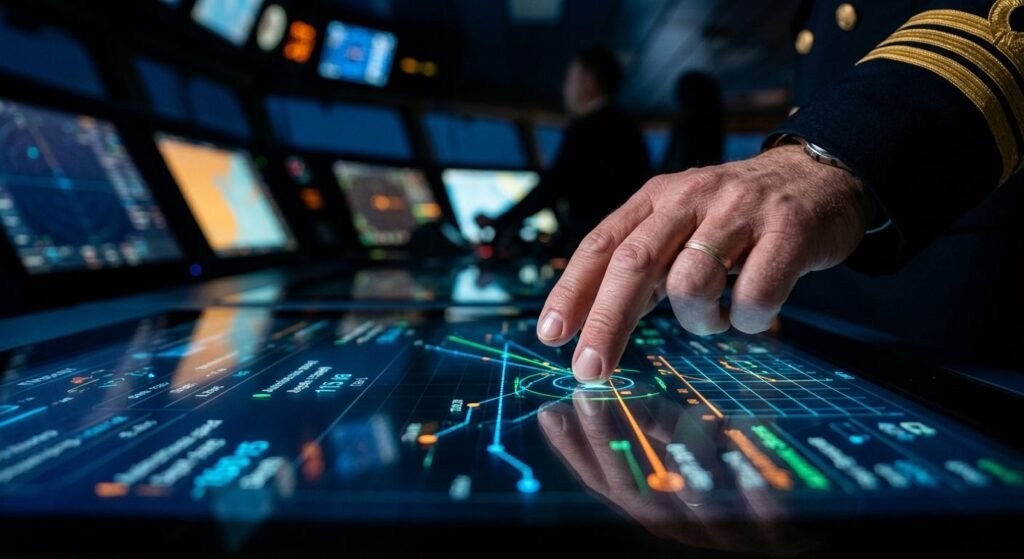
Autonomous navigation systems now function as “co-pilots” that handle complex decision-making. These agents process over 35 live datasets—including satellite weather, ocean currents, engine stress, and cargo weight—to perform:
• Voyage Optimization: Agents continuously adjust speed and route to maximize fuel efficiency and ensure compliance with strict Carbon Intensity Indicator (CII) ratings.
• Situational Awareness: By integrating radar, optical sensors, and AIS, these agents autonomously detect obstacles and suggest—or execute—evasive manoeuvres, mitigating the risk of human error in high-traffic or high-risk waters.
3. Compliance and Regulatory “Self-Management”
With the regulatory landscape becoming increasingly complex, AI agents act as the first line of defence for maritime compliance:
• Automated Documentation: Agents can validate shipping manifests, bills of lading, and Oil Record Books against international regulations, flagging inconsistencies before they become audit issues.
• Regulatory Intelligence: As maritime laws change—such as new port-specific environmental mandates—these agents monitor global legal updates and automatically update the ship’s compliance checklists and operational parameters.
4. The Path Ahead: Collaboration Over Replacement
While the capability for “fully autonomous” shipping exists, 2026 sees the industry prioritizing a collaborative model. Autonomous AI is not replacing the captain or the crew; it is augmenting their capability.
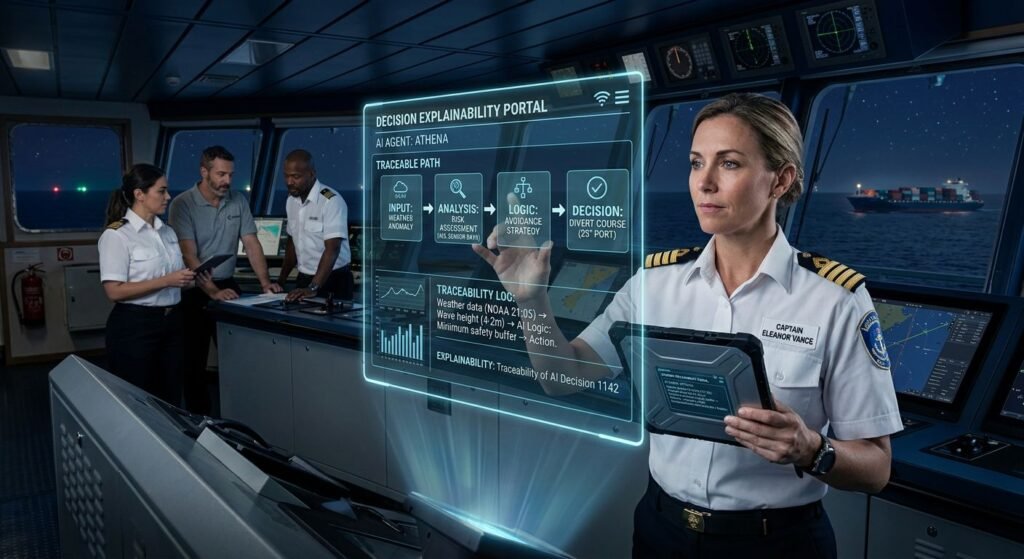
The primary challenge is no longer technical; it is trust and governance. As the AI agents take on more decision-making authority, maritime leadership must ensure “explainability”—the ability for auditors and operators to trace exactly why a captain agent made a specific navigational or maintenance decision.
For the modern maritime professional, the shift toward autonomous AI means moving away from manual data entry and routine monitoring toward a role focused on strategic oversight, risk mitigation, and managing the AI-driven ecosystem.
Here are some examples categorized by their function within the industry:
1. Voyage and Vessel Performance Agents
Systems interact directly with shipboard systems to optimize operations in real-time.
• DeepSea Technologies (Pythia & Hyperpilot):
One of the industry’s most advanced examples. Pythia functions as a voyage optimization agent that provides real-time speed and route recommendations, while Hyperpilot can take the next step by connecting to the ship’s automation systems to autonomously adjust speed and engine settings to achieve those efficiency targets.
• Exail (DriX O-16): An unmanned surface vessel (USV) that operates autonomously to perform intelligence, surveillance, and reconnaissance. It uses onboard AI processing to manage mission payloads (like drones and cameras) and navigate without continuous human “joystick” input.
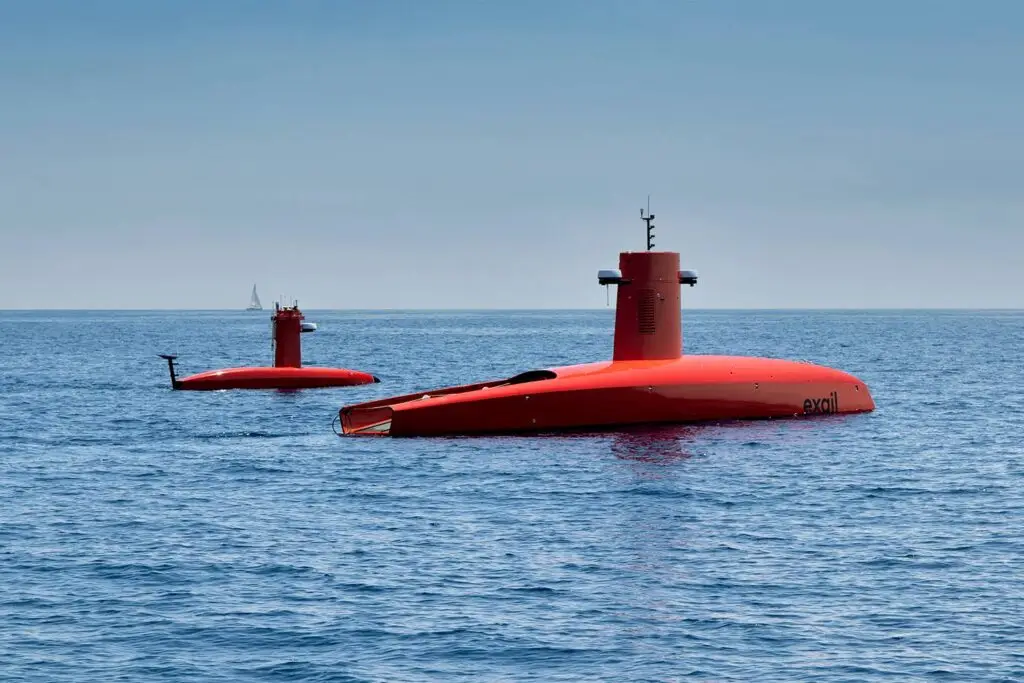
Exail Launches Its Drix O-16 USV
2. Port and Terminal Logistics Agents
Agents solve the “bottleneck” problems that traditionally require teams of human planners.
• Digiqt (Berth and Yard Planning Agents): These agents act as autonomous planners. By ingesting AIS feeds, tidal data, and terminal capacity, the agent creates berth and crane schedules. Crucially, if a vessel is delayed, the agent autonomously replans the entire schedule in minutes, replacing hours of manual coordination.
• Loadmaster.ai: Uses reinforcement learning agents to optimize container terminal operations. It creates a digital twin of the terminal and trains agents to manage stacking priorities and crane sequences, reducing container “rehandles” (moving a container more than once) and significantly increasing throughput.
3. Administrative and Compliance Agents
These agents focus on the “paperwork” that historically slowed down global shipping.
• Leafkutter: An example of “agentic” software for logistics. Instead of a chatbot that just answers questions, it is an agent that takes a quote request and autonomously handles the booking, generates bills of lading, and manages customs documentation. It keeps human operators in the loop only when an exception requires judgment.
• OceanDocs AI / MariApps (OceanAI): These agents specialize in maritime compliance. They automatically read, classify, and extract data from regulatory certificates and inspection records, flagging discrepancies in the Safety Management System (SMS) without requiring a human to manually review every page.
4. Collaborative AI Assistants (Crew-Facing)
These agents act as “force multipliers” for the crew on board.
• IntelliCrew (by MariApps): An AI agent that automates the complex task of crew scheduling. It ingests flag state requirements, crew certifications, and medical fitness records to recommend the best candidates for a vessel, saving ship managers dozens of hours per crew change.
• Fincantieri (captAIn): An enterprise-level agent designed for maritime organizations. It synthesizes vast amounts of technical documentation and internal knowledge, allowing ship surveyors and engineers to ask complex technical questions about ship design or maintenance and receive synthesized answers with direct citations from the internal manuals.