

Black Sea Crisis Deepens: The Golden Leo Sinking and the Escalating War on Merchant Shipping
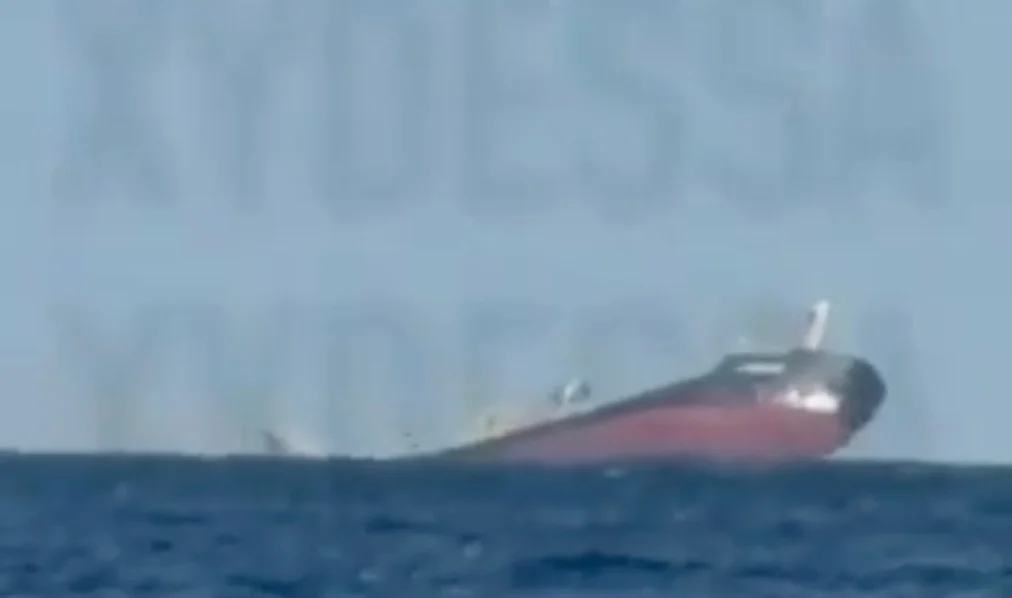
The general cargo ship Golden Leo capsized and sank off the coast of Odesa on July 26, 2026, marking a tragic escalation in the region’s naval conflict. The Guinea-Bissau-flagged vessel, managed by a Turkish shipping company, had sustained catastrophic damage a week earlier on July 19 when it was struck by three Russian cruise missiles while departing with a cargo of corn. The Golden Leo sinking follows a series of targeted attacks on commercial shipping in the area, highlighting the extreme perils facing civilian seafarers and the broader breakdown of maritime safety norms in the western Black Sea.
The Attack Infrastructure and the Golden Leo Sinking
On July 19, Russian Kh-59/Kh-69 cruise missiles struck the starboard superstructure of the Golden Leo as it attempted to navigate the Ukrainian sea corridor out of Chornomorsk. The resulting fire and hull breaches ultimately rendered the vessel unseaworthy, causing it to capsize and go down in Odesa Bay in waters roughly 22 to 24 meters deep. The physical destruction of the vessel represents a direct kinetic assault on global food supply lines, given its cargo of agricultural exports intended for international markets.
The human cost of this specific Odesa cargo ship attack was devastating. Ten people lost their lives in the strike, including a Ukrainian maritime pilot and nine crew members of Syrian and Indian nationalities.
To watch the video, please click the link.
While search and rescue teams successfully evacuated eight survivors to shore, the incident has triggered sharp diplomatic friction. Following the deaths, the Indian Ministry of External Affairs officially summoned Russia’s chargé d’affaires to condemn the hostile action against non-combatant maritime workers.
Operational Fallout and Cascading Maritime Safety Risks
This recent Russian missile strike has fundamentally changed the risk calculus for merchant operators transiting these waters. Shipowners have drastically pulled back, forcing a near-total halt to vessel arrivals at key Ukrainian terminals. The operational reality involves navigating a zone where commercial assets are treated as active tactical targets, regardless of flag or neutrality.
The primary regulatory and financial consequences include:
– Extended port delays and service suspensions as major shipping operators refuse to authorize inbound voyages.
– Extreme inflation of war risk insurance premiums, with underwriters re-evaluating hull and machinery coverage for the northern and western Black Sea.
– Mandatory implementation of ultimate security protocols, with the Norwegian Maritime Authority and other bodies maintaining ISPS Level 3 restrictions across the region.
– Navigational hazards extending beyond direct missile threats, including persistent GNSS jamming, automated identification system (AIS) spoofing, and floating sea mines.
These hybrid threats mean that crew members are not only managing the risk of incoming fire but must also navigate with distorted telemetry data. The widespread operational disruptions make basic route planning and maritime compliance exceptionally volatile.
Black Sea Maritime Security and the Regulatory Standpoint
The recent wave of Ukrainian port strikes violates core tenets of international maritime law, specifically the principle of freedom of navigation as protected under United Nations frameworks. The International Maritime Organization (IMO) and individual state ministries have repeatedly warned that turning trade corridors into free-fire zones directly undermines global food security. Russia’s defense apparatus has frequently claimed these commercial bulkers carry military equipment, a rationale used to justify aggressive interdiction and logistics denial.
However, regulatory bodies counter that the systematic targeting of grain-carrying general cargo ships constitutes a clear threat to civilian shipping corridors. The Ministry of Community and Territorial Development of Ukraine has emphasized that these attacks are intended to choke off the economic viability of the agricultural export corridor. The loss of the Golden Leo proves that standard maritime flags of convenience no longer offer legal or physical deterrence in active conflict zones.
Commercial Future and Future Outlook
The immediate outlook for Black Sea trade remains severely restricted as logistics networks adapt to the loss of stable sea routes. Over the coming months, the industry will likely see a forced pivot toward secondary overland and riverine transit points, such as the Danube ports, though these lack the capacity to match deep-water ocean terminals. In response to the growing casualties, nations like India have issued strict travel and contract advisories, urging their seafarers to thoroughly evaluate conflict risks before signing contracts on commercial vessels operating in the region.
Commercial traffic through the western Black Sea will remain depressed until robust international monitoring or security guarantees are established. Shipowners are unlikely to risk high-value hulls and civilian lives while port infrastructure remains under routine drone and missile bombardment. The sinking of the Golden Leo serves as a clear warning that the maritime environment has transitioned from a high-risk zone into an active theater of naval attrition.
Data & Sources
– International Maritime Organization (IMO)
– Ministry of External Affairs, India (MEA)
– State Service for Maritime and Inland Waterway Transport and Navigation of Ukraine