

Singapore Strait Container Vessel Loss Sparks Major Safety Warning
The Maritime and Port Authority of Singapore (MPA) has issued an urgent warning to all mariners following the sinking of the Tanzania-registered container vessel, Golden Star 1, in the busy waters of the Singapore Strait.

container vessel, Golden Star 1 by vesselfinder.com
The feeder vessel went down approximately 6 kilometres off the coast, triggering immediate emergency response protocols. While all crew members were safely rescued, the loss of the hull creates a persistent threat to one of the world’s most congested shipping lanes: drifting cargo.
Operational Response and Navigational Alerts
Following the sinking, the MPA initiated safety measures to protect ongoing traffic. The primary tool is the MPA Singapore navigational broadcast, which provides real-time updates to vessels transiting the area. These broadcasts are essential for maintaining situational awareness, as the sinking occurred close to the Traffic Separation Scheme (TSS).
The immediate priority for authorities is to locate and mark submerged wreckage and floating debris. While Singapore Strait maritime safety standards are among the most stringent in the world, a sunken vessel creates a physical obstacle requiring precise coordination between the Port Operations Control Centre and incoming ships. Authorities have deployed survey craft to conduct sonar sweeps, ensuring that main navigable channels remain clear for deep-draft tonnage.
Managing Drifting Container Hazards and Traffic Flow
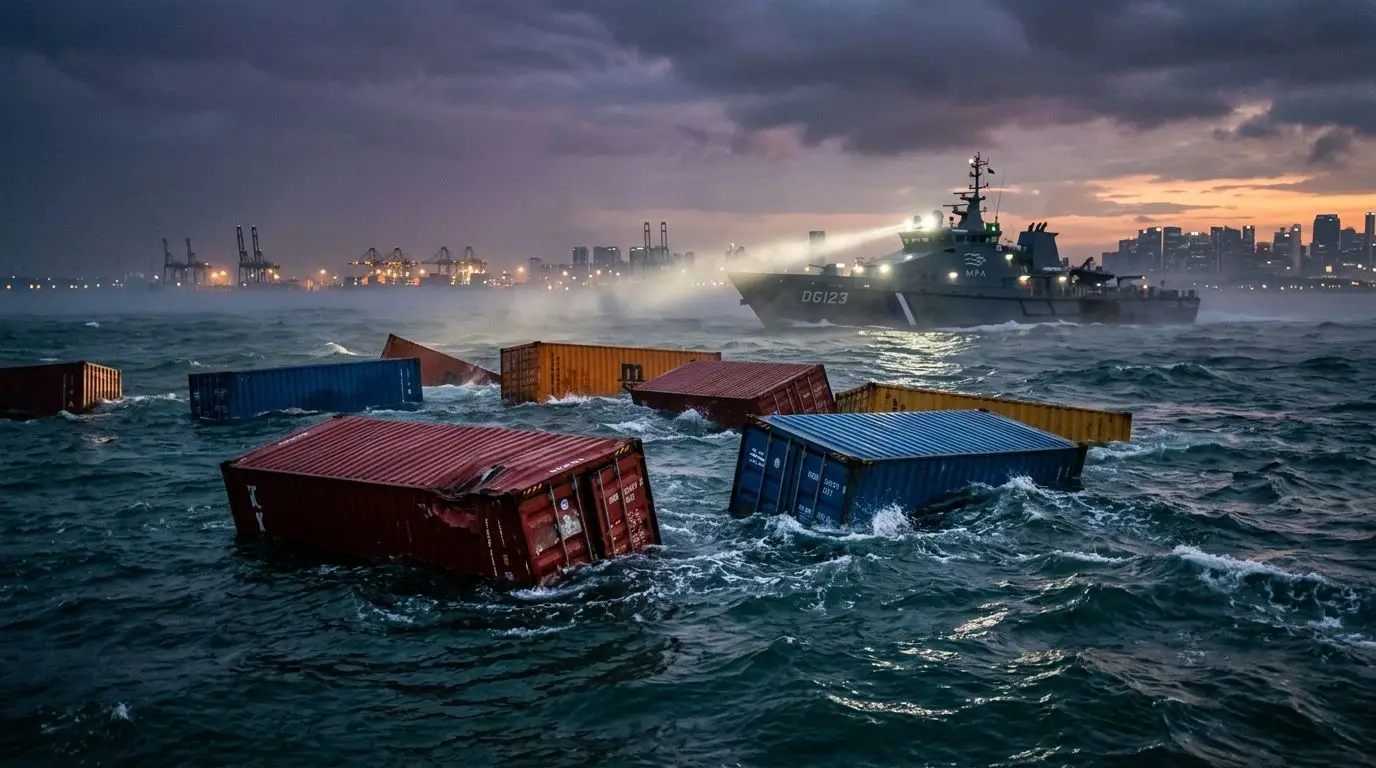
The most significant immediate threat to commercial traffic is drifting container hazards. When a container ship sinks, the lashings holding deck cargo often fail, releasing steel boxes into the sea. These containers do not always sink immediately; depending on their contents, they can float just beneath the waterline, becoming nearly invisible “growlers” that can cause catastrophic hull damage to smaller vessels or foul the propellers of larger ones.
The MPA emphasised that TSS navigation must be handled with extreme caution until the full extent of the cargo spill is determined. Shipping companies are advised to maintain a strict lookout and reduce speed when passing through the affected sectors.
Key operational impacts for shipowners and operators include:
-
Increased Transit Times: Speed restrictions and precautionary rerouting around the wreck site will delay voyages.
-
Bridge Team Strain: Heightened requirements for watchstanders to monitor specific VHF channels for updated navigational coordinates.
-
Port Delays: Potential delays to port arrivals, disrupting berth schedules and downstream logistics at the Port of Singapore.
-
Financial Exposure: Significant insurance and liability adjustments as salvage teams and P&I clubs assess environmental and wreckage removal costs.
Regulatory Framework and Incident Causality
The sinking of the Golden Star 1 will be investigated under the framework provided by the International Maritime Organization (IMO) and the Maritime Labour Convention (MLC). Initial reports suggest the vessel experienced stability issues or hull failure, though a formal inquiry by the flag state and Singaporean authorities is required to confirm the technical cause. These investigations are critical for the industry, as they often lead to amendments in the International Convention for the Safety of Life at Sea (SOLAS).
From a commercial perspective, this incident highlights the risks associated with older feeder-class vessels operating in high-density corridors. Market forces often push smaller operators to maximise cargo intake, which can place immense strain on a vessel’s stability and structural integrity. Regulatory bodies monitor these risks through Port State Control (PSC) inspections, but the dynamic nature of maritime transit means that mechanical or structural failures can occur between inspection cycles.
Salvage Outlook and 2026 Mandates
The industry faces several months of operational friction in the Strait of Singapore. The salvage of the Golden Star 1 will be a complex engineering feat, requiring specialised heavy-lift barges and diving teams. Until the wreckage is cleared or stabilised, the restricted zone around the site will compress traffic into narrower lanes, increasing the risk of near-misses or secondary collisions.
The implementation of new IMO mandates regarding the reporting of lost containers, set to take full effect in 2026, will put more pressure on masters and shipowners to provide immediate, accurate data following such losses. This shift toward total transparency is intended to improve global maritime safety but requires investment in onboard tracking and communication technology. For now, the focus remains on the immediate tactical response: keeping the bins out of the propellers and the ships in their designated lanes.
The Golden Star 1 incident serves as a stark reminder of the inherent risks within global maritime chokepoints. While the rescue of the crew proves the efficiency of regional Search and Rescue (SAR) capabilities, the lingering threat of drifting containers and wreckage requires sustained vigilance. As the MPA continues its survey and salvage coordination, the shipping community must prioritise safety over schedule to prevent a localised incident from becoming a wider maritime disaster.
