

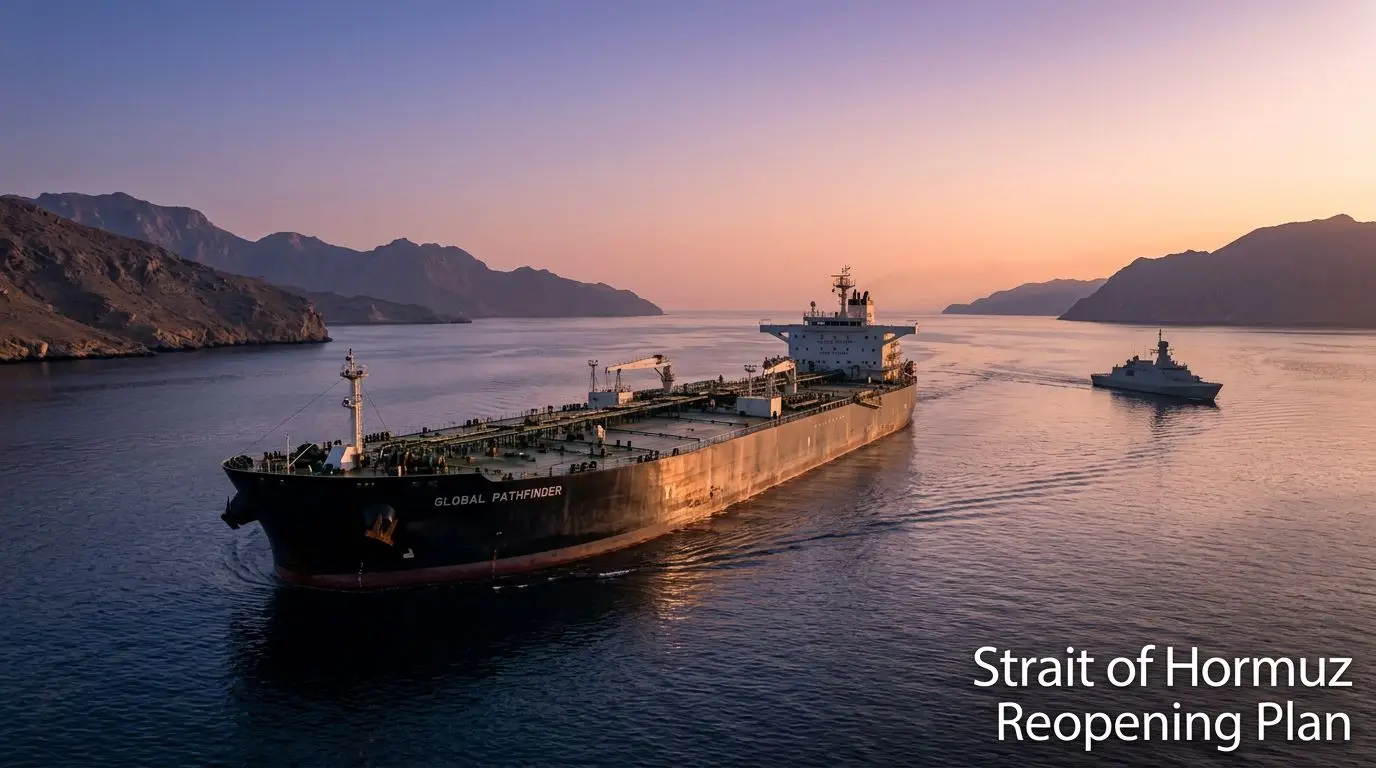
Strait of Hormuz Reopening: Strategic Roadmap for Global Maritime Recovery
The maritime industry is bracing for a shift in trade flows as the United States and Iran move to finalise a memorandum of understanding (MoU) on the Strait of Hormuz Reopening Plan, which will end hostilities and reopen the strait.
With a formal signing ceremony scheduled for June 19, 2026, in Switzerland, shipowners and energy charterers are preparing for the gradual restoration of the world’s most critical maritime chokepoint.
The agreement follows months of supply chain dislocation, during which daily commercial transits plummeted to single digits compared with the pre-conflict average of 138 vessels.
As of June 15, 2026, over 350 vessels remain anchored, waiting for clearance to navigate the 21-nautical-mile-wide strait.
The Mechanics of the Restoration Roadmap
The preliminary framework, brokered by Pakistan and Qatar, outlines a phased return to normalised operations. The primary objective is the removal of sea mines and the cessation of the U.S. naval blockade on Iranian ports, both of which are expected to commence following the June 19 signing.
-
Initial 30-Day Window: Priority is given to identifying and clearing safe corridors for commercial transit.
-
60-Day Ceasefire: This period serves as the primary track for broader diplomatic stabilisation, including international monitoring of nuclear protocols and a structured reduction in regional military posture.
-
Toll-Free Transit: Iranian officials have indicated a commitment to a toll-free transit policy during this initial restoration phase, aiming to de-escalate tensions and facilitate the movement of stranded tonnage.
Commercial Implications for Shipowners and Charterers
The shift from a “war zone” designation back to a managed shipping lane will trigger an immediate recalibration of operational risk and insurance costs.
-
War Risk Premiums: Market analysts anticipate a rapid cooling of insurance premiums. Current peak emergency rates—which soared as hostilities broke out on February 28, 2026—are expected to stabilise as naval forces verify the integrity of transit lanes.
-
Logistics and Bunkering: The resumption of “business as usual” will eliminate the necessity for costly diversions around the Cape of Good Hope. Diversions have historically added up to 14 days to voyage times, creating a massive backlog in vessel availability and dry bulk supply chains.
-
Regulatory Coordination: Operators must liaise with regional maritime safety centres to receive real-time data on mine-clearance progress and VTS (Vessel Traffic Service) instructions. Initial transits will likely be subject to strict speed and routing constraints to ensure safety.
Energy Market Volatility and Outlook
The impact on the energy sector was immediate. Following the June 14 announcement, Brent crude futures dropped over 4%, easing inflationary pressures that had spiked throughout the first half of 2026.
For the shipping industry, the focus is now on the strait’s physical throughput, which accounts for roughly 21% of global seaborne oil trade and 25% of LNG shipments. While the diplomatic breakthrough has calmed markets, the “operational reality” remains fluid. Much of the recovery speed depends on the technical efficacy of mine-sweeping operations and the sustained commitment of both the U.S. and Iran to the 60-day roadmap.
Industry Watchlist: Critical Benchmarks
The coming weeks will be defined by the following metrics:
-
Transit Volumes: Tracking the return to the pre-conflict average of ~60 transits per day.
-
Stranded Asset Clearing: The speed at which the 350+ vessels currently at anchor gain clearance to proceed.
-
Insurance Benchmarking: Adjustments in hull and machinery (H&M) and Protection & Indemnity (P&I) rates for tankers operating in the Persian Gulf.
-
Sanctions Relief: Monitoring the partial unfreezing of Iranian assets and the status of international trade restrictions on Iranian energy exports.
While the path to full normalisation requires navigating complex geopolitical negotiations, the reopening of the Strait of Hormuz provides a necessary lifeline to global commerce. Shipowners are advised to remain agile, as any deviation from the 60-day technical plan could result in immediate renewals of insurer hesitation and renewed market volatility.