

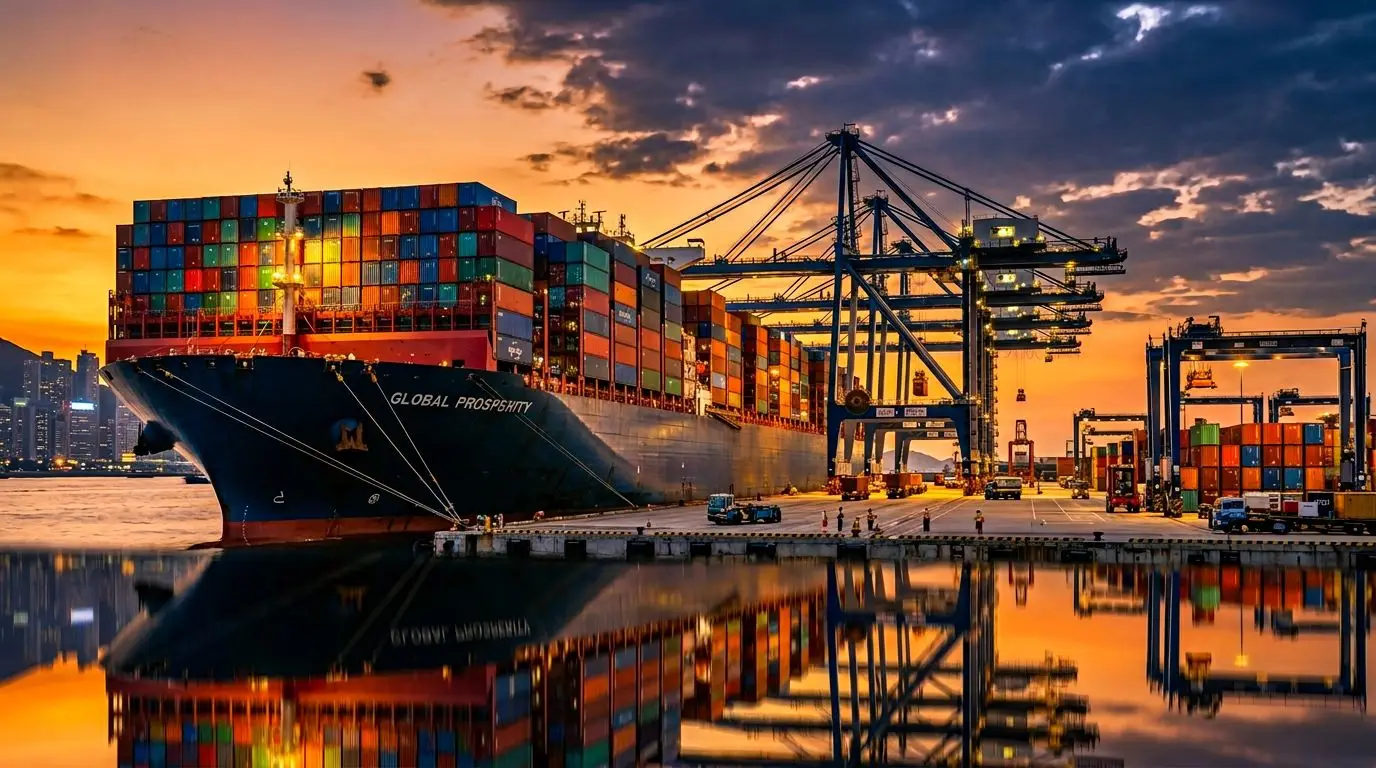
The global maritime industry is experiencing a significant financial turnaround, with major shipping companies reporting a remarkable Profit Surge in their latest quarterly results. Following a period of stabilisation, the third quarter of fiscal year 2026 has seen a dramatic increase in earnings, largely driven by resilient consumer spending and a shift in trade lane dynamics. As the industry analyzes these Q3 financial results, it is becoming clear that the combination of strategic capacity management and a localized increase in maritime freight demand has created a highly lucrative environment for the world’s leading carriers.
Drivers of the 2026 Profit Surge and Market Resilience
The primary catalyst behind this Profit Surge is a surprising uptick in global trade volume growth. While early-2026 forecasts suggested a more moderate expansion, actual demand for goods across Transpacific and Asia-Europe routes has outpaced expectations.
This demand has been fueled by a robust e-commerce sector and the stabilization of manufacturing hubs in Southeast Asia. For carriers, this has meant high vessel utilization rates, which directly translates into stronger pricing power in the spot market.
Furthermore, shipping lines have become more adept at managing the “known unknowns” of global logistics. By maintaining flexible fleets and strategically implementing blank sailings, companies have successfully prevented the overcapacity issues that historically plagued the sector. This discipline has ensured that even as more tonnage enters the market, the supply-demand balance remains tilted in favour of carriers, bolstering overall profitability in container shipping.
Analyzing Q3 Financial Results and Carrier Operating Margins
A deep dive into the Q3 financial results reveals that the recovery is not uniform across all segments but is particularly strong in the tanker and bulk sectors. For example, the Shipping Corporation of India (SCI) reported a staggering 436% surge in consolidated net profit, reaching Rs 405 crore. This was largely powered by its tanker division, which saw earnings before interest and taxes (EBIT) skyrocket as energy demand remained high.
Leading global lines such as Maersk and Hapag-Lloyd have also shown greater resilience. While facing higher operational costs due to rerouting around the Cape of Good Hope and new environmental mandates, carrier operating margins have remained healthy. Many top-tier carriers are reporting operating margins between 15% and 25%, a significant achievement given the inflationary pressures on fuel and labor. – Strategic Disinvestment: Many companies are streamlining non-core assets to focus on integrated logistics and high-margin shipping routes.
– Fleet Renewal: The transition to LNG-powered vessels and green technology is helping carriers meet IMO 2026 compliance while reducing long-term fuel costs.
– Dividend Growth: Strong cash flows have allowed boards to approve interim dividends, reflecting high investor confidence.The Human Element and Operational Challenges
Behind the impressive financial figures are the dedicated professionals who keep the global fleet in motion. Increased demand and shifting routes have created new pressures on deck officers and engineers. They must navigate evolving maritime careers while ensuring the safety and efficiency of vessels. The industry’s ability to sustain this growth relies heavily on its investment in human capital and the well-being of seafarers who operate increasingly complex, technology-driven ships.
Strategic Outlook for Global Trade Volume Growth
As we look toward the final quarter of the year and into 2027, the focus remains on whether this momentum can be sustained. The expansion of the EU Emissions Trading System (EU ETS) in 2026 means that carriers will soon be responsible for 100% of their emissions on intra-European voyages. While this adds a layer of cost, the current profitability levels provide a sufficient buffer for major lines to invest in the necessary decarbonization technologies.
Most analysts expect a period of moderation rather than a sharp decline. While the influx of new vessel deliveries in late 2026 will present an overcapacity risk, the industry’s newfound commitment to capacity management suggests that the era of extreme boom-and-bust cycles may be giving way to a more structured, albeit volatile, market.
Shipping Industry’s adaptability
The Q3 2026 results serve as a testament to the shipping industry’s adaptability. The reported Profit Surge is not merely a product of luck but the result of disciplined capacity control and a keen understanding of shifting global trade volume growth. As maritime freight demand remains steady and carrier operating margins stay robust, the sector is well-positioned to navigate the regulatory and geopolitical uncertainties that lie ahead. For shippers and investors alike, the remainder of 2026 promises a market defined by strategic planning, technological innovation, and a continued focus on operational excellence.
Sources
-
MarketsMojo: Shipping Corporation of India Q3 FY26: Record Quarterly Profit Drives 436% YoY Surge (Feb 2026).
-
Morningstar Nordics: Raising the Fair Value Estimates of Global Shippers Maersk and Hapag-Lloyd on Iran Conflict Concerns (Mar 2026).
-
European Commission: Reducing emissions from the shipping sector – EU Climate Action (2026).
-
Metro Global: Blanked sailings surge as congestion and reliability continue to constrain capacity (Feb 2026).
-
International Maritime Organization (IMO): From Policy to Practice: Powering Maritime Excellence 2026-2027 Initiative.