
Methanol and Momentum: High Stakes and Heavy Lifting in Global Shipping Trends 2026
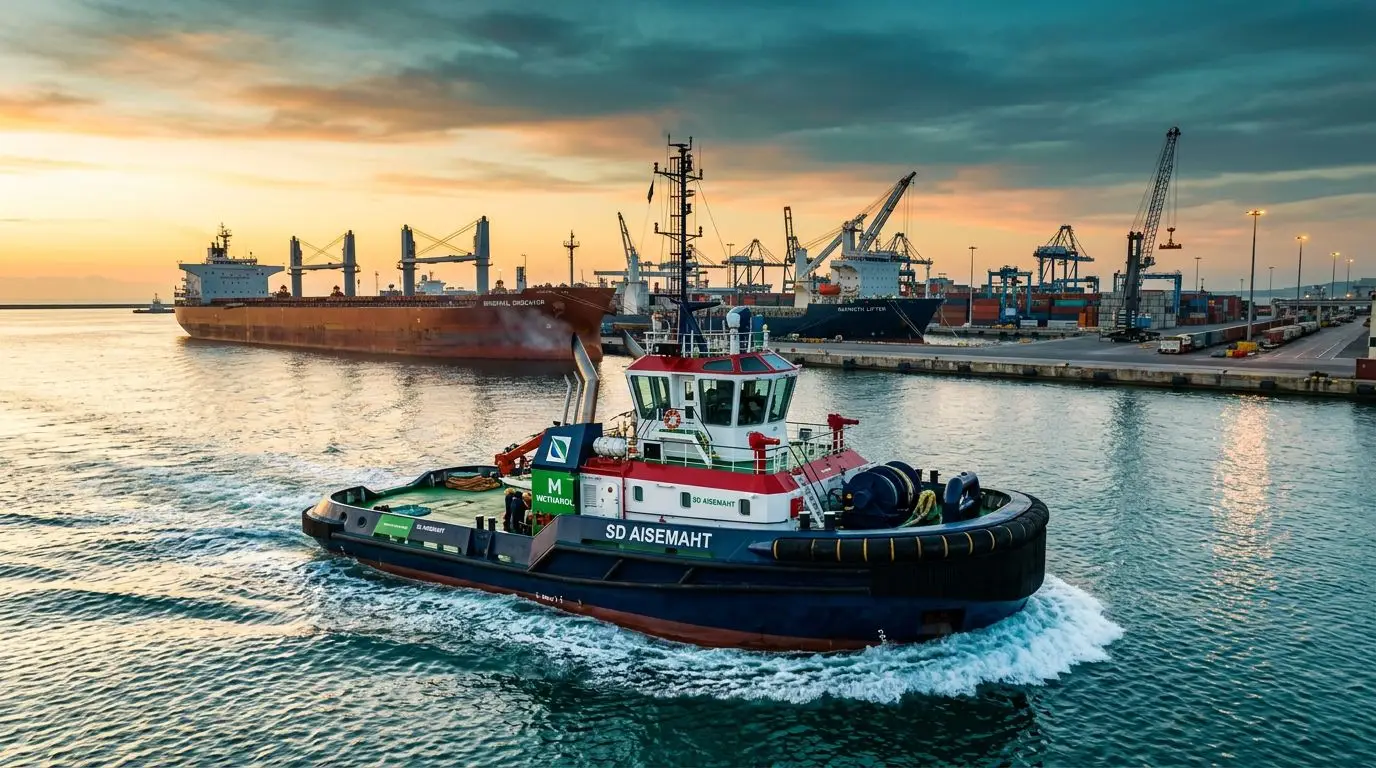
The maritime industry is navigating a decisive turning point where decarbonization mandates and market volatility are no longer abstract risks but the primary drivers of daily operations. Sanmar Shipyards recently achieved a world-first with full class certification for a dual-fuel methanol escort tug, while Jumbo’s new deal for methanol-ready heavy-lift ships signals a deepening commitment to alternative fuels.
Simultaneously, the Baltic Dry Index has hit a 30-month peak, reflecting a massive surge in demand across the dry bulk sector. These developments, paired with DP World’s $800 million push into Mediterranean infrastructure, define the core Global Shipping Trends 2026 that shipowners must master to remain competitive.
Green Maritime Technology and the Methanol Pivot
The race toward net-zero emissions has found a frontrunner in methanol. Unlike LNG, which requires massive cryogenic tanks and complex handling, methanol offers a more straightforward path for retrofitting and newbuilds. Sanmar’s recent certification from the American Bureau of Shipping (ABS) for its dual-fuel methanol tug marks a shift from experimental pilot projects to commercially viable, certified assets. This is not just a win for tug operators; it proves that high-performance engines can meet the rigorous demands of escort and rescue operations while slashing carbon output.
Heavy-lift specialist Jumbo is following a similar logic by partnering with Dajin Heavy Industry to design vessels that can seamlessly transition to green fuels. This proactive approach to green maritime technology is driven by the International Maritime Organisation’s (IMO) tightening Greenhouse Gas (GHG) Strategy.

Owners now recognise that vessels lacking a clear “green” path will face steep carbon levies and limited chartering opportunities. By investing in methanol dual-fuel vessels today, companies are hedging against future regulatory costs that could otherwise render older, diesel-only fleets obsolete.
Market Forces Behind the Baltic Dry Index Surge
While the industry goes green, the commercial market is running hot. The Baltic Dry Index surge has caught many by surprise, reaching levels not seen in two and a half years. This growth is visible across all segments, from the massive Capesize vessels moving iron ore to the Supramax ships handling grain and specialised ores.
The primary catalyst is a combination of a constrained vessel supply—partly due to older ships being scrapped or slowed to meet emissions compliance—and a robust recovery in global industrial production.
This dry bulk market outlook remains bullish but brings significant operational challenges. Higher freight rates are a boon for owners, but they also increase the financial stakes for charterers who must now manage tighter margins. Logistics workflows are being recalibrated to prioritise speed and efficiency, as every day a ship sits idle in port represents a higher opportunity cost than it did eighteen months ago. To maintain this momentum, the industry is increasingly looking toward data-driven route optimisation to minimise fuel burn while maximising cargo throughput.
Building Sustainable Port Infrastructure for the Next Decade
Technological advancements on the water must be matched by hardware on land. DP World’s decision to fast-track an $800 million development at the Port of Tartous is a strategic play to capture shifting trade flows in the Eastern Mediterranean. This investment focuses on expanding container capacity and modernising workflows to handle the larger, more sophisticated vessels entering the global fleet. Beyond mere expansion, the project emphasises sustainable port infrastructure, integrating automated systems and shore-power capabilities to reduce the environmental footprint of docked ships.
The operational impact of such massive infrastructure projects is profound. For shipowners, modernised ports mean:
– Significantly reduced turnaround times through automated gantry systems.
– Access to “cold ironing” or shore-power, helping vessels meet port-side emission limits.
– Improved multimodal connections that allow cargo to move faster from the quay to inland rail and road networks.
– Enhanced digital tracking that provides real-time transparency for cargo owners and insurers.The Road Ahead: Commercial Risks and Regulatory Bottlenecks
Looking toward the remainder of 2026, the industry faces a dual challenge of capacity and compliance. While methanol is gaining traction, the supply of “green” or “e-methanol” remains a significant bottleneck. Shipowners are ordering the engines, but the global production of carbon-neutral fuel is still scaling up. If fuel production doesn’t keep pace with vessel orders, the industry may see a “green premium” in fuel costs, complicating the dry bulk market outlook.
Additionally, the expansion of the EU Emissions Trading System (EU ETS) to cover 100% of emissions for voyages within Europe is forcing a global rethink of routing. There is a real risk of “carbon leakage,” where ships might call at non-EU ports to bypass these costs, potentially distorting traditional trade maps. Monitoring these regulatory shifts alongside the volatility of the Baltic Exchange will be critical for anyone managing maritime assets in the coming months.
The business now is not just moving cargo
The maritime sector is no longer just about moving cargo; it is about managing a complex transition toward a high-tech, low-carbon future. From the arrival of certified methanol dual-fuel vessels to the strategic expansion of Mediterranean trade hubs, the industry is proving its resilience. While the Baltic Dry Index surge provides a welcome financial cushion, the long-term winners will be those who reinvest those profits into sustainable port infrastructure and green maritime technology. As we move deeper into 2026, the gap between innovators and laggards will only widen.
Data & Sources
– International Maritime Organisation (IMO) – Regulatory frameworks and GHG Strategy updates.
– The Baltic Exchange – Freight market data and dry bulk indices.
– American Bureau of Shipping (ABS) – Classification and certification standards for alternative fuel vessels.