
Marinakis: Better to Pay a Fee for Hormuz Transits
The proposed implementation of Strait of Hormuz Transit Fees has sparked a fierce debate within the global shipping industry as owners weigh the costs of compliance against the risks of conflict.
Greek shipping magnate Evangelos Marinakis recently brought this quiet industry sentiment to the surface, suggesting that paying a direct fee for safe passage might be preferable to the logistical “hassle” and spiralling costs of the current maritime standoff. As the Iranian parliament explores a bill to formalise these charges, the commercial shipping sector faces a difficult choice between upholding international law and ensuring the immediate safety of crews and billion-dollar assets.

The Economics of Compliance and Conflict
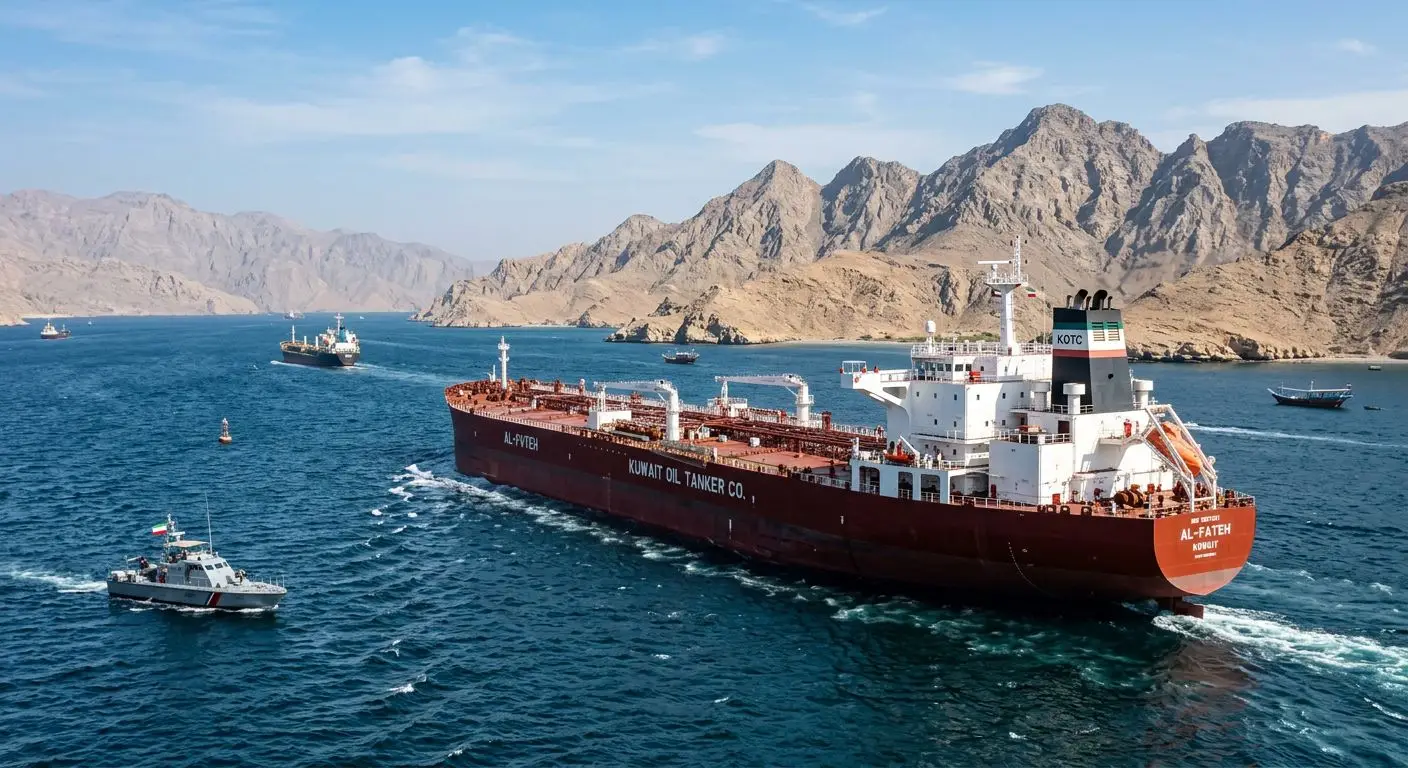
The commercial framework driving this situation is rooted in a sharp spike in operational overhead. For months, the Strait of Hormuz has operated under a high-alert state of restriction, effectively closing the waterway to many commercial vessels and forcing others to seek security assurances through unofficial channels. Evangelos Marinakis argued at a recent industry forum that paying a fee of $100,000 to $200,000—depending on vessel size—is a more predictable business expense than the current alternative.
The primary financial driver of this approach is the explosion in war-risk insurance premiums. Under current market conditions, Hormuz transit premiums have reached as high as 5% of a vessel’s total value, a rate dozens of times higher than historical norms. For a modern VLCC or LNG carrier, these insurance costs can easily dwarf the proposed transit fees. Additionally, rerouting vessels around the Cape of Good Hope adds weeks to transit times and millions in fuel costs, creating a massive global energy supply chain disruption that affects downstream markets and consumer prices.

Legal Precedents and the Challenge to UNCLOS Transit Rights
The proposal to charge for passage through an international waterway creates a significant legal crisis regarding UNCLOS transit rights. Under the United Nations Convention on the Law of the Sea, the Strait of Hormuz is recognised as an international strait where the right of transit passage applies. This ensures free, continuous, and unobstructed navigation for all ships. Most global maritime authorities argue that blocking the strait or imposing tolls lacks a legal basis under international law.
However, the reality on the water has shifted. Iran’s establishment of the Persian Gulf Strait Authority to oversee vessel approvals and fee collection has created a de facto regulatory body that operates outside the traditional UNCLOS framework. This body, supported by the Islamic Revolutionary Guard Corps, implements a tolling procedure that varies by the ship’s nationality and cargo.
– Transit passage rights under UNCLOS Article 38 prohibit coastal states from suspending or charging for passage through international straits.
– War risk insurance premiums now represent the highest single operational cost for vessels choosing to enter the Gulf.
– Rerouting around Africa remains the only alternative for owners unwilling to engage with the new tolling regime, despite the massive fuel and time penalties.
– Sanctions on the Persian Gulf Strait Authority by the United States have further complicated the legality of making these payments for Western-linked firms. Operational Realities and Maritime Chokepoint Security

The operational impact on shipowners and charterers is profound, requiring daily adjustments to logistics workflows and technical compliance. Shipowners must now decide whether to wait at anchor outside the strait—accumulating daily insurance costs—or proceed through a high-risk zone where only a fraction of typical traffic is currently cleared for transit. This bottleneck has reduced tanker traffic by approximately 70%, leaving global energy markets in a state of constant volatility.
For the technical teams in the field, the focus has shifted entirely to maritime chokepoint security. Crews are operating under heightened alert levels, and companies are seeking real-time satellite tracking and potential naval protection. The decision to pay a fee, as suggested by Marinakis, is being viewed by some as a “security assurance” payment that might offer a guarantee of safety that traditional insurance and legal protections can no longer provide in the current geopolitical climate.
The Future Outlook for Global Energy Transit
Over the coming months, the industry must monitor the progression of the Iranian transit fee bill and the response from international regulators. The immediate bottleneck remains the daily limit on ships allowed through the strait—currently estimated at 10 to 15, compared to the usual 130. If more prominent owners follow Evangelos Marinakis’s lead and agree to the fees, it could set a dangerous precedent that would permanently alter the concept of “freedom of the seas.”
The long-term commercial risk is the potential for other strategic chokepoints to adopt similar tolling models. If the international community fails to uphold the prohibition on the suspension of transit passage in the Strait of Hormuz, the legal protections under UNCLOS may be weakened globally. For now, the maritime world remains caught between the high-minded principles of international law and the brutal, expensive reality of operating in a conflict zone.
Data & Sources
– International Maritime Organization (IMO)
– United Nations Convention on the Law of the Sea (UNCLOS)
– Lloyd’s List Intelligence
– TradeWinds Global Shipping News
