

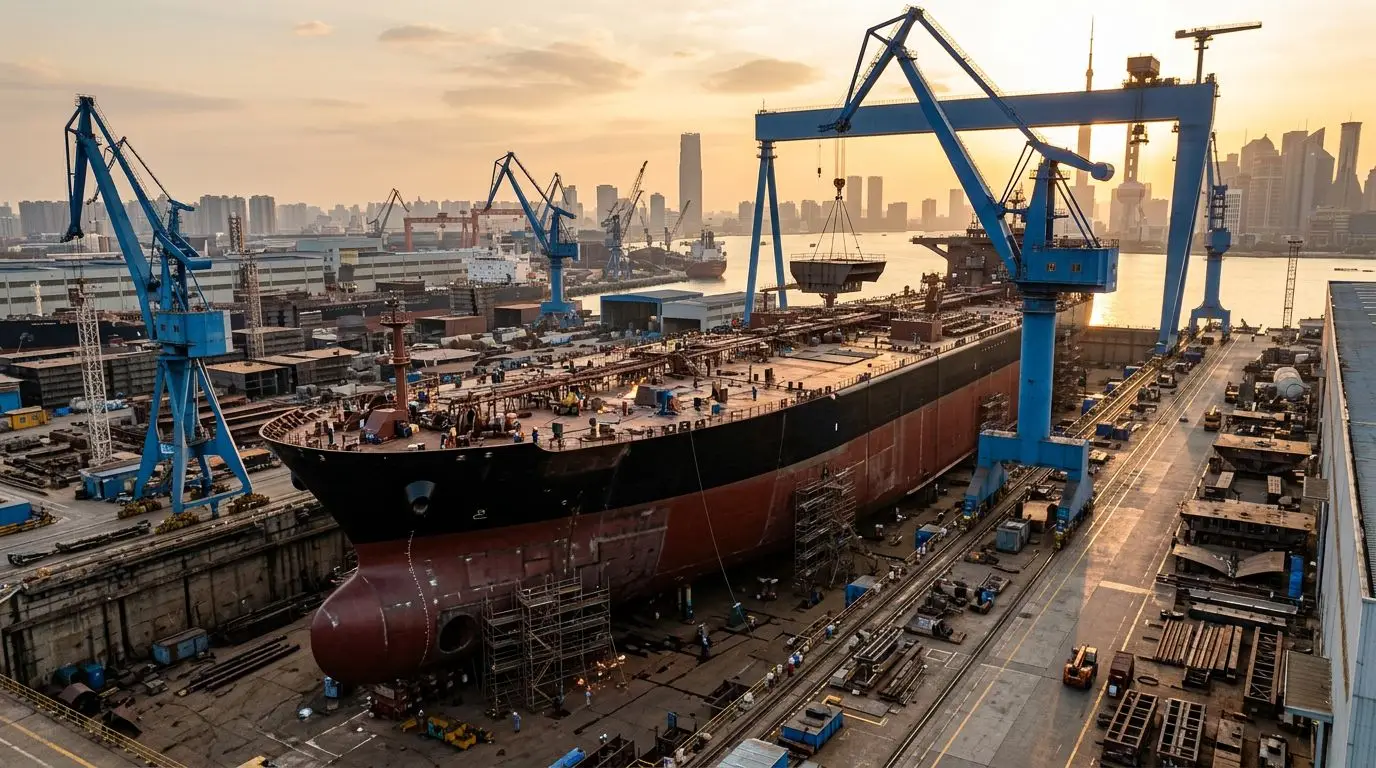
Hudong-Zhonghua Secures Massive RMB 10 Billion Order for 12 VLCCs from Dynacom
Hudong-Zhonghua Shipbuilding has finalised a landmark contract to build 12 Very Large Crude Carriers (VLCCs) for Dynacom Tankers Management, representing a total investment of nearly RMB 10 billion.
This agreement highlights a significant resurgence in VLCC Newbuilding Orders as global shipowners move to secure shipyard slots amid a tightening market. The deal, brokered in collaboration with China Shipbuilding Industry Trading Company, reinforces the dominant position of Chinese yards in the large-tanker segment and signals a major commitment to fleet expansion by one of Greece’s most prominent shipowning families.
The Strategic Impact of the Dynacom Expansion
George Procopiou, the veteran Greek shipping tycoon at the helm of Dynacom Tankers Management, is known for making bold, contrarian moves in the tanker market. By ordering a dozen 300,000-deadweight tonne (dwt) vessels in a single transaction, Procopiou is positioning his fleet to capitalise on a projected shortage of modern crude carrying capacity. These vessels will feature high-specification designs, including advanced hull forms and energy-saving devices, to reduce fuel consumption and meet increasingly stringent environmental standards.

George Procopiou
This transaction is a cornerstone of the Dynacom fleet renewal strategy. As older tankers face mounting pressure from carbon intensity regulations, replacing old tonnage with new, eco-friendly designs is no longer optional; it is a prerequisite for maintaining chartering relationships with major oil companies. The sheer scale of this order allows Dynacom to achieve better economies of scale in technical management and crew training while locking in delivery dates through 2027 and 2028, a period when shipyard berths are expected to be in extremely short supply.
The Rise of the Chinese Shipbuilding Market Share
The contract serves as a powerful testament to China’s growing market share in the high-value VLCC sector. Historically, South Korean shipyards held a firm grip on the VLCC market, but the technical capabilities of Chinese state-owned yards like Hudong-Zhonghua Shipbuilding have matured rapidly. Chinese builders now offer competitive pricing alongside sophisticated engineering that satisfies the rigorous demands of European owners.

Very Large Crude Carrier
Several factors have contributed to this shift in the global shipbuilding hierarchy:
– Massive state-backed investment in R\&D and yard infrastructure.
– The ability to offer comprehensive financing packages settled in local currency (RMB).
– Shorter lead times compared to saturated Korean counterparts.
– A proven track record of delivering complex, “green” vessels that comply with EEDI Phase 3 requirements.Operational Pressures and the Push for VLCC Newbuilding Orders
The decision to ramp up VLCC Newbuilding Orders is driven by a complex framework of regulatory and commercial pressures. The International Maritime Organisation (IMO) has introduced the Carbon Intensity Indicator (CII) and the Energy Efficiency Existing Ship Index (EEXI), which effectively penalise older, less efficient vessels. For a shipowner like Dynacom, operating an aging fleet in a high-interest-rate environment poses significant financial risks. Modern vessels not only command higher spot rates but also benefit from lower insurance premiums and better access to “green” financing.
Operationally, the introduction of these 12 VLCCs will reshape Dynacom’s logistics workflows. Newer ships are equipped with digital twin technology and remote monitoring systems, allowing shore-based teams to optimise speed and route planning in real-time. This level of technical oversight reduces the likelihood of mechanical failures and ensures that vessels spend more time on hire rather than in drydock. Furthermore, as global trade routes shift toward longer-haul voyages from the Atlantic Basin to Asia, the fuel efficiency of these newbuildings will provide a decisive competitive edge over older vessels that struggle with high bunker consumption.

Market Outlook and Future Challenges
Looking ahead, the industry must monitor several potential bottlenecks. While the Dynacom order provides a healthy backlog for Hudong-Zhonghua Shipbuilding, the global supply chain for marine components remains fragile. Shortages of specialised steel plates or marine engines could lead to delivery delays. Additionally, as more owners rush to place VLCC Newbuilding Orders, the cost of labour and materials is expected to rise, potentially squeezing the profit margins of shipbuilders who have already signed fixed-price contracts.
Commercial risks also loom on the horizon. Geopolitical shifts can rapidly alter oil demand patterns, and a sudden downturn in global crude consumption could leave owners with expensive new assets in a soft market. However, with the current VLCC orderbook-to-fleet ratio still at historically low levels, most analysts believe that new tonnage supply is unlikely to outpace demand in the near term. The industry will be watching closely to see if other Greek and Asian owners follow Procopiou’s lead, further tightening the remaining capacity at top-tier Chinese shipyards.
Massive deal
The RMB 10 billion deal between Hudong-Zhonghua and Dynacom is more than just a large capital expenditure; it is a strategic manoeuvre that reinforces the evolving dynamics of the maritime world. By leveraging the technical prowess of Chinese shipbuilders to execute a massive fleet renewal strategy, George Procopiou is ensuring that Dynacom remains a top-tier player in the global energy trade. As the first of these 12 vessels begin to take shape in the drydocks of Shanghai, they will represent the next generation of efficient, high-capacity crude transportation.
Data & Sources
– China State Shipbuilding Corporation (CSSC) Official Reports
– Clarkson Research Services Maritime Intelligence
– International Maritime Organization (IMO) Regulatory Guidelines
