

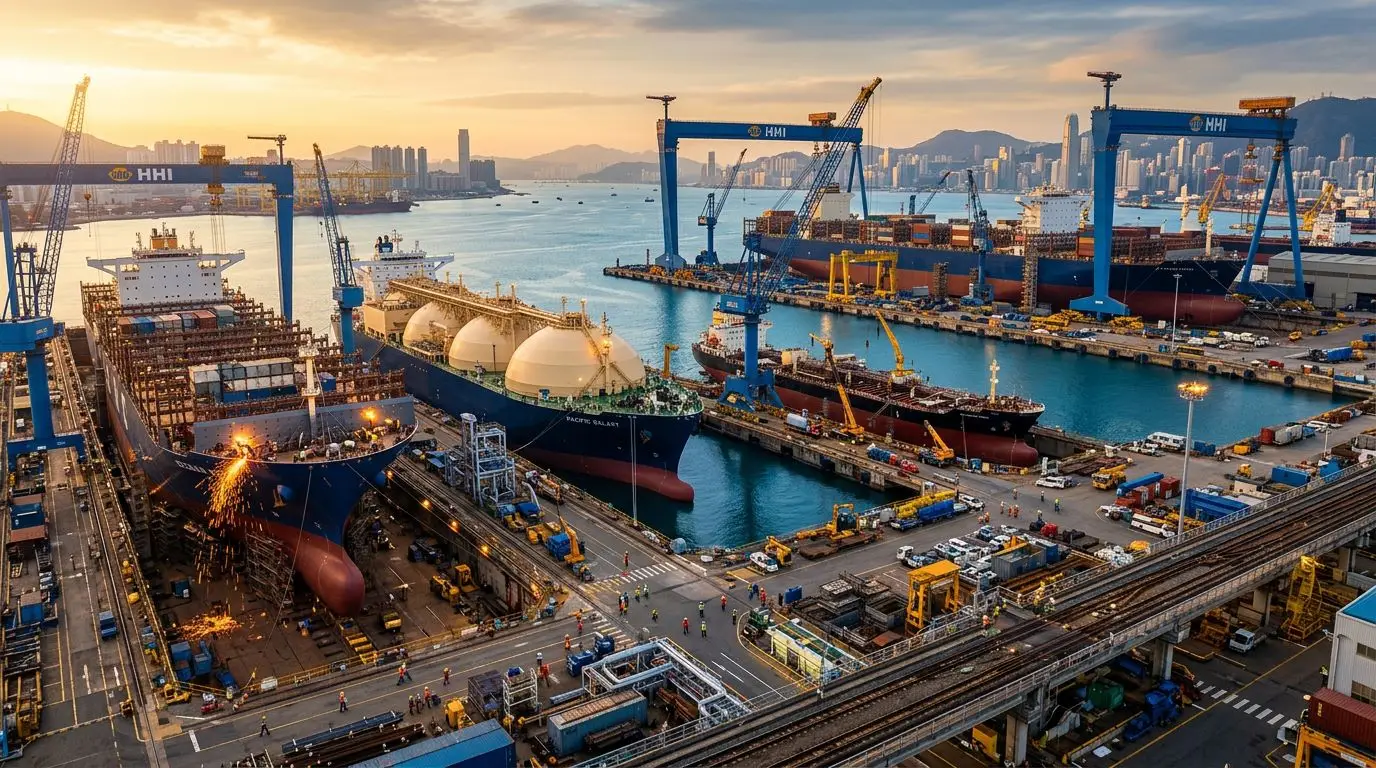
Asian Shipbuilding Expansion: Major Shipyards Shaping the Future of Global Trade
Rapid transformation is reshaping the global maritime sector, with substantial expansion within Asian shipbuilding driving the change.With rising international trade volumes and increasing demand for energy-efficient vessels, as reported by major Far East press, major industrial hubs in South Korea, China, and Southeast Asia are announcing ambitious expansion plans. This development goes beyond increases in physical capacity, marking a strategic shift toward digital integration and toward meeting international environmental standards.Through operational expansion and facility upgrades, these shipyards are positioning themselves to lead maritime trade and naval construction in the coming decade.
China is rapidly expanding its lead in the global shipbuilding industry. This growth makes the country more influential in international trade and global politics.
Key Growth Statistics
Based on recent data from BRS, China’s market share is rising sharply:
-
Global Orders: By the end of 2025, China held 70.9% of all world ship orders. This is a significant jump from 66.7% in 2024 and 57.3% in 2023.
-
New Contracts: China secured 72.3% of all new ship orders placed worldwide.
-
Deliveries: The country completed and delivered 56.6% of the world’s total ship production for the year.
-
Total Output: Domestic production grew by 10.5%, increasing from 48 million tons to 53 million tons.
Global Shipbuilding Trends: China and South Korea
According to Maritme IHS, in March, the world ordered 135 new ships (totalling 4.06 million CGT). According to data from Clarkson and reports from Yonhap News Agency, two countries dominated these orders:
-
China: Secured 84 ships (53% of the market).
-
South Korea: Secured 38 ships (39% of the market).
Together, these two nations control the majority of the industry, showcasing a mix of intense competition and potential partnership.
China’s Strengths: Scale and Variety
China remains the world leader because of its massive manufacturing base. It is the only country with a complete version of every industrial category defined by the UN. This gives its shipbuilders several advantages:
-
Mass Production: They can build everything from simple cargo ships to complex cruise ships and LNG (liquefied natural gas) carriers.
-
Reliability: A mature supply chain ensures it can deliver large numbers of ships on time.
-
Resilience: Their ability to produce all types of vessels provides stability for the global shipping market.
South Korea’s Strengths: High-Value Technology
South Korea focuses on “high-value-added” ships. These are expensive, specialised vessels that require advanced engineering. Their strengths include:
-
Expert Design: Deep knowledge in designing complex ships.
-
Advanced Tech: Expertise in integrating the latest maritime technologies.
-
High Profit: A focus on quality and high-end segments rather than just volume.
The Future: From Competition to Cooperation
As China begins building more high-end ships, it is competing more directly with South Korea. However, there are still many ways for the two countries to work together:
-
Supply Chains: South Korea makes high-end components that Chinese builders need.
-
Green Technology: Both countries are working on low-carbon ships. By sharing research and setting international standards together, they can lower costs and risks.
-
Mutual Benefits: South Korea can use China’s massive production power to lower costs, while China can benefit from South Korea’s technical research.
Key Drivers of Maritime Infrastructure Investment
A wave of investment in maritime infrastructure supports this regional growth. Leading shipbuilders are moving beyond traditional dockyards and investing heavily in updating old sites and building new ones to support larger ships. For instance, Hindustan Shipyard Limited (HSL) is undertaking major upgrades, including installing powerful Goliath cranes and extending slipways to accommodate heavier ships. Several factors are driving this investment:The ageing global fleet, especially in sectors such as tankers, has created an urgent requirement for fleet renewal, prompting the replacement of less efficient cargo vessels.
– A significant increase in orders for high-value vessels, particularly Liquefied Natural Gas (LNG) and ammonia carriers.
– There is growing demand for special offshore platforms that support the world’s expanding energy sector, especially for deep-sea exploration. All these future developments in shipping markets and shipbuilding have broad industry implications, affecting global supply chain logistics and shaping the career paths of maritime professionals. As shipyards expand, there is a need for highly skilled personnel who require enhanced training.
Asian Shipbuilding Expansion and the Advancement of Smart Shipyard Technology
The expansion of Asian shipbuilding is marked by a shift from work that relies heavily on manual labour to the use of smart technology in shipyards. Digital tools now help shipyards compete. By using 3D design, virtual reality, and digital twins, shipyards can plan construction before starting actual work. This helps improve accuracy and speed up the building process. New digital platforms, including SAP S/4HANA, help design, supplier, and production teams work together in real time. This teamwork is important as ships become more complex. As Asian shipyards work with international partners on ship construction, sustaining digital continuity is crucial to guarantee consistent quality, regardless of the origin of the first blueprints.
Eco-friendly Vessel Construction and Sustainable Growth in the Maritime Industry
Environmental regulations set by the International Maritime Organisation (IMO) drive sustainable growth in the maritime sector. Industry leaders face considerable pressure to achieve net-zero emissions, prompting shipyards to increase the construction of eco-friendly vessels. South Korean and Chinese shipyards now specialise in dual-fuel systems that use methanol, ammonia, and hydrogen as cleaner alternatives to conventional heavy fuel oil.This transition is now a central business strategy. High-efficiency hull designs and emissions-reduction technologies are standard for major shipping lines such as Maersk and COSCO. By advancing green technology, Asian shipyards are securing high-margin contracts that emphasise long-term sustainability over immediate cost savings. This approach secures the region’s continued status as a focal point for innovation in the maritime energy transition.
Regional Competition and Market Diversification in Shipbuilding
Although South Korea and China currently dominate the market, new regional shipbuilding competition is emerging. Southeast Asian countries, such as Vietnam, the Philippines, and Malaysia, are actively expanding their market visibility. Turkish defence firms collaborate with Malaysian partners to open new overseas shipyards, while the Philippines leverages its advantageous position to attract international investment.Such diversification reduces global supply chain risks and promotes technological sharing. However, it also compels established shipyards to keep innovating. To sustain a competitive edge, industry leaders focus on:- Automation and robotics to address increasing labour costs plus potential workforce shortages.
– Enhanced lifecycle support, extending beyond construction to provide long-term maintenance, repair, and overhaul (MRO) services.
– Tactical partnerships with naval forces to secure long-term defence contracts.The current expansion of major shipyards across Asia signifies a critical moment in maritime history. By investing in infrastructure and adopting smart shipyard technologies, the region cements its standing as a central driver of global trade. Focusing on eco-friendly vessel construction secures growth is in line with international environmental objectives and supports eco-friendly maritime development. As competition grows, shipyards that merge advanced digital capabilities with physical production will determine the future of maritime commerce. For participants and maritime professionals, this expansion provides considerable opportunities to transform global logistics and power transport.