

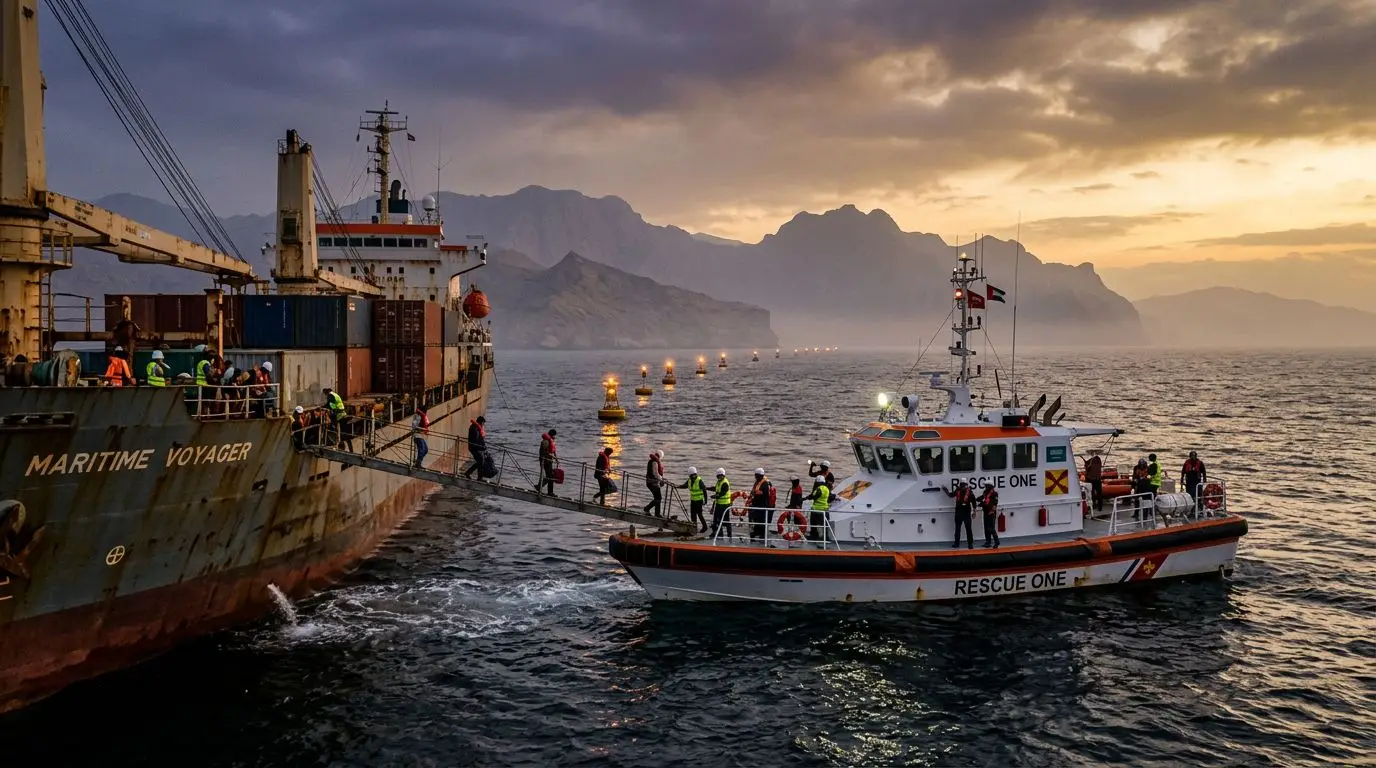
The Plight of the 20,000: Global Push for a Strait of Hormuz Humanitarian Corridor
The International Maritime Organisation (IMO) and several coastal states are now moving to establish a formal Strait of Hormuz Humanitarian Corridor to address a rapidly deteriorating situation in the Middle East. With approximately 20,000 seafarers currently stranded on hundreds of vessels in the Persian Gulf, the pressure to secure a 30-day evacuation window has reached a breaking point.
These crews, representing dozens of nationalities, remain trapped behind a de facto blockade that has effectively severed the world’s most vital energy chokepoint from safe commercial transit. This diplomatic push seeks to prioritise the human element over geopolitical manoeuvring, providing a clear window for crew changes and the safe departure of non-combatant merchant ships.
The IMO Seafarer Evacuation Framework and Regulatory Drivers
The move toward a 30-day corridor is not merely a diplomatic suggestion but a structured response emerging from the IMO seafarer evacuation framework.
Under the leadership of Secretary-General Arsenio Dominguez, the IMO Council has been working to coordinate with regional powers to prevent the escalation of a maritime humanitarian crisis. The legal foundation for this action rests on the Maritime Labour Convention (MLC) and the International Convention for the Safety of Life at Sea (SOLAS), which mandate the protection and well-being of crew members regardless of regional conflict.
The current crisis stems from a convergence of military activity and the breakdown of traditional protocols for safe passage through maritime corridors. When commercial shipping lanes are used as leverage in regional conflicts, the standard insurance and regulatory protections for seafarers often fail. The proposed 30-day corridor is designed to act as a release valve, allowing shipowners to fulfil their repatriation obligations without the immediate threat of seizure or kinetic attack. It also aims to restore access to critical supplies, as reports indicate that many stranded seafarers in the Persian Gulf are struggling with dwindling medical supplies and limited contact with their families.
Key elements of the proposed evacuation corridor include:
– A mandatory 30-day ceasefire specifically for non-combatant merchant vessels within designated transit lanes.
– Coordinated surveillance by international naval forces to provide “blue safe” monitoring of all transiting hulls.
– Facilitated crew changes at designated regional hubs to replace exhausted seafarers with fresh relief personnel.
– Clear technical corridors that bypass active minefields or high-risk military zones currently obstructing the Strait.
– Temporary suspension of regional transit fees for vessels utilizing the humanitarian exit route.Operational Fallout: Rerouting, Insurance, and Logistics

The impact of this stalemate on global logistics is profound. For shipowners and charterers, the Strait of Hormuz’s shipping-security vacuum has turned the Persian Gulf into a “dead zone” for new fixtures. Many vessels already in the Gulf when tensions spiked are now facing insurance premiums that exceed their daily earnings. Standard hull and machinery (H&M) and Protection and Indemnity (P&I) clubs have largely designated the area as a high-risk zone, requiring individual “war risk” extensions that can cost tens of thousands of dollars per day.
Operationally, the crisis has forced a radical recalibration of energy supply chains. Tankers that would normally transit the Strait are now being diverted or held in anchorage indefinitely, causing a massive backlog at loading terminals. For technical managers, the inability to rotate crew has led to severe fatigue and mental health challenges among the workforce. Onboard maintenance schedules are slipping as spare parts and specialised technicians cannot reach the ships, creating a secondary risk of environmental disaster if a stranded tanker suffers a mechanical failure or hull breach while in limbo.
Future Outlook: Bottlenecks and Commercial Risks
Looking ahead, the success of the Strait of Hormuz Humanitarian Corridor depends entirely on the “de-confliction” of regional naval forces. Even if a 30-day window is granted, the industry faces a massive logistical bottleneck. Clearing 20,000 seafarers and hundreds of trapped vessels in a single month will require an unprecedented level of coordination among flag states, port authorities, and airlines for repatriation flights.
The commercial risks remain high for the remainder of 2026. If the corridor is not established soon, we expect to see a surge in vessel abandonment cases, a phenomenon that has historically haunted the industry during prolonged regional conflicts. Furthermore, the long-term cost of shipping energy through this region will likely include a permanent “security surcharge,” as cargo owners demand more robust escorts and private security details. The industry must prepare for a future in which the Strait is no longer a guaranteed open waterway but a managed corridor requiring constant diplomatic oversight and military protection.
Conclusion
The maritime world is watching the UN and IMO with bated breath. While the technical details of the evacuation framework are being finalized, the reality for those on the water is one of anxious waiting. A 30-day corridor represents more than just a logistical solution; it is a necessary reaffirmation of seafarers’ neutrality in global conflict. If the international community fails to secure this safe passage, the humanitarian cost will eventually outweigh the strategic value of the blockade itself.
Data & Sources
– International Maritime Organization (IMO) Council Reports
– International Chamber of Shipping (ICS) Global Crewing Statistics
– Nautilus International Maritime Union Briefings
–Reuters
– United Nations Office for the Coordination of Humanitarian Affairs (OCHA)
