
Escalating Tensions: The Gulf of Oman Tanker Incident and the Crisis of Maritime Security
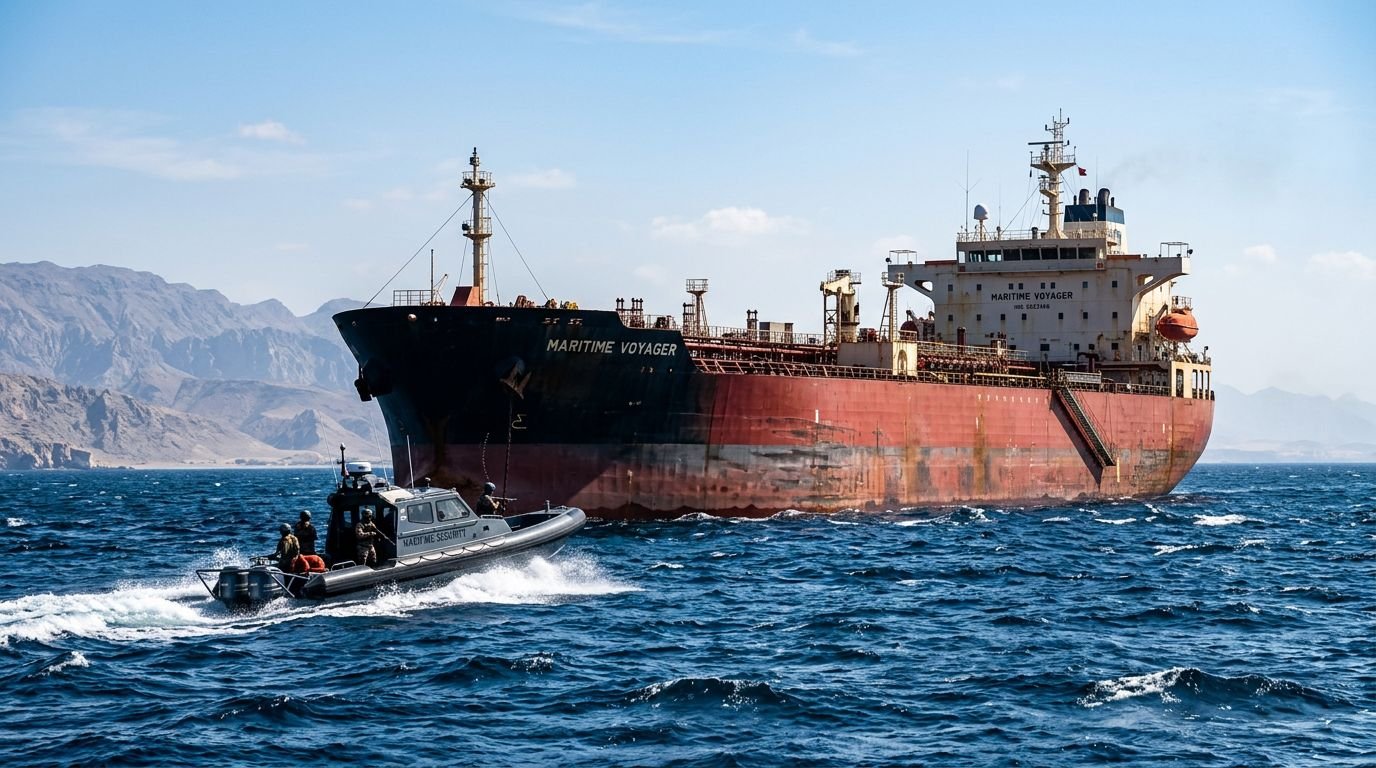
The United Kingdom Maritime Trade Operations (UKMTO) issued Warning 062/26 on May 26, 2026, documenting a serious maritime security incident approximately 60 nautical miles east of Muscat, Oman. At 09:45 UTC, a commercial tanker reported an external explosion above the waterline on the port side.
As reported by UKMTO
UKMTO WARNING 062-26 – ATTACK Report Date:26 May 2026 Report Time: 0945UTC Issue Date:26 May 2026 Source Master UKMTO has received a report of an incident 60NM east of Muscat, Oman. The Master of a Tanker reports of an external explosion, Port side aft close to the waterline. The crew and vessel are safe, although the Master reports some bunker fuel has discharged into the sea. Authorities are investigating. Vessels are advised to transit with caution and report any suspicious activity to UKMTO.
While the crew is reported safe and the vessel remains operational, this Gulf of Oman Tanker Incident represents a sharp escalation in regional volatility. As global energy markets react to uncertainty, the industry is once again forced to confront the fragile nature of maritime safety in the Strait of Hormuz and the broader implications for international trade.
Geopolitical Friction and the Regulatory Framework
This latest incident does not exist in a vacuum; it is the culmination of months of friction involving state and non-state actors in the region. The legal and commercial framework governing these waters is complex, involving the United Nations Convention on the Law of the Sea (UNCLOS) and various International Maritime Organization (IMO) mandates. However, enforcing these standards becomes difficult when maritime security alerts are triggered by kinetic actions such as drone strikes or limpet mines.

Regulatory bodies and state ministries are currently evaluating the effectiveness of the International Ship and Port Facility Security (ISPS) Code in high-risk zones. While the ISPS Code provides a standardised framework for risk management, it was primarily designed for port-side security and internal vessel protection rather than defending against external explosions or state-sponsored harassment. Consequently, the industry is increasingly turning to private security firms and naval coalitions, such as the International Maritime Security Construct (IMSC), to fill the gap where traditional international law lacks the reach to deter targeted aggression.
Operational Disruptions and the Gulf of Oman Shipping Risk
For shipowners and charterers, the Gulf of Oman shipping risk translates directly into prohibitive operational costs. When UKMTO Warning 062/26 was broadcast, many operators immediately implemented emergency rerouting protocols. These adjustments, while necessary for safety, add thousands of nautical miles to voyages, increasing fuel consumption and straining global supply chain schedules.
The financial fallout is equally severe. Marine insurers typically designate the Gulf of Oman and the Persian Gulf as high-risk areas, requiring Additional War Risk Premiums (AWRP). Following a commercial tanker explosion, these premiums often spike overnight, sometimes increasing by 10% to 20% depending on the vessel’s flag and cargo. Furthermore, technical compliance becomes more rigorous; masters are now required to conduct more frequent security drills and maintain constant communication with maritime trade centres.
Operational challenges currently facing the industry include:
– Drastic increases in insurance premiums and the requirement for specialized war risk cover.
– Implementation of “Best Management Practices” (BMP5) to harden vessels against unauthorized boarding or external attacks.
– Strategic rerouting away from chokepoints, leading to port congestion in alternative hubs.
– Heightened psychological stress on crew members operating in zones where “silent” threats like underwater mines are a constant concern.Future Outlook: Bottlenecks and Commercial Vulnerabilities
Looking ahead, the industry must prepare for a period of sustained instability. The immediate bottleneck remains the Strait of Hormuz, where a total blockade or continued targeted attacks could decouple regional supply from global demand. Analysts monitor the “shadow fleet”—vessels operating with disabled AIS—which complicates situational awareness needed to maintain maritime safety in the Strait of Hormuz. If legitimate commercial operators continue to face such risks, we may see a permanent shift in how energy is transported, with a greater emphasis on pipelines that bypass maritime chokepoints.
Over the coming months, the focus will likely shift toward technological solutions. Enhanced satellite monitoring and the deployment of autonomous underwater vehicles (AUVs) for hull inspections are becoming standard for high-value tankers. However, the primary risk remains political. Without a de-escalation of naval tensions between regional powers, the frequency of maritime security alerts is expected to remain high, keeping the global economy on edge.
UKMTO Warning
The incident off the coast of Muscat is a stark reminder that the security of the seas is never guaranteed. As the industry digests the details of UKMTO Warning 062/26, the priority remains the safety of seafarers and the integrity of the environment. While the vessel involved in this specific Gulf of Oman Tanker Incident escaped catastrophic damage, the broader commercial and geopolitical damage is already done. Stakeholders must now collaborate more closely than ever to ensure that these vital waterways do not become inaccessible graveyards for global trade.
Data & Sources
– United Kingdom Maritime Trade Operations (UKMTO)
– International Maritime Organization (IMO)
– International Chamber of Shipping (ICS)
– BIMCO (Baltic and International Maritime Council)
