

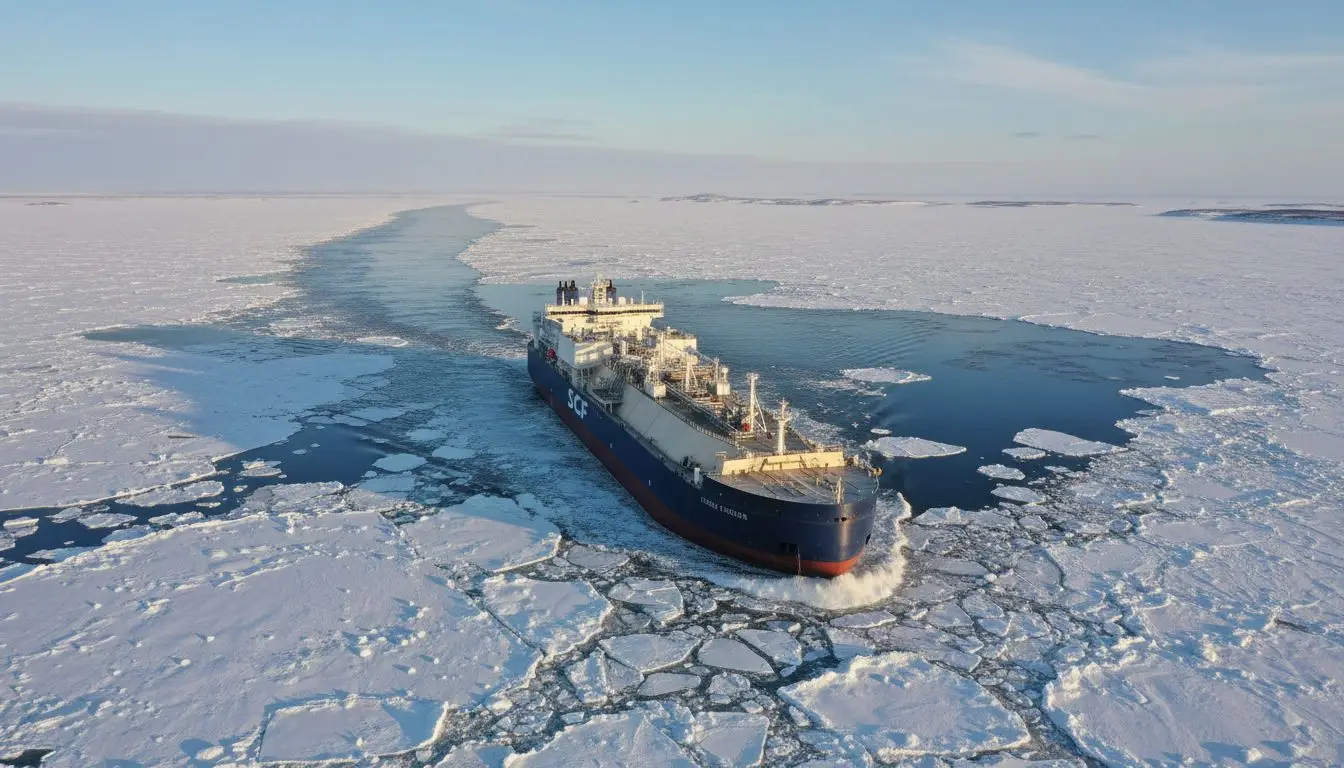
The advanced LNG tanker features impressive icebreaking capabilities, designed to navigate through 2.1 meters of Arctic ice using powerful 60 MW propulsion systems. Furthermore, the vessel will play a vital role in supporting year-round operations at Novatek’s Arctic LNG 2 project under a long-term charter agreement. During construction, Russian engineers overcame significant challenges by developing domestic alternatives to previously imported components for propulsion and insulation systems.
This delivery represents not only a technological achievement but also a strategic victory for Russia’s energy sector, enabling continued exports from its resource-rich Arctic region regardless of severe weather conditions. The Alexey Kosygin is the first of 15 planned Arc7 ice-class tankers to be built at the Zvezda facility by 2026, establishing Russia’s growing self-reliance in specialized maritime infrastructure.
Russia Delivers First Domestically Built Arc7 LNG Tanker
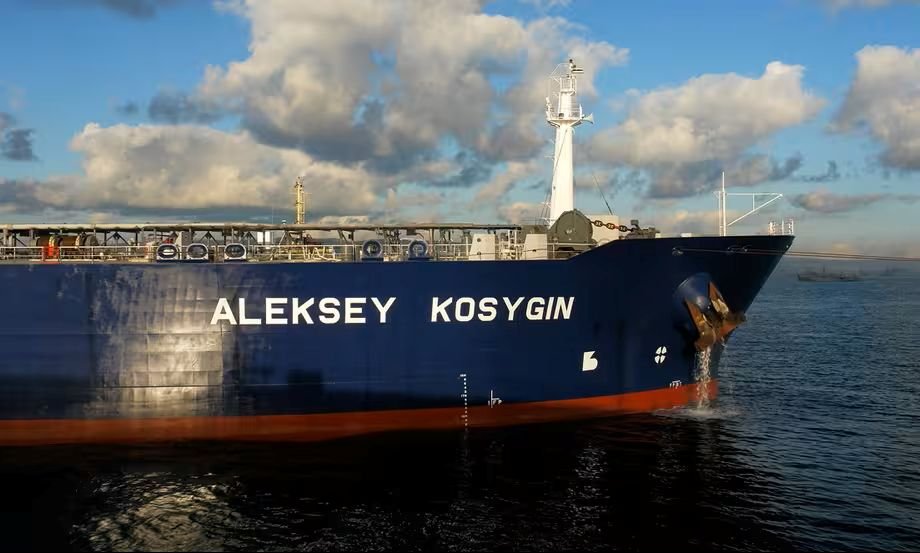
On December 24, 2025, Sovcomflot, Russia’s leading tanker group, officially received the Alexey Kosygin, marking a historic milestone as the first ice-class LNG carrier built entirely in Russia [1]. The momentous handover ceremony at the Zvezda shipbuilding complex in the Russian Far East represents a significant achievement for the country’s maritime industry.
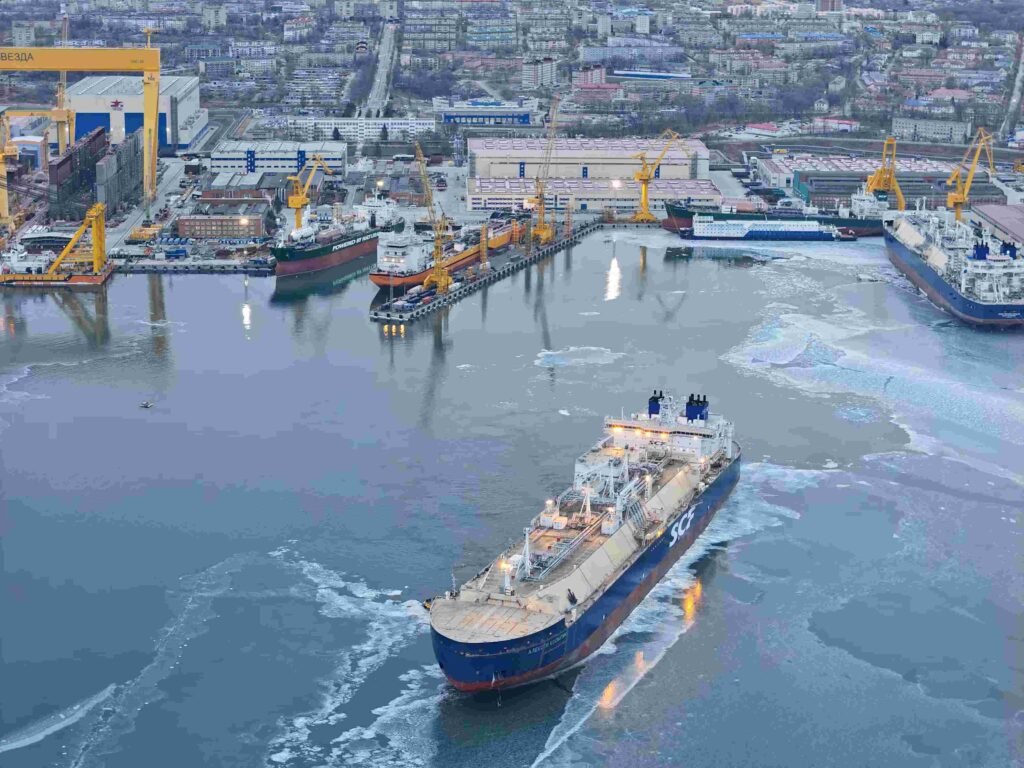
Sovcomflot receives Alexey Kosygin from Zvezda shipyard
The 300-meter (984-foot) vessel was commissioned and transferred to Sovcomflot with financial support from VEB.RF [2]. Igor Tonkovidov, CEO of Sovcomflot, described the event as “a historic event for the entire domestic shipping and shipbuilding industry” [3]. The tanker boasts impressive specifications with a cargo capacity of 172,600 cubic meters [2] and is designed to operate without restrictions in Arctic ice conditions.
Construction of the vessel began in November 2020 [2], with Zvezda initially collaborating with South Korea’s Samsung Heavy Industries and French LNG containment specialist GTT. However, following new EU sanctions against Russia, GTT ceased all activities in Russia in 2023, including tank design work for the ice-breaking LNG carriers under construction [2]. Subsequently, Samsung Heavy terminated contracts for 10 ice-class Arc7 LNG carriers and seven shuttle tankers with Zvezda [2].
Notably, the Alexey Kosygin uses LNG for its propulsion system, which has a capacity of 45 MW with three full-turn rudder propellers [3]. The propulsion plant was domestically built at the Saphir plant within the Zvezda complex, demonstrating Russia’s growing self-sufficiency in advanced maritime technology.
Vessel named after Soviet statesman Alexey Kosygin
The gas tanker bears the name of Alexei Kosygin, a prominent Soviet statesman who served as Chairman of the USSR Council of Ministers [4]. According to official statements, Kosygin “made an immense contribution to the development of the Far East, our country, the economy, its key industries, and proved himself a talented organizer during the Great Patriotic War” [4].
This naming continues Russia’s tradition of honoring significant historical figures through its maritime fleet. The choice particularly emphasizes the connection between the vessel’s purpose in developing Arctic resources and Kosygin’s legacy in building Soviet industrial capacity.
Commissioning marks milestone in Russian shipbuilding
The delivery represents an unprecedented achievement for Russia’s shipbuilding sector, as the country has never before constructed vessels with such engineering complexity [5]. “Never before has our country built such complex vessels, both in engineering and technology,” noted Igor Tonkovidov [3].
The Alexey Kosygin is the lead vessel in a series of advanced Arc7 ice-class LNG carriers being built at the Rosneft-led Zvezda shipyard [2]. Plans call for a total of 15 Arc7 ice-class tankers to be constructed at the facility [1], with Sovcomflot expected to receive two more similar vessels by 2026 [2].
These state-of-the-art vessels are equipped with the latest technology and are “without exaggeration, among the best in their class internationally” [4]. Each tanker in the series features a double hull, strong structures, and reinforced propellers specifically designed for safe operation in extreme Arctic conditions [2].
The vessel will operate under a long-term charter to Novatek, which holds a 60% stake in the Arctic LNG 2 project [3]. This strategic deployment will ensure year-round navigation in the eastern sector of the Russian Arctic, expediting implementation of national plans to boost cargo traffic along the Northern Sea Route [5].
The successful domestic production of such an advanced vessel indicates that “with each new ship delivered, the level of localisation at Zvezda will increase” [4], strengthening Russia’s maritime independence amid ongoing international sanctions.
Zvezda Shipyard Overcomes Sanctions to Complete Build
The completion of the Alexey Kosygin represents a significant victory for Russian shipbuilding amid severe international restrictions. The Zvezda shipyard, the only Russian facility capable of producing large-capacity oil and gas vessels, faced mounting challenges after becoming subject to US sanctions itself [6].
Sanctions disrupted access to foreign components
Western restrictions created substantial obstacles for the tanker’s construction, delaying the Alexey Kosygin’s delivery which was initially expected in early 2023 [7]. The sanctions specifically targeted Arctic LNG 1, 2, and 3 projects, Murmansk LNG, Obsky LNG, the Zvezda shipyard, and several LNG carriers under construction [8].
These measures severely disrupted the supply chain for critical components. Most significantly, France’s GTT ceased all operations in Russia in January 2023 following EU sanctions, abandoning work on the specialized membrane containment systems essential for LNG tankers [9]. Simultaneously, European firms MAN and Wartsila, which had previously supplied propulsion components, withdrew from the project [9].
The most damaging blow came when South Korea’s Samsung Heavy Industries cancelled contracts for 10 ice-class Arc7 LNG carriers and seven shuttle tankers with Zvezda [9]. This partnership was meant to continue until technology transfer was complete, yet ended prematurely before Russia achieved self-sufficiency in LNG tanker construction [10].
Domestic alternatives used for propulsion and insulation
Faced with these obstacles, Russia accelerated the development of indigenous alternatives for critical systems. For propulsion units previously supplied by ABB, the shipyard adopted Russian technology instead [11]. The propulsion plant was ultimately built at the Saphir plant within the Zvezda complex.
Moreover, Russia’s GTI company developed a domestic cryogenic containment system, reportedly achieving 97% import substitution [11]. This technology sought type approval from the Russian Maritime Register of Shipping ahead of serial production.
A key innovation was the use of “tanker plywood” from Russia’s Segezha Group for the insulation panels of LNG carriers [11]. The product had previously been certified by France’s GTT in 2022 [12]. As Segezha’s Vice President for Commerce Dmitry Beresnev explained: “Currently, there are no manufacturers of membrane cargo containment systems for LNG tankers on the Russian market. Therefore, all our products are sent abroad. However, we maintain close working contacts with Russian companies that plan to begin domestic production of membranes” [12].
Collaboration with foreign firms before sanctions
The Arc7 LNG tankers were originally conceived as a collaborative international effort. Prior to sanctions, South Korea’s Samsung Heavy Industries constructed hulls and complex sections, then transported them to Zvezda for final assembly [9]. Five hulls were delivered before the agreement terminated, leaving three additional hulls in various stages of completion [9].
The original plan called for Samsung to deliver 15 hulls to Zvezda, establishing a technology transfer pathway [10]. Novatek had selected domestic construction over Korean shipyards despite the greater risks involved, partly due to political pressure to develop Russia’s value chain and partly because of subsidy schemes offsetting cost differences with Korean alternatives [10].
French firm GTT provided the specialized gas membrane systems critical for containing liquefied natural gas at cryogenic temperatures [9]. European companies including MAN and Wartsila supplied the propulsion components [9]. This international collaboration was intended as a temporary arrangement until Russia developed sufficient domestic capabilities.
To accelerate this transition after Western partners departed, Novatek sent 200 skilled personnel to Zvezda Shipyard to assist with completing the most advanced first two Arc7 LNG carriers [10]. This extraordinary measure underscores both the strategic importance of these vessels and the technical challenges of constructing them without foreign expertise.
Alexey Kosygin Demonstrates Advanced Icebreaking Capabilities
The Alexey Kosygin stands out for its extraordinary polar capabilities, making it an essential asset for Russia’s Arctic energy strategy. This vessel represents the latest evolution in ice-class LNG carrier technology, building upon innovations first pioneered with the Christophe de Margerie, which made history as the first tanker to cross the Northern Sea Route without icebreaker assistance.
Designed to break through 2.1 meters of Arctic ice
The LNG tanker boasts impressive ice navigation capabilities, enabling independent operation in Arctic waters with ice thicknesses up to 2.1 meters [3]. This feature proves critically important for operations in the Kara Sea and Gulf of Ob during winter months, which typically last from December to May, when first-year ice often exceeds 1.5 meters and pressure ridges can block passage of lower-class vessels [3].
Compared with standard LNG carriers, the Alexey Kosygin employs a Double-Acting Ship design that enables it to navigate in two directions [3]. When confronting particularly challenging ice conditions, the vessel can rotate 180 degrees and proceed stern-first [2]. In this configuration, the propellers mill the underwater portion of ice ridges, creating a passage. At the same time, the water flow flushes the hull, thereby reducing resistance and allowing the ship to move forward [2].
Equipped with 60 MW propulsion and Azipod thrusters
At the heart of the vessel’s icebreaking capability is its powerful propulsion system, which delivers approximately 45 MW [13]. The ship features three 15-MW Azipod-type thrusters [14], an innovative engineering solution that dramatically enhances manoeuvrability in ice fields. Each Azipod unit consists of an electric motor connected to a propeller housed in a pod beneath the hull that can rotate 360 degrees to change direction [15].
This advanced propulsion technology creates turbulence that substantially reduces friction between the carrier and surrounding ice [15]. Consequently, this approach proves far more effective than conventional ramming-based icebreaking methods [15]. The vessel’s Azipod propulsion system enables it to maintain an average speed of 14 knots even when traversing ice exceeding one meter in thickness [16].
Double hull and reinforced propellers for Arctic conditions
The Alexey Kosygin features comprehensive structural reinforcements designed specifically for extreme Arctic operations. Among these are a double hull construction and reinforced propellers that can withstand the tremendous pressures exerted by thick ice [4]. Additionally, the vessel incorporates a complete double hull structure in the engine room with separation between port and starboard sides [17].
For the purpose of withstanding the brutal Arctic environment, the ship includes:
A specialized icebreaker bow structure
Ice coating on exposed surfaces
Ice sea chest design
Dual manoeuvring stations
Polar-designed navigation equipment, including ice radar [17]
The vessel can function reliably in temperatures as low as -52°C thanks to specialized insulation and heating systems throughout [15]. These include triple-source heating, electric heat tracing, and steam de-icing systems that ensure operational integrity in extreme conditions [17].
Tanker Enables Year-Round LNG Exports from Arctic LNG 2
The arrival of the Alexey Kosygin marks a critical advancement for Russia’s Arctic energy ambitions, enabling consistent year-round exports from the strategically important Arctic LNG 2 project even during the harshest winter conditions.
Supports Novatek’s Arctic LNG 2 under long-term charter
The vessel will operate exclusively under a long-term charter agreement with Novatek, which holds a 60% stake in the Arctic LNG 2 project. This arrangement ensures dedicated transportation capacity for the facility’s output, crucial for maintaining operational continuity. Although Western sanctions have complicated Arctic LNG 2’s development, Deputy Prime Minister Alexander Novak confirmed that “despite the unlawful freezing of assets, the Arctic LNG 2 project is being implemented” and “work continues, including the commissioning of the first production line.”
Prevents production halts due to full storage tanks
Before the Alexey Kosygin’s arrival, Arctic LNG 2 faced a significant operational challenge: the plant was producing LNG but lacked vessels capable of navigating the freezing Ob Bay during winter months, leading to inventory accumulation issues. The production process for LNG is continuous—if storage tanks reach capacity with no available tanker for loading, operations must cease. With its advanced icebreaking capabilities, the Alexey Kosygin enables two to three shipments monthly even in extreme cold, facilitating exports of up to 250,000 metric tons of LNG per month. This operational cadence is vital since a complete shutdown and subsequent restart of liquefaction trains in Arctic conditions represents both a technically risky and financially costly undertaking.
Shuttle strategy to Murmansk for LNG transfer
To maximize efficiency, the Alexey Kosygin will implement a specialized “shuttle” strategy:
The vessel loads LNG at the Utrenny terminal and navigates through challenging ice fields to Murmansk
At Ura Bay near Murmansk, cargo transfers to the Saam FSU floating storage unit, an operation taking 12-24 hours
After transfer, the ice-class tanker immediately returns for another load while conventional vessels transport the LNG to international markets
This approach optimizes the use of costly ice-class vessels by limiting their operation to ice-covered waters. A parallel arrangement using the Koryak FSU in Kamchatka further enhances supply chain efficiency, enabling consistent deliveries despite Arctic winter conditions.
Russia Plans to Expand Ice-Class LNG Fleet by 2026
Following the delivery of Alexey Kosygin, Russia is steadily advancing its ambitious plans for establishing an independent Arctic LNG fleet capable of year-round operations in polar conditions.
Two more tankers are expected next year
Sovcomflot anticipates receiving two additional domestically built ice-class LNG carriers from the Zvezda shipyard in 2026 [18]. These vessels, reportedly named Petr Stolypin and Sergei Witte, alongside Viktor Chernomyrdin and Konstantin Posyet, are currently under construction [19]. The delivery timeframe has been delayed relative to the initial schedule due to Western sanctions that complicated the procurement of critical components.
Goal to build 15 Arc7 tankers at Zvezda
Novatek has confirmed plans to construct 15 Arc7 ice-class tankers at the Zvezda shipbuilding facility [4]. This forms part of a broader strategy, with Novatek having contracted a total of 21 such vessels overall [4]. The 15 Arc7 carriers under construction at Zvezda will serve as the core fleet for Arctic LNG 2 operations [1]. These vessels represent approximately $9.5 billion in investment, highlighting the economic scale of Russia’s Arctic ambitions.
Fleet needed for full-scale Arctic LNG 2 operations.
Without adequate ice-class vessels, the Arctic LNG 2 project cannot reach its designed capacity. Indeed, full-scale operation requires a fleet of at least 15 Arc7-class vessels [19]. Given the challenges of completing construction without Western components, coupled with cancelled orders at South Korean shipyards, experts estimate assembling the required fleet could take five to seven years [19]. This timeframe creates operational constraints, as the existing fleet appears insufficient.
Conclusion
Russia’s successful launch of the Alexey Kosygin represents a watershed moment for the country’s shipbuilding industry. Despite severe Western sanctions, Russian engineers developed domestic alternatives to critical systems previously sourced from international partners. The delivery of this first Arc7 ice-class LNG carrier showcases remarkable technical achievement, particularly the vessel’s ability to navigate through 2.1 meters of Arctic ice using powerful 60 MW propulsion systems.
Undoubtedly, this technological milestone carries significant strategic implications. The tanker enables year-round LNG exports from the Arctic LNG 2 project regardless of harsh weather conditions, thus preventing production halts due to full storage tanks. This capability is essential to maintaining Russia’s position in global energy markets amid international restrictions.
The shuttle strategy implemented with the Alexey Kosygin further demonstrates Russia’s adaptability. The vessel will transport LNG through challenging ice fields to transfer points near Murmansk, where conventional vessels then deliver the cargo to international markets. This approach maximizes the efficiency of these specialized ice-class tankers.
Looking ahead, Russia plans to expand its domestic ice-class LNG fleet substantially. Sovcomflot expects two additional tankers next year, part of an ambitious goal to build 15 Arc7 vessels at the Zvezda facility by 2026. This fleet expansion remains crucial for full-scale Arctic LNG 2 operations and underscores Russia’s determination to develop self-reliance in specialized maritime infrastructure. Russia has taken a significant step toward ensuring continued access to its resource-rich Arctic region, ultimately strengthening its position in the global LNG market regardless of external pressures.
References
[1] – https://www.ship-technology.com/projects/arc7-ice-class-lng-tanker/
[2] – https://global.abb/topic/azipod-30-years/en/30-facts-for-30-years
[3] – https://theins.ru/en/news/288111
[4] – https://www.reuters.com/business/energy/russia-gets-its-first-home-built-ice-class-lng-tanker-eyes-two-more-2026-2025-12-24/
[5] – https://www.rivieramm.com/news-content-hub/news-content-hub/milestone-for-first-russian-built-icebreaking-lng-carrier-61948
[6] – https://www.shearwater-law.com/news/us-sanctions-target-russian-oil-tankers-still-under-construction-159323/
[7] – https://gcaptain.com/russia-delivers-first-home-built-ice-class-tanker-for-sanctioned-arctic-lng-2/
[8] – https://lngallies.com/lng-sanctions/
[9] – https://www.marineinsight.com/shipping-news/russias-first-domestically-built-lng-carrier-begins-sea-trials/
[10] – https://www.realinstitutoelcano.org/en/analyzes/western-sanctions-on-icebreakers-stall-russias-arctic-lng-expansion/
[11] – https://gcaptain.com/russia-unveils-plans-for-first-domestically-built-lng-carrier-to-overcome-sanctions/
[12] – https://www.highnorthnews.com/en/russias-zvezda-shipyard-launches-two-additional-arc7-lng-carriers-novateks-arctic-lng-2
[13] – https://www.arctictoday.com/worlds-first-icebreaking-lng-tanker-starts-sea-trials/
[14] – https://www.rivieramm.com/news-content-hub/news-content-hub/new-generation-of-ice-breaking-lng-carriers-takes-shape-in-russia-65227
[15] – https://lubmarine.totalenergies.com/blog/lng-ice-breakers-new-class-ship
[16] – https://www.bbc.com/news/science-environment-41037071
[17] – https://www.mol.co.jp/en/pr/2020/20070.html
[18] – https://www.marineinsight.com/shipping-news/sovcomflot-receives-russias-first-domestically-built-ice-class-lng-tanker/?utm_source=rss&utm_medium=rss&utm_campaign=sovcomflot-receives-russias-first-domestically-built-ice-class-lng-tanker
[19] – https://theins.ru/en/amp/news/288111
[20] – https://energyandcleanair.org/the-rise-of-shadow-lng-vessels-a-new-chapter-in-russias-sanctions-evasion-strategy/
