
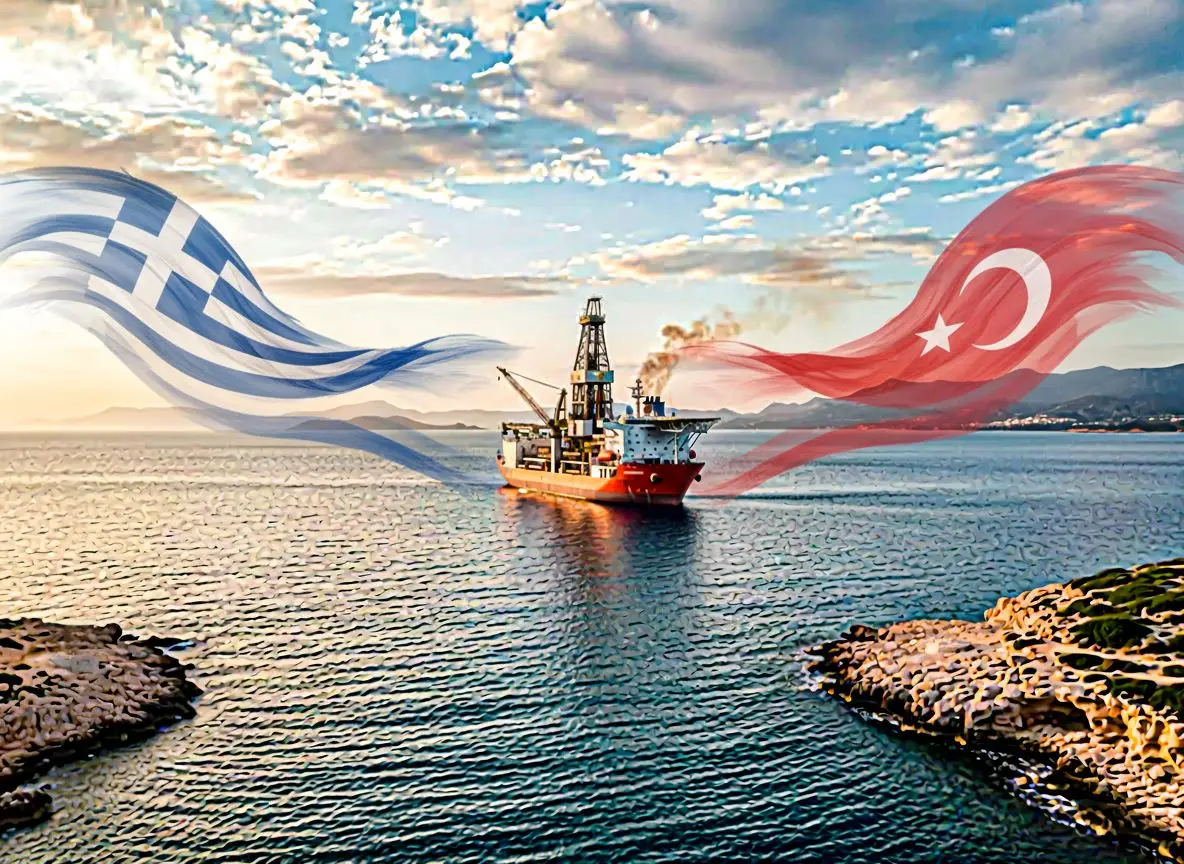
Greece and Turkey appear to be pursuing their ambitions in the offshore market, either through key partnerships with the U.S. or by exploring opportunities in Somalia. Both countries are very active and striving for success as they explore various possibilities. The question remains whether they can consider collaboration for a better future or if they will continue to engage in disputes. Only time will reveal their true intentions. Both governments are committed to achieving their plans and objectives in the oil and gas sector.
For more maritime news, please follow this link
Turkey’s Global Leap: The Somalia Mission
On February 15, 2026, Turkey marked a historic milestone in its “Africa Opening Strategy.” The deep-sea drillship Çağrı Bey—the newest addition to what is now the world’s fourth-largest exploration fleet—departed from the port of Taşucu for the coast of Somalia.
The Somalia-Turkey Energy Corridor
This deployment is the result of a comprehensive 2024 agreement that granted Turkey significant rights to explore and produce hydrocarbons in Somali waters.
- The Fleet: The Çağrı Bey is escorted by three Turkish naval warships to protect the workers on the drilling ships from Somali pirates. A clear signal of Ankara’s intent to protect its technical assets and sovereign interests abroad.
- The Target: Drilling is scheduled to commence in April 2026 at the Curad-1 well, located approximately 370 kilometres off the coast of Mogadishu.
- Economic Stakes: Reports indicate the deal allows Turkey to recover a significant portion of its costs through a production-sharing arrangement, with estimates of untapped reserves in the region reaching up to 30 billion barrels.
Greece’s Strategic Deepwater Alliance with Chevron
While Turkey looks toward the Indian Ocean, Greece is cementing its role as the European Union’s energy gateway by welcoming Chevron into its territorial waters. On February 16, 2026, a consortium led by the U.S. energy giant signed exclusive lease agreements for four massive offshore blocks
Doubling the Exploration Footprint
The deal with Chevron (70% operator) and its local partner Helleniq Energy (30%) effectively doubles Greece’s offshore acreage available for exploration.
| Exploration Block | Location | Water Depth | Total Area |
| South Crete 1 & 2 | South of Crete | Ultra-Deepwater | ~47,000 km² |
| South of Peloponnese | Ionian Sea | Ultra-Deepwater | (Combined) |
| Block A2 | Peloponnese | Deepwater | (Combined) |
Regional Energy Security
Prime Minister Kyriakos Mitsotakis described the agreement as a “giant leap” toward energy sovereignty. The goal is two-fold:
- Vertical Gas Corridor: Linking potential domestic discoveries to the existing pipeline network to supply Southeast Europe.
- Reducing Dependency: Replacing Russian gas imports with Mediterranean-sourced energy, aligned with EU energy diversification goals.
Technical and Geopolitical Challenges
The offshore activities of both nations face significant hurdles, ranging from extreme physics to delicate diplomacy.
1. Ultra-Deepwater Engineering
The Greek blocks, particularly those south of Crete, involve water depths exceeding 1,500 meters. Extracting gas from these depths requires advanced subsea infrastructure and specialised vessels capable of handling immense hydrostatic pressure
2. The “Sour Gas” and Environmental Factor
Much like the Kashagan field in the Caspian, new Mediterranean and East African wells often contain high levels of $CO_2$ and $H_2S$. This necessitates specialised metallurgical treatments for pipelines to prevent corrosion.
3. Diplomatic Thaw or Tactical Pause?
Interestingly, the 2026 drilling campaigns are proceeding amid a period of “structured dialogue” between Athens and Ankara. While territorial disputes over the Aegean continental shelf remain unresolved, both nations appear to be focusing their energy efforts in areas where their claims are either clearer or supported by international agreements (like the Turkey-Somalia deal).
Summary of Offshore Fleet Capabilities (2026)
| Country | Key Drillships | Primary Focus | Strategy |
| Turkey | Çağrı Bey, Abdülhamid Han, Fatih | Somalia, Black Sea, Libya | Independent & Global Operations |
| Greece | (Consortium-led rigs: Stena IceMAX) | Crete, Ionian Sea | Partnerships with ExxonMobil & Chevron |
Sources
- Ministry of Energy and Natural Resources (Turkey) – 2026 Deployment Brief.
- Hellenic Hydrocarbons and Energy Resources Management Company (HEREMA).
- Chevron Corporation Mediterranean E&P Reports.
- OPEC and IEA Regional Outlooks 2026.