

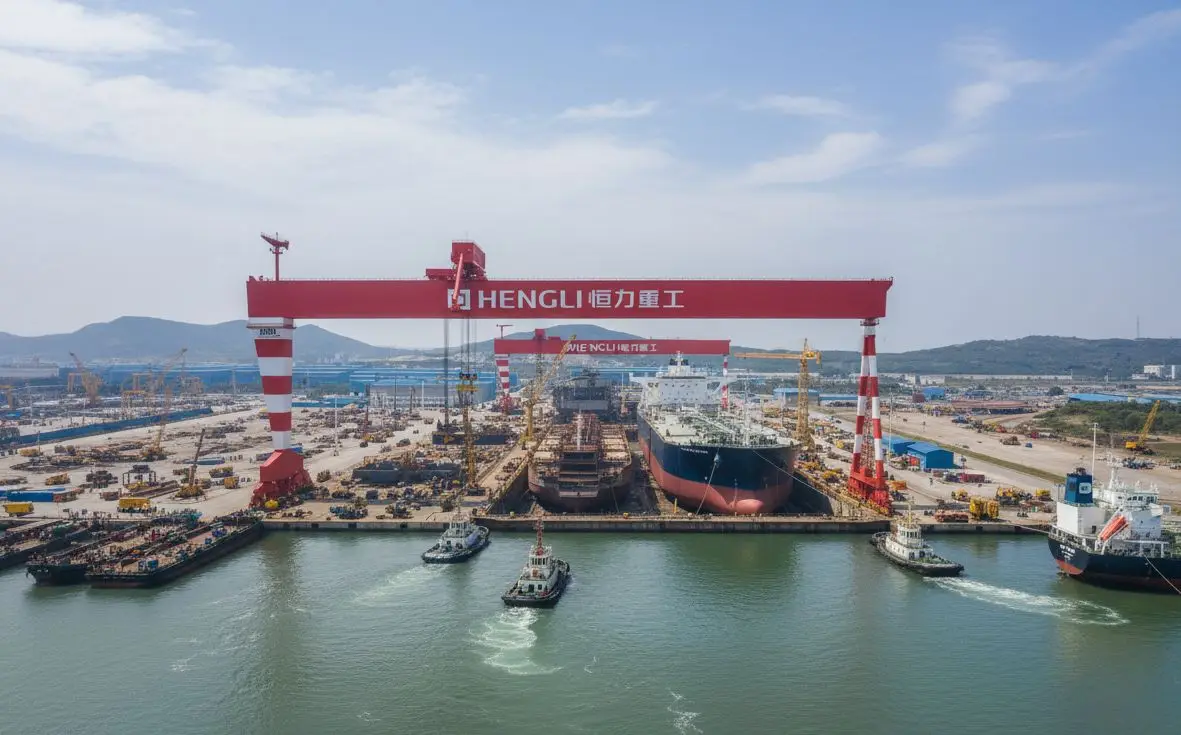
Chinese shipbuilding is experiencing good times with a record number of new orders in the last two months. In fact, many maritime executives cannot remember any country, including China, winning so many vessel orders.
“The main question is, “Can they deliver all these ships?” If they manage to do it, it will be a miracle.”
As the maritime industry steps into 2026, Chinese shipbuilding has emerged as the dominant force steering a global market rebound. Following a challenging 2025 that saw significant declines in newbuilding activity, the momentum documented by iMarine News reveals a sector revitalised—largely due to China’s overwhelming lead in vessel orders.
A Strong Rebound After a Difficult Year
The year 2025 was defined by contraction. Total new shipbuilding orders fell to 56.43 million CGT from 76.78 million CGT the previous year, marking a steep 27% decline. Vessel orders dropped from 3,235 to 2,036, reflecting widespread caution among shipowners dealing with economic unpredictability and shifting energy markets. [imarinenews.com]
However, by early 2026, the story is drastically different. From January 1 to February 16, global shipyards announced 366+68 new vessel orders, signalling a revitalisation across several shipping segments. This resurgence forms the backdrop for the most notable development of the year so far: the decisive rise of Chinese shipbuilding as the industry’s global leader. [imarinenews.com]
Chinese Shipbuilding Dominates Global Orders
Chinese shipbuilders have outpaced international competitors by extraordinary margins. In the first six weeks of 2026, they secured 280+49 new ship orders, representing approximately 76.5% of all confirmed global orders. By contrast, South Korea accounted for 47+10 orders (12.8%), while Japan and other nations shared 39+9 orders (10.7%). [imarinenews.com]
This commanding lead highlights the competitive strength of Chinese shipbuilding, which has expanded its capabilities to excel across multiple vessel categories. The gap between Chinese and South Korean shipyards—233+39 vessels—is particularly striking, showcasing China’s growing dominance at the start of the Year of the Horse. [imarinenews.com]
Container Ships: The Engine of Growth
Container ships remain the core of global order activity. Out of 122+6 container ship orders placed during the reporting period, Chinese shipyards captured 114+4—an overwhelming majority that solidifies China’s leadership in this segment. South Korea claimed only 8+2 orders. [imarinenews.com]
This surge demonstrates the manufacturing scale, efficiency, and advanced environmental technologies now associated with Chinese shipbuilding, making China the preferred choice for global carriers seeking fleet modernization and compliance with decarbonization regulations.
LNG Carriers Return to Center Stage
After a slow 2025, LNG carrier demand has accelerated. In early 2026, 22+7 LNG carrier orders were reported—equal to around 59% of the previous year’s total LNG orders. Chinese shipbuilders secured 13+5 of these vessels, while South Korean yards received 9+2. [imarinenews.com]
The growing share of LNG carrier construction underscores the rapid advancement of Chinese shipbuilding in high‑technology, high‑value sectors once dominated by South Korea.
VLCC Demand Surges
Very Large Crude Carriers (VLCCs) have also seen renewed interest. A total of 42+1 VLCC orders have been placed—already reaching 70% of 2025’s total. Chinese shipyards claimed 38+1 of these contracts, while South Korea and Japan secured just four orders combined. [imarinenews.com]
The strong VLCC performance further cements Chinese shipbuilding as the dominant global force, especially in large-tonnage markets that traditionally signal stronger long‑haul crude trade expectations.
Bulk Carriers Lag Behind
Despite the upward trend in other segments, bulk carrier orders remain muted. Market uncertainties and slowed industrial demand have led shipowners to adopt a cautious stance in this category. [imarinenews.com]
Why Chinese Shipbuilding Is Surging Ahead
Several strategic advantages underpin China’s extraordinary early‑2026 momentum:
1. Unmatched Production Capacity
China operates the world’s largest and most modernized network of shipyards, enabling vast production volumes and rapid delivery schedules.
2. Rapid Technological Advancement
Chinese yards have closed the gap in advanced vessel segments, particularly LNG carriers, methanol-ready ships, and other alternative-fuel designs.
3. Highly Integrated Supply Chains
A comprehensive domestic supply chain—from steel production to marine engines—gives Chinese shipbuilding a major cost and timing advantage.
4. Competitive Pricing
China offers attractive pricing without compromising quality—an essential factor as operators balance tight financial environments with carbon‑compliant fleet upgrades.
A Reshaped Global Shipbuilding Landscape
The trends observed in early 2026 suggest a significant realignment of the global shipbuilding hierarchy. South Korea remains a strong competitor, particularly in niche technologically complex vessel types, yet China’s rapid advances and overwhelming volume advantage signal a widening divide. Japan’s continued decline in market share reflects growing structural challenges and limited modernization progress.
As reported by iMarine News, the strength of Chinese shipbuilding at the outset of 2026 represents more than a cyclical recovery. It marks a pivotal shift—one in which China is not only sustaining its position as the world’s largest shipbuilder but increasingly asserting itself as the leader in advanced, energy‑efficient, and next‑generation vessel production. [imarinenews.com]
