

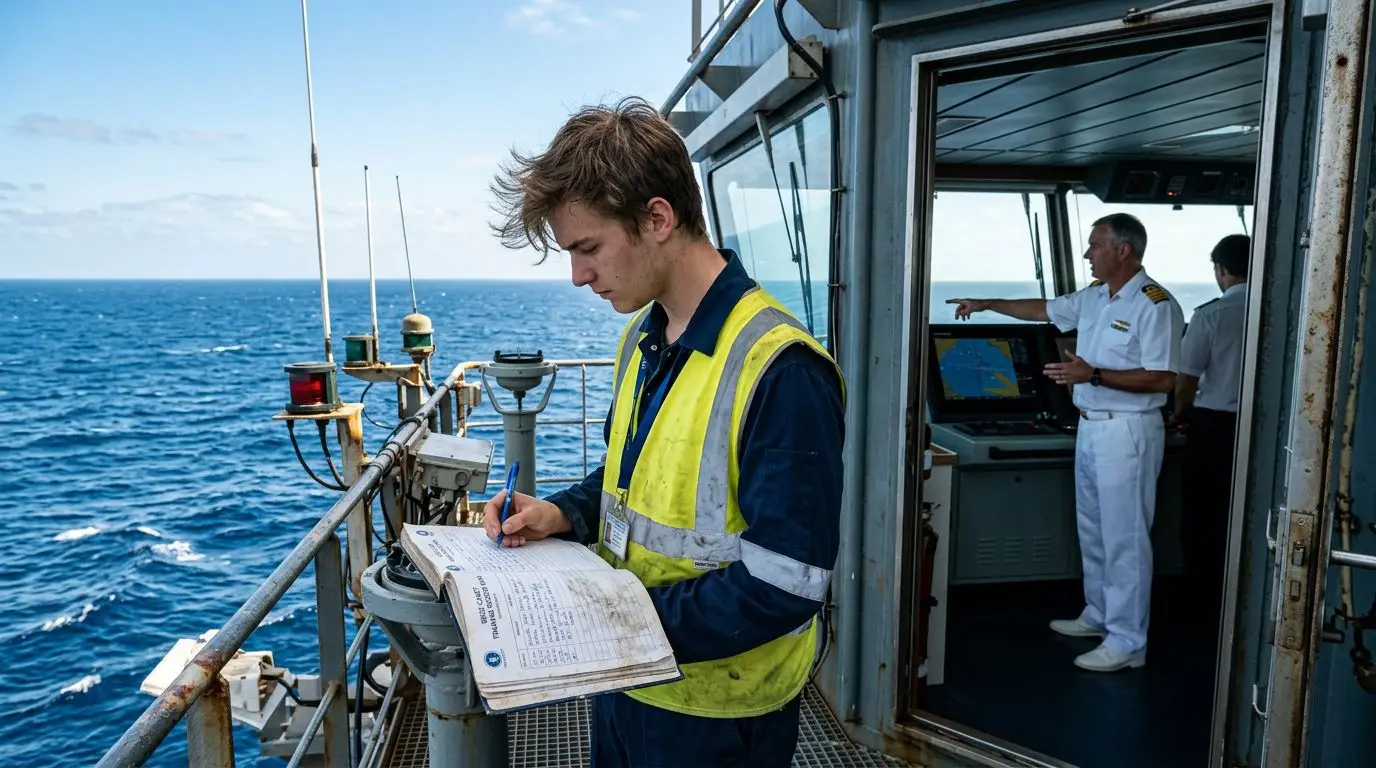
Moving from a deck cadet to a certified Third Officer is one of the most exciting yet challenging parts of a maritime career. It is the moment you stop being a student and start being a professional responsible for lives, cargo, and a multi-million dollar vessel. However, many aspiring officers find themselves stuck in the “cadet phase” much longer than they planned.
Often, the delay isn’t because the cadet lacks the brains or the books. It happens because of small, avoidable mistakes in how they act and work on board. If you want to trade your cadet stripes for an officer’s license on schedule, you need to understand exactly what Captains and Chief Officers are looking for. They aren’t just looking for someone who can paint a deck; they are looking for a future colleague they can trust.
Here is a deep dive into the most common mistakes that delay promotion, along with the specific steps you can take to avoid them.
1. The “Wait and See” Attitude
The most common trap for a cadet is being too passive. On a modern ship, the workload is intense. Officers are busy with complex navigation, endless paperwork, and cargo planning. If you stand in the corner of the bridge waiting for someone to tell you exactly what to do every minute, you appear unmotivated.
The Mistake: Waiting for orders for every small task. This makes you look like a “passenger” rather than a trainee officer.
How to Avoid It:
You must show initiative. Initiative doesn’t mean doing dangerous things without permission; it means being one step ahead of the daily routine.
- On the Bridge: Don’t just stare out the window. If you see the Officer of the Watch (OOW) preparing to plot a position, have the tools ready. If the weather is changing, ask whether you should adjust the radar settings or check the heavy-weather checklist.
- On Deck: If you know the ship is arriving in port tomorrow, don’t wait for the Bosun to tell you to prepare the mooring lines. Ask, “Should we start clearing the decks for arrival?”
When you show initiative, you signal to the Captain that you are thinking like an officer. This builds the trust necessary for a positive promotion recommendation.
2. Neglecting the Training Record Book (TRB)
Your Training Record Book is the most important document you carry. It is the only physical proof of your progress. A very common mistake is treating the TRB like a chore that can be finished in the last week of a contract.
The Mistake: Leaving the TRB blank for months and then rushing to get signatures before signing off.
How to Avoid It:
A rushed TRB is easy to spot. It usually has messy handwriting, missing dates, and “faked” descriptions. If a Captain sees a messy book, they assume your work on the bridge will be just as messy.
- Set a Weekly Goal: Aim to complete three to five tasks every single week. This keeps the workload manageable and ensures the information is fresh in your mind.
- The “Immediate Signature” Rule: Never wait. If you just finished a lifeboat drill, go to the officer in charge immediately and ask for a signature while the event is still fresh.
- Quality Over Quantity: When you describe a task, don’t just write “I did it.” Draw a small sketch of the fire main system or explain the specific steps you took to test the emergency steering. This shows genuine understanding.
3. Poor Communication and “Bridge Presence“
The bridge is a high-pressure environment. In a busy shipping lane, clear communication is the difference between safety and a disaster. Many cadets fail to promote because they are too shy or use “lazy” language.
The Mistake: Being too quiet, using “maybe” or “I think,” and failing to use “Closed-Loop Communication.”
How to Avoid It:
You need to develop “Bridge Presence.” This means being a clear and confident part of the team.
- Master Closed-Loop Communication: If an officer says, “Change course to 090 degrees,” don’t just say “Okay.” Repeat the order back exactly: “Course 090 degrees, sir.” Once the task is done, report back: “Course is now 090 degrees, sir.”
- Be Early: In the maritime world, “on time” is late. Always arrive 10 to 15 minutes early for your watch. Use this time to check the weather, look at the traffic on the radar, and read the Captain’s Standing Orders.
- VHF Radio Skills: Listen to how the officers speak on the radio. Practice your “Standard Marine Communication Phrases.” When you can report a target clearly over the radio, the OOW will feel much more comfortable letting you handle more complex tasks.
4. Failing to Master the Equipment
We live in an era of “Electronic Navigation.” While traditional skills are important, an officer must be an expert in the electronics on the bridge. A cadet who cannot operate the ECDIS (Electronic Charts) or the Radar is a liability, not an asset.
The Mistake: Using the equipment but not truly understanding how it works or how to fix it when it goes wrong.
How to Avoid It:
Use your “quiet” watches at night to learn.
- The Manual is Your Friend: Pick one piece of equipment—like the GMDSS radio or the AIS—and read the manual for 20 minutes. Learn what every button and menu does.
- Independent Operation: Aim for the day when you can set up the radar or update the electronic charts without asking for help. When an officer sees you operating the equipment independently and safely, they will know you are ready for the Third Officer’s chair.
5. Overlooking the “Safety Culture“
Safety is the number one priority at sea. Some cadets treat safety drills as a boring break from work. This is a massive red flag for senior officers. If you don’t care about safety, they cannot trust you with the lives of the crew.
The Mistake: Showing up late for drills, not wearing the right PPE (Personal Protective Equipment), or not knowing where safety gear is located.
How to Avoid It:
Be the person who takes safety more seriously than anyone else.
- Know the Ship: Within your first week, you should know the location of every fire extinguisher, life jacket, and emergency exit on the ship by heart.
- Lead by Example: Even if you see a senior rating not wearing safety glasses, you should wear yours. It shows that you have the discipline required to be an officer.
- Be Active in Drills: During a fire drill, don’t just stand there. Ask the Safety Officer if you can help prepare the equipment or keep the log.
6. Poor Relationships and Reputation
The maritime industry is surprisingly small. People talk, and your reputation will often arrive at a new ship before you do.
The Mistake: Being disrespectful to the ratings (deckhands) or being “above” doing hard physical work.
How to Avoid It:
To be a good leader (an officer), you must first be a good follower.
- Respect the Crew: The Bosun and the able seamen often have 20 years of experience. Even though you are training to be their boss, you should learn from them. Treat them with respect, and they will help you learn the practical side of the ship much faster.
- Seek Feedback: Once a month, ask your supervising officer: “What are the three things I need to improve on most?” This shows a level of maturity that is very rare. It tells them you are focused on growth, not just getting a paycheck.
Summary Checklist for Promotion
| Goal | Action Step |
| Initiative | Anticipate the next task before being asked. |
| Documentation | Complete 3-5 TRB tasks every single week. |
| Communication | Always use “repeat-back” for every order. |
| Knowledge | Learn one new piece of bridge equipment per week. |
| Professionalism | Arrive 10 minutes early and keep a tidy uniform. |
Conclusion
Your cadetship is not just a training phase; it is a long-term job interview. Every time you step onto the bridge or the deck, you are showing your seniors whether you are a “cadet for life” or a “future Captain.”
By avoiding the traps of passivity, poor paperwork, and weak communication, you make it very easy for the Captain to give you that vital recommendation. Stay focused, stay disciplined, and remember that the hard work you put in now will pay off the moment you finally put on those Third Officer stripes.he ranks much faster.
