
First Commercial Bunkering of Ammonia Completed: A New Era for Green Shipping
The global maritime industry has reached a historic turning point in its quest for sustainability.
On April 23, 2026, the successful completion of the world’s first commercial ammonia bunkering operation at Ulsan Port marked a definitive Ammonia Bunkering Milestone. This achievement, involving the delivery of clean ammonia to a state-of-the-art Exmar vessel, demonstrates that the infrastructure for zero-carbon maritime fuel is no longer a distant vision but a reality.
As the industry navigates the complexities of the energy transition, this event serves as a blueprint for future decarbonization efforts worldwide.
The Strategic Significance of the Ammonia Bunkering Milestone
The operation at Ulsan Port represents the first time a commercial vessel has been refuelled with ammonia via a port-to-ship (PTS) method.
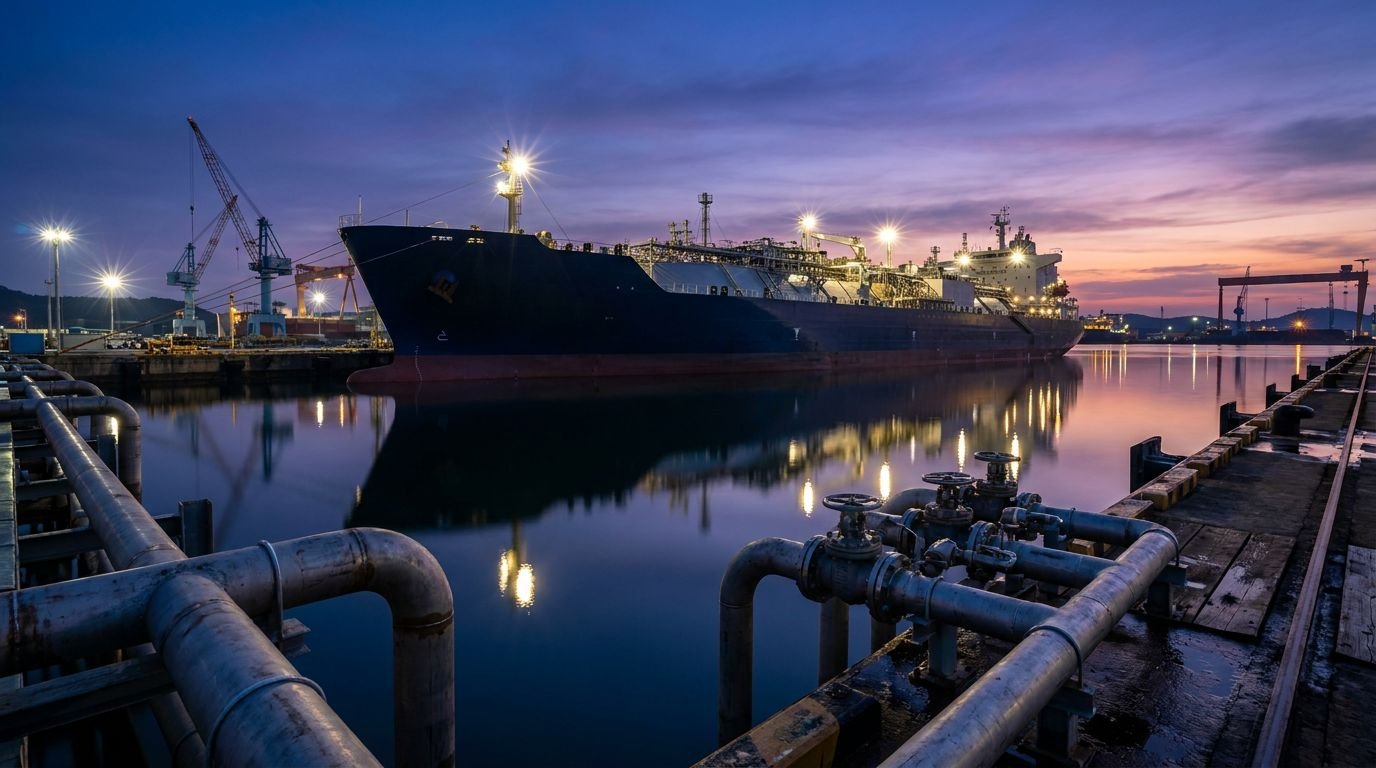
The newly delivered vessel, the ANTWERPEN, is a 45,000-cubic-meter mid-size gas carrier (MGC) operated by Exmar and built by Hyundai Heavy Industries. Exmar ammonia bunkering operation saw the transfer of approximately 600 tons of clean ammonia, proving that large-scale handling of this toxic yet promising fuel can be managed safely in a busy industrial port.

Naming ceremony-Source Exmar
Ulsan Port’s success is not an isolated event but the result of years of meticulous planning. The Ulsan Port Authority (UPA) has systematically built its reputation as a multi-fuel hub, having already demonstrated capabilities in LNG and methanol bunkering. By adding ammonia to its portfolio, Ulsan has solidified its position at the forefront of maritime decarbonization technology, offering shipowners the flexibility they need to invest in next-generation fleets.
Exmar and the Rise of Green Ammonia Shipping
Exmar has long been a pioneer in the gas transportation sector, and its commitment to green ammonia shipping is a natural extension of its expertise. The ANTWERPEN and its sister vessel, the ARLON, are the world’s first ocean-going ammonia dual-fuel MGCs. These ships feature specialised WinGD engines designed to burn ammonia, which can reduce CO2 emissions by up to 90% compared to traditional diesel-powered vessels.
The adoption of ammonia is particularly attractive for deep-sea shipping because it contains no carbon atoms. Unlike hydrogen, which requires extreme cryogenic temperatures, or methanol, which still contains carbon, ammonia offers a high energy density and a relatively straightforward storage profile. However, the transition to such advanced systems requires a highly skilled workforce capable of managing the unique seafaring and life-at-sea challenges associated with toxic fuel handling and high-tech engine rooms.
Safety Standards and Port Infrastructure
One of the greatest hurdles to the widespread adoption of ammonia is its toxicity. A single leak can be hazardous to both the crew and the marine environment. To address this, the Ulsan port bunkering operation was conducted under rigorous safety protocols, with the Ministry of Oceans and Fisheries, the Ulsan Fire Department, and the Korean Register involved.
Key safety features integrated into the Exmar vessels and the Ulsan infrastructure include:
– Double-walled piping and advanced gas detection systems to prevent and identify leaks.
– Specialized “deck tanks” that hold fuel separately from the main cargo.
– Shaft generators that allow the vessel to generate electrical power while sailing on ammonia, reducing the need for auxiliary engines.
– Comprehensive crew training programs focused on PPE and emergency response for ammonia handling. These measures ensure that the industry complies with the interim guidelines set by the International Maritime Organisation (IMO) while the official regulatory framework for ammonia as a fuel continues to evolve.
Ulsan Port: A Global Hub for Maritime Decarbonization Technology
The success of the Ulsan port bunkering trial is a testament to the power of public-private partnerships. The project brought together fuel suppliers such as Lotte Fine Chemical, shipbuilders such as HD Hyundai, and operators such as Exmar and HMM. This collaborative approach is essential for overcoming the “chicken and egg” dilemma of the energy transition, where shipowners are reluctant to build vessels without bunkering infrastructure, and ports are hesitant to build infrastructure without vessel demand.
By successfully demonstrating the PTS method, Ulsan has shown that existing petrochemical infrastructure can be adapted for the bunkering market. The proximity of Ulsan’s industrial complex to its quays enabled a direct transfer from land-based tanks to the ship, a method often more efficient and cost-effective than ship-to-ship bunkering in the early stages of fuel adoption.
Charting a Course for Zero-Carbon Trade
The successful fueling of the ANTWERPEN is more than just a technical trial; it is a signal to the global market that the path to zero-carbon maritime fuel is open. As more shipowners look toward 2030 and 2050 decarbonization targets, the lessons learned from this Ammonia Bunkering Milestone will be invaluable.
While challenges remain—particularly in scaling “green” ammonia production from renewable energy—the technology to burn and bunker this fuel is now proven. With leaders like Exmar and forward-thinking hubs like Ulsan Port paving the way, the maritime industry is well-positioned to transition from being one of the hardest-to-abate sectors to a champion of the global green economy. The era of ammonia-powered shipping has officially begun, promising a cleaner, more sustainable future for global trade.
