

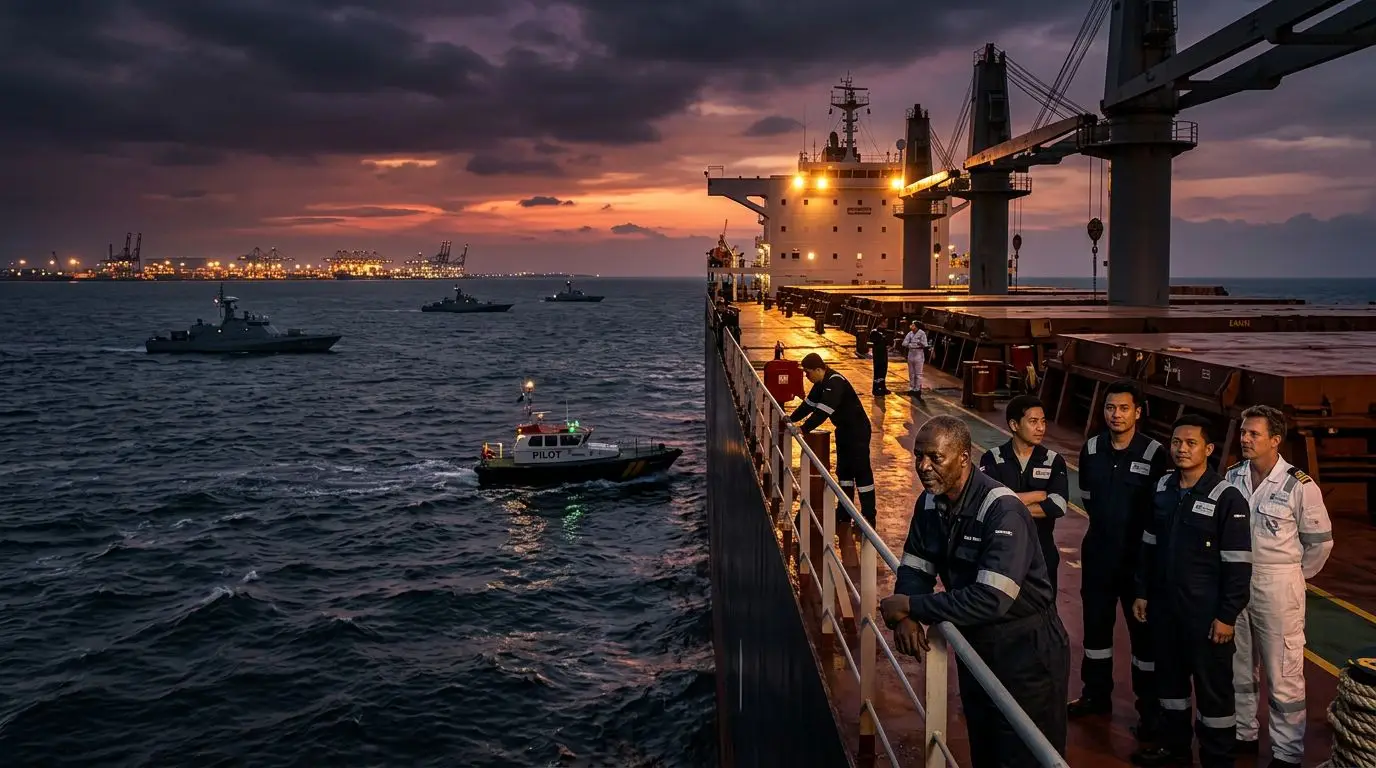
Navigating Maritime Crew Change Challenges in a Volatile Geopolitical Landscape
The global shipping industry is the lifeblood of international trade, but its operational success relies entirely on the people behind the machinery.
In recent years, maritime crew change challenges have escalated significantly due to shifting geopolitical tensions and regional conflicts. From the blockade in the Strait of Hormuz to ongoing tensions in the Black Sea and South China Sea, seafarers often find themselves caught in the middle of state-level disputes. These disruptions do more than delay cargo; they create a logistical and humanitarian crisis that threatens the stability of the entire global supply chain.
The Impact of Geopolitical Maritime Security on Crew Rotations
As nations employ conflict as a primary mechanism for dispute resolution, the ocean has become a contested space. High-stakes geopolitical maritime security concerns now dictate where vessels can sail and, more importantly, where crews can safely embark or disembark. When a strategic chokepoint like the Strait of Hormuz is blocked, or under high-risk protocols, shipowners face the daunting task of managing seafarers who may be stuck on board for months past their contract end dates.
Current security threats include:
– Drone and missile attacks in high-traffic corridors like the Red Sea.
– State-sanctioned vessel seizures that put innocent crew members in legal limbo.
– GPS spoofing and electronic interference that compromise safe navigation. These security risks force shipping companies to implement dynamic risk assessment protocols. In some cases, ships are diverted thousands of miles around the Cape of Good Hope to avoid danger zones. While this may protect the vessel and cargo, it adds weeks to a voyage, further complicating rotation timing and increasing the burden on the mariners on board.
Addressing Maritime Travel Restrictions and Logistic Barriers
The technical side of global shipping logistics is struggling to keep pace with rapid political shifts. When a geopolitical crisis erupts, governments often respond with sudden maritime travel restrictions. These may include closing ports to certain flags, suspending visa processing for specific nationalities, or imposing strict security screenings that make the movement of personnel nearly impossible.
For instance, the Philippines, which provides a significant share of the world’s seafaring workforce, has previously halted deployments to certain high-risk zones. When major labour-supplying nations restrict movement, ship managers must scramble to find qualified replacements, often leading to a fragmented and overworked workforce. Effective logistics now requires constant monitoring of international law and port-specific regulations to ensure that a planned crew change doesn’t turn into a multi-week administrative nightmare.
Protecting Seafarer Repatriation Rights and Mental Health
At the heart of these operational hurdles is a profound human cost. Seafarer repatriation rights are protected under the Maritime Labour Convention (MLC), which mandates that shipowners are responsible for returning a mariner home at the end of their contract. However, when geopolitical barriers prevent a ship from reaching a safe port, these rights become difficult to enforce.
Prolonged time at sea, often in high-stress “war risk” zones, takes a severe toll on seafarer welfare and mental health. The isolation of life at sea is exacerbated by the fear of physical harm and the uncertainty of when they will see their families again. Industry experts emphasise that seafarers are not mere spectators to these global events; they are living through them under immense pressure.
Maintaining a resilient workforce requires:
– Guaranteed access to reliable communication and the internet to stay connected with family.
– Enhanced mental health support and counselling for those operating in conflict zones.
– Strict adherence to maximum hours of work and rest to combat fatigue-related accidents.
– Robust legal safeguards to prevent the criminalisation of seafarers during maritime incidents.
For those considering entering the industry, understanding these modern maritime careers or challenges is essential for long-term success and safety.
The Future of Crew Management in a Fragmented World
As we look toward the future, the shipping industry must move away from outdated, manual operational systems. Managing complex crew rotations through spreadsheets and fragmented communication is no longer viable in an era of rapid disruption. The adoption of AI-driven predictive scheduling and real-time risk assessment tools is becoming a competitive necessity rather than a luxury.
Digitalisation allows shipowners to anticipate delays and proactively adjust logistics before a crisis peaks. Moreover, industry-wide collaboration through organisations like the International Maritime Organisation (IMO) is vital to ensure that seafarers remain a priority in global policy discussions. We must recognise that the “human element” is the most critical asset in maritime trade.
Challenges
The maritime crew change challenges we face today are a direct reflection of a more volatile and protectionist world. Geopolitical tensions will likely continue to reshape trade routes and security protocols for years to come. However, by prioritising seafarer welfare and mental health and investing in advanced logistics technology, the industry can build a more resilient framework.
Protecting the rights and safety of the 1.9 million people at sea is not just an ethical obligation; it is a fundamental requirement for the continued movement of global commerce. As the industry adapts to this “new normal,” the focus must remain steadfastly on the humans in the loop who keep the world’s economy afloat.
