

Synopsis
Technological Milestone: Fincantieri has delivered Four Seasons I, the inaugural vessel of the “Navis Sapiens” program, integrating AI and real-time data for optimized operations.
Strategic Collaboration: The vessel’s digital architecture was developed by Fincantieri Ingenium, a joint venture between Fincantieri NexTech and Accenture.
Bespoke Luxury: Designed for Marc-Henry Cruise Holdings, the yacht features 95 all-suite accommodations, offering significantly more living space per guest than industry competitors.
Operational Intelligence: The “intelligent” platform allows the ship to “learn” and adapt, ensuring it can integrate future technologies without disrupting the guest experience.
The Rise of the Smart Ship
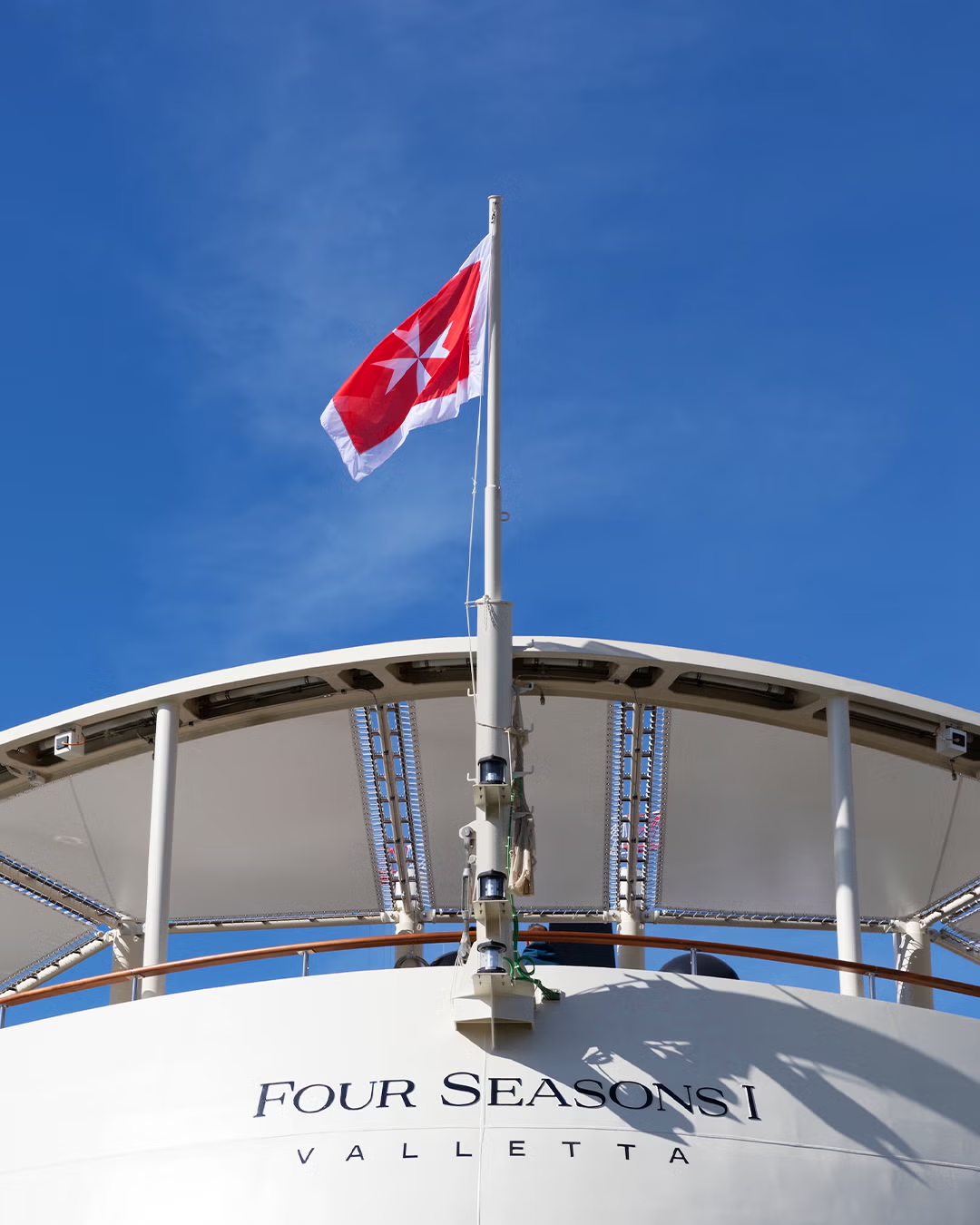
On February 25, 2026, the Italian shipbuilding giant Fincantieri officially delivered Four Seasons I at its Ancona shipyard. While the vessel marks a significant entry for the Four Seasons brand into the maritime hospitality sector, its true distinction lies beneath the surface. Fincantieri has designated the yacht as the world’s first “intelligent” ultra-luxury vessel, serving as the pilot unit for its ambitious Navis Sapiens program.
The Navis Sapiens framework represents a shift from traditional ship construction to a “system of systems” approach. By utilizing an integrated digital architecture, the vessel leverages artificial intelligence (AI) and real-time data streams to support safer, more efficient, and sustainable operations. This “digital intellect” enables the ship to learn and evolve throughout its lifecycle, adapting to the needs of both the operator and the guests.
Technical Specifications and Architecture
The Four Seasons I is a 34,000-gross-ton vessel measuring 207 meters in length. Despite its substantial size, it prioritizes exclusivity over capacity, featuring only 95 suites for a total occupancy of 222 guests.

Vessel Profile: Four Seasons I
| Feature | Specification |
| Gross Tonnage | 34,000 GT |
| Length | 207 meters (679 feet) |
| Decks | 15 (13 public) |
| Guest Capacity | 222 |
| Total Suites | 95 all-suite |
| Flagship Suite | Funnel Suite (457 sq. meters) |
The ship’s design, a collaboration between Tilberg Design of Sweden and Creative Director Prosper Assouline, focuses on a residential-style experience. Notable features include a 20-meter aft pool—one of the largest at sea—and a transverse marina that offers guests direct access to the ocean for watersports.
Engineering the “Navis Sapiens”
The delivery of Four Seasons I is a culmination of Fincantieri’s “Operations Excellence” program, which integrates automation, collaborative robotics, and augmented reality into the shipbuilding process. The Fincantieri Ingenium joint venture with Accenture was instrumental in developing the open, scalable digital design.
This architecture is designed to be “future-proof”. Unlike traditional vessels where technology upgrades often require invasive retrofitting, the Navis Sapiens platform allows for the seamless integration of new functionalities as they emerge. This ensures that the vessel remains at the technological forefront for decades without “weighing down” the luxury guest experience with visible hardware changes.
Strategic Implications for the Maritime Industry
The deployment of AI-driven vessels aligns with broader maritime trends toward digitalization and decarbonization. Fincantieri’s focus on technological distinctiveness is a core component of its strategy to lead the extra-luxury segment. By embedding AI into the core architecture, the ship can optimize fuel consumption, predict maintenance needs, and enhance navigational safety.
Pierroberto Folgiero, CEO of Fincantieri, noted that the vessel represents a “new paradigm” where technological excellence and bespoke luxury merge. This approach is not limited to the cruise sector; Fincantieri is applying similar digital innovations across its naval and offshore divisions to create “floating smart cities”.
The Four Seasons I integrates several layers of environmental technology, ranging from physical propulsion hardware to advanced AI-driven software designed for operational optimization.
The vessel’s environmental strategy is built on four primary pillars:
1. Advanced Propulsion and Power Grid
Unlike conventional cruise ships using fixed-speed engines, the Four Seasons I employs a diesel-electric power plant with four variable-speed engines provided by MAN, generating a total of 14.4 MW.
DC Distribution Grid: This is an unprecedented application in the cruise industry. By utilizing a direct current (DC) grid, the vessel can optimize fuel consumption across varying speeds and loads more effectively than traditional alternating current (AC) systems.
Fuel Efficiency: The variable-speed engines reduce emissions by operating at lower RPMs during periods of low load and responding rapidly to load changes.
Azimuth Pods: Propulsion is handled by two azimuth pods (7.2 MW total), which enhance hydrodynamic efficiency and maneuverability.
2. Digital Intelligence (Navis Sapiens)
The ship’s “intelligent” architecture is a central component of its sustainability profile.
AI Optimization: The AI-driven systems monitor and optimize energy use, navigation, and maintenance schedules in real-time to minimize the environmental footprint.
Data-Driven Decisions: The platform collects data on energy consumption, weather conditions, and operational parameters (like HVAC) to make faster, more efficient decisions that reduce waste.
Future-Proofing: The open, scalable digital design allows the ship to integrate future green technologies—such as battery storage or alternative fuel systems—without requiring major structural overhauls.
3. Energy Conservation and Recovery
Fincantieri applied sophisticated Computational Fluid Dynamics (CFD) and scale-model testing to optimize the hull form, specifically aiming to reduce the propulsive power required at a service speed of 15 knots.
Waste Heat Recovery: The vessel features recovery systems, including enthalpy recovery units for the air, which reclaim energy from exhaust and ventilation systems.
HVAC Efficiency: High-efficiency variable frequency drives are installed for major electrical consumers like chiller units and thrusters to maximize performance at partial loads.
Solar Protection: The extensive use of glass in the guest suites is combined with state-of-the-art technology to reduce solar radiation and heat transfer, lowering the energy required for indoor cooling.
4. Marine Life and Waste Management
The vessel holds specific class notations for environmental protection.
Silent-E Notation: This certification ensures the ship remains below established underwater radiation noise levels, minimizing the disruption to marine life.
Shore Power: To eliminate emissions while docked, the yacht is equipped to connect to shore power (cold ironing) from both the starboard and port sides.
Waste and Water: The design includes advanced water, waste, and air emissions management systems, alongside a commitment to eliminate single-use plastics and prioritize sustainable materials in construction.
Environmental Technology Comparison
| Technology | Function | Environmental Benefit |
| Variable-Speed Engines | Adjusts RPM to match load | Optimized fuel consumption & lower emissions |
| DC Distribution Grid | Modernized power distribution | Higher system efficiency than AC grids |
| Enthalpy Recovery | Recycles heat/moisture from air | Reduced energy demand for HVAC |
| Navis Sapiens AI | Real-time energy monitoring | Predictive efficiency and lower carbon footprint |
| Silent-E Design | Underwater noise reduction | Protection of marine biodiversity |
Future Outlook
Four Seasons I is scheduled to embark on its maiden voyage in the Mediterranean in late March 2026 before repositioning to the Caribbean. The vessel is the first of a planned fleet, with a second ship currently under construction and scheduled for delivery in 2027.
As the industry watches the performance of the first Navis Sapiens unit, the success of this “intelligent” yacht may dictate the pace of AI adoption across the global merchant and cruise fleets. For now, Fincantieri has successfully demonstrated that the future of luxury yachting is as much about data and software as it is about steel and service.
