
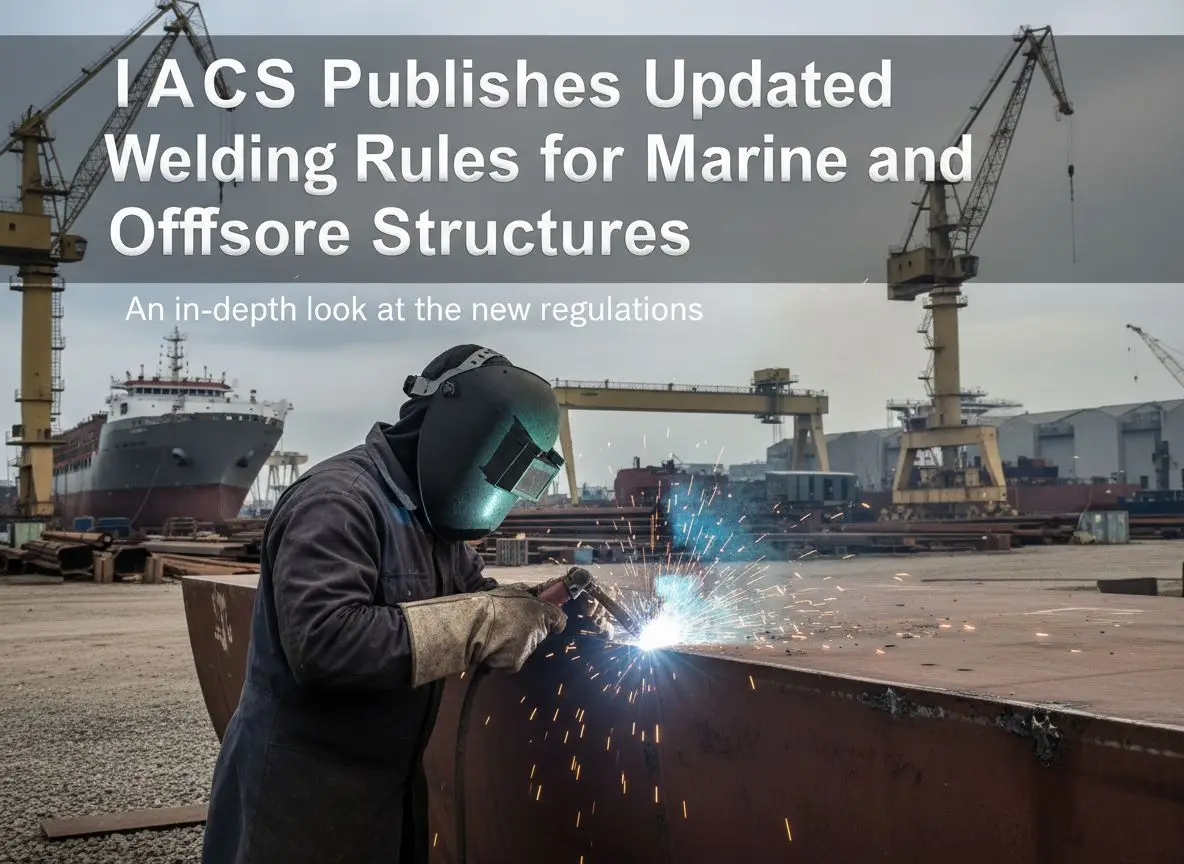
The International Association of Classification Societies (IACS) has published updated welding rules for marine and offshore structures, introducing revised technical requirements to improve structural integrity, construction quality, and safety across shipbuilding and offshore fabrication projects.
The updated rules reflect advances in welding technology, materials engineering and fabrication practices, as well as lessons learned from operational experience and structural failure investigations. They are expected to have a direct impact on shipyards, offshore fabricators, shipowners, designers, welding contractors and classification surveyors worldwide.
Strengthening Welding Standards Across the Maritime Sector
Welding remains one of the most critical processes in the construction of ships and offshore structures, directly affecting fatigue performance, structural reliability, and lifecycle safety. IACS’ latest revisions seek to ensure that welding standards remain aligned with modern vessel designs, the increased use of high‑strength steels, and more complex offshore installations.
The updated rules cover a wide range of topics, including:
- Qualification and approval of welding procedures (WPS)
- Requirements for welder and welding operator qualification
- Material and consumable compatibility
- Control of welding parameters and heat input
- Inspection, testing and acceptance criteria for welded joints
By harmonising these requirements across its member societies, IACS aims to maintain a consistent global baseline for welding quality in both newbuilding and offshore construction.
Key Focus Areas in the Updated Rules
One of the central themes of the revised welding rules is improved control over fatigue‑critical welded details, particularly in high‑stress areas such as hull girder connections, offshore support structures and dynamically loaded components.
The revised framework places greater emphasis on:
- Welding of higher‑strength and thicker steels, which are increasingly common in large container ships, LNG carriers and offshore platforms
- Better definition of requirements for automated and semi‑automated welding techniques, reflecting the growing use of robotics and digitally controlled processes
- Clearer guidance on repair welding, including acceptance criteria and documentation
- Enhanced alignment with non‑destructive testing (NDT) practices
These changes are designed to reduce the risk of defects that may only become evident after a vessel enters service.
Impact on Shipyards and Offshore Fabricators
For shipyards and offshore fabrication yards, the updated IACS welding rules mean a renewed focus on process control, documentation and compliance.
Yards may need to:
- Review and, where necessary, update existing WPS documentation
- Re‑qualify welding procedures or personnel in line with revised criteria
- Ensure closer coordination between design offices, production teams and quality departments
While the changes may introduce additional short‑term compliance work, industry sources note that improved welding consistency can lead to lower rework rates, fewer inspection findings and reduced lifecycle maintenance costs.
Implications for Shipowners and Project Developers
For shipowners and offshore project developers, the updated rules provide reassurance that vessels and structures built under the revised IACS framework will benefit from higher, more uniform construction standards.
This is particularly relevant for assets designed for long service lives in harsh operating environments, such as:
- Offshore wind installation vessels
- Floating production units
- Ice‑class vessels and Arctic‑capable ships
- Gas carriers and large container ships
Stronger welding standards may also support better outcomes in class surveys, insurance assessments and long‑term asset valuations.
Alignment with Safety, Sustainability and Regulation
The updated welding rules dovetail with wider industry efforts to improve safety and sustainability across the maritime sector. Poor welding quality can contribute to structural failures, unplanned downtime and increased repair‑related carbon emissions over a vessel’s lifetime.
By improving weld integrity from the construction phase, the rules support:
- Enhanced structural safety
- Reduced need for corrective repairs
- More efficient lifecycle management
They also complement evolving regulatory and class requirements for new fuels, offshore renewable energy structures, and increasingly complex ship designs.
Implementation and Compliance Timeline
IACS member classification societies are expected to incorporate the updated welding rules into their respective class regulations, with defined effective dates for new projects. Stakeholders are advised to review the changes closely and engage early with classification societies to clarify transitional arrangements and applicability.
Projects already under construction may be subject to specific grandfathering provisions, while new contracts are likely to reference the updated standards directly.
Looking Ahead
The publication of the updated welding rules underscores IACS’ ongoing role in setting globally harmonised technical standards for the maritime and offshore industries. As vessel designs continue to evolve and construction techniques become more advanced, welding quality will remain a cornerstone of the safe and reliable performance of ships and offshore structures.
For industry stakeholders, early engagement and proactive compliance with the revised rules will be key to avoiding delays, ensuring quality, and maintaining competitiveness in an increasingly regulated, technically demanding market.