

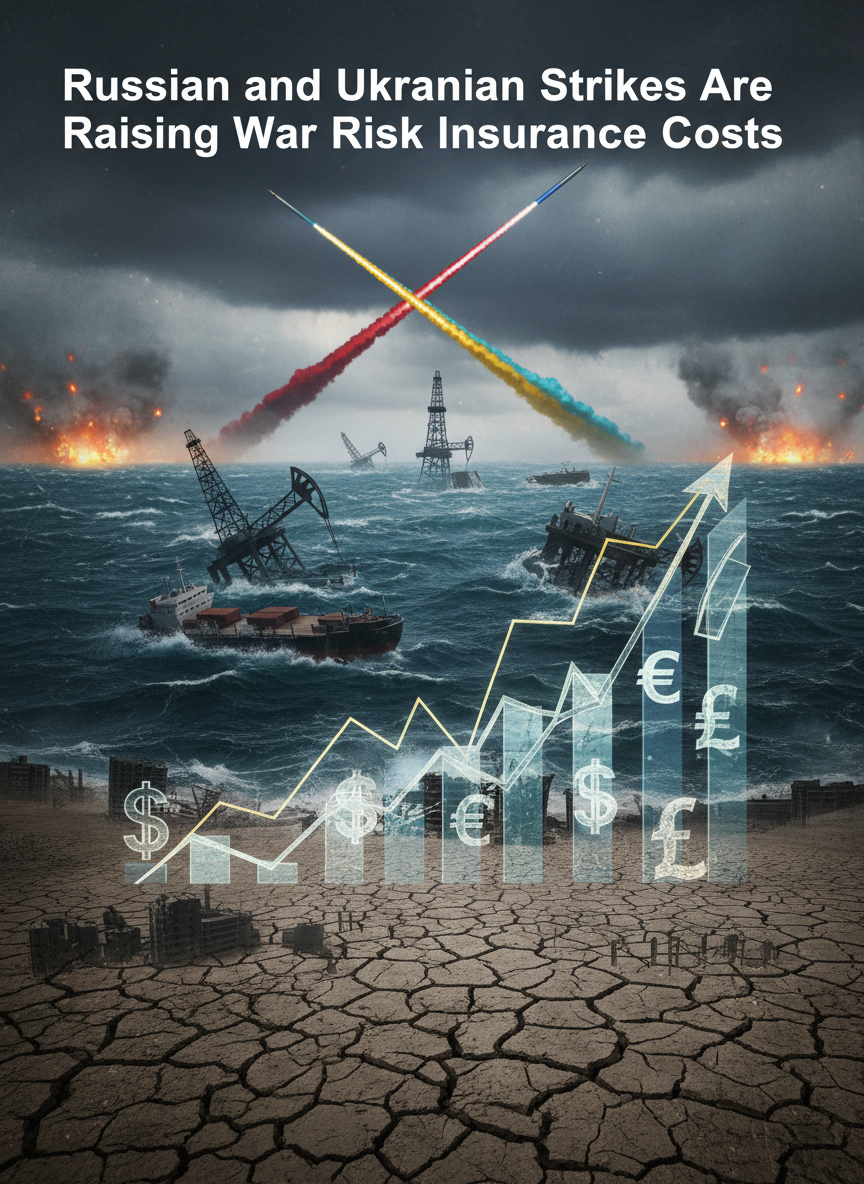
The maritime industry is once again facing heightened uncertainty as the conflict between Russia and Ukraine intensifies in the Black Sea region. Recent strikes on commercial vessels and port infrastructure have triggered a sharp rise in War Risk Insurance premiums, creating significant financial and operational challenges for shipowners, charterers, and insurers alike.
Why War Risk Insurance Matters
War Risk Insurance is a specialised cover designed to protect vessels against losses arising from war-related perils, including acts of hostility, terrorism, and political unrest. For shipowners, this coverage is not optional when trading in conflict zones—it is a prerequisite for safeguarding assets and ensuring compliance with charter party obligations.
In stable times, premiums for war risk cover are relatively modest. However, when geopolitical tensions escalate, these costs can surge dramatically, reshaping voyage economics and influencing routing decisions. The Black Sea, a critical artery for global grain and energy shipments, has become the latest flashpoint.
Escalating Risks in the Black Sea
The past few months have seen a series of drone and missile attacks targeting tankers and port facilities on both sides of the conflict. Ukrainian naval drones recently struck Greek-owned tankers near the Caspian Pipeline Consortium terminal, while Russian forces have reportedly targeted grain carriers in Ukrainian waters. These incidents underscore the growing vulnerability of commercial shipping in the region.
The operational environment is fraught with hazards:
Direct attacks on vessels using drones and limpet mines.
Damage to port infrastructure, disrupting loading schedules.
Presence of naval mines and heightened military activity.
Such developments have prompted insurers to reassess risk profiles daily, rather than the traditional 48-hour review cycle. This volatility is now a defining feature of the Black Sea market.
Premiums Surge to Historic Highs
War Risk Insurance premiums for Black Sea port calls have climbed to approximately 1% of a vessel’s insured value, up from 0.6–0.8% just weeks ago. For a modern Suezmax tanker, this translates into an additional $800,000 per voyage purely for war risk cover. These figures represent the highest levels since 2023 and rival those seen during the Red Sea crisis in 2024.
Policies typically apply for seven-day periods, but underwriters are now imposing stricter conditions, including:
Daily reassessment of terms and pricing.
Enhanced due diligence requirements for vessel ownership and routing.
Selective capacity, with some insurers considering withdrawal from the market if risks escalate further.
Operational and Financial Implications
For shipowners and operators, the surge in War Risk Insurance costs is more than a line-item increase—it is a strategic challenge. Rising premiums affect freight rates, charter negotiations, and overall voyage profitability. In some cases, owners may opt to reroute vessels to avoid high-risk zones, incurring longer transit times and higher fuel costs.
Charterers, too, are feeling the pressure. Additional insurance costs are being passed down the supply chain, impacting commodity pricing and trade flows. Energy majors and grain exporters reliant on Black Sea routes face mounting uncertainty as insurers tighten terms.
Risk Management Strategies
In this volatile environment, proactive risk management is essential. Maritime executives should consider the following measures:
Engage early with brokers to secure coverage and manage pricing volatility.
Update threat assessments regularly, incorporating intelligence from local agents and security advisories.
Review contractual clauses related to war risk surcharges and deviation rights.
Explore alternative routes where feasible, balancing cost against safety.
Additionally, leveraging technology for real-time monitoring and adopting parametric insurance solutions can help mitigate exposure and streamline claims processes.
Looking Ahead
The trajectory of War Risk Insurance pricing will depend on the conflict’s evolution. If attacks on commercial shipping persist or expand to new areas, premiums could rise further, and coverage availability may tighten. Conversely, any diplomatic breakthrough could stabilise the market, though insurers are likely to maintain a cautious stance for the foreseeable future.
For maritime stakeholders, the message is clear: War Risk Insurance is no longer a marginal consideration—it is a core component of voyage planning and financial strategy in today’s geopolitical landscape. Staying informed, agile, and prepared will be key to navigating these turbulent waters.
