
Latest Developments: CGAS Saturn Incident
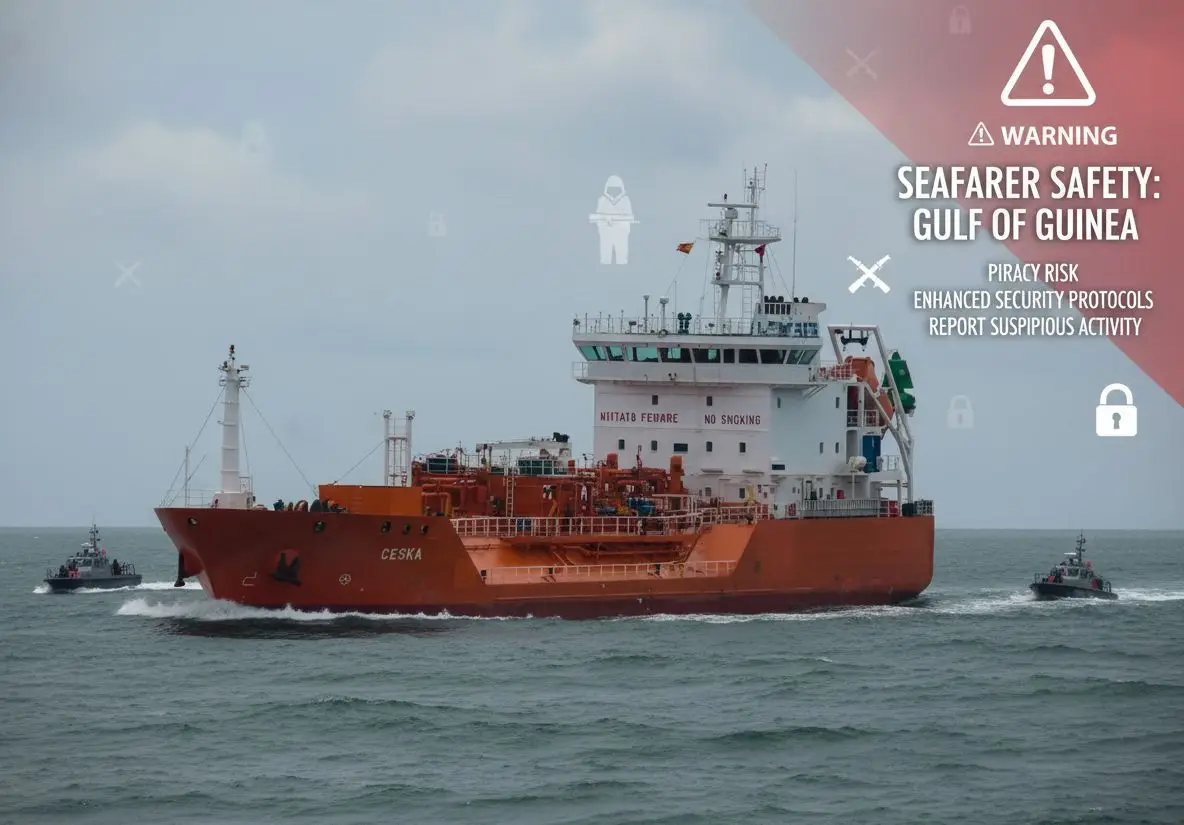
On 3 December 2025, the Portuguese-flagged LPG carrier CGAS Saturn was attacked by armed pirates about 50 nautical miles off Mbini, Equatorial Guinea. Nine of the 13 crew were abducted and taken ashore, while the rest navigated the vessel to safety.
After nearly a month in captivity, all nine seafarers were released on 29 December 2025 and have since undergone medical and psychological evaluations. They are now being repatriated. Christiania Gas, the vessel’s owner, thanked authorities and advisors for their support.
Further reading:
Why the Gulf of Guinea Remains High-Risk
Despite a decline in overall piracy incidents, the Gulf of Guinea remains one of the world’s most dangerous maritime zones. According to the International Maritime Bureau (IMB), there were 15 reported piracy incidents in the first nine months of 2025, with 14 crew members kidnapped.
Underlying drivers—poverty, weak law enforcement, and organised criminal networks—persist. Pirates now operate as sophisticated syndicates, equipped with military-grade weapons and insider knowledge, striking far offshore.
Further reading:
Global and Regional Security Measures
Efforts to combat piracy have intensified through regional cooperation and international naval presence:
- Yaoundé Architecture: A regional framework uniting ECOWAS and ECCAS states for coordinated patrols, intelligence sharing, and joint exercises.
- Combined Maritime Task Force: Proposed by the African Union to strengthen collaborative defence.
- International Naval Support: Increased deployments from EU, India, Brazil, and others to deter attacks.
These measures have contributed to a 90% drop in piracy incidents since 2020, but vigilance remains essential as criminal tactics evolve.
Further reading:
- Maritime Security Risks Surge: Protecting Global Trade
- EMSA Participates in Safety and Security Operation
- Singapore’s Maritime Security Strategy: A Call for Innovation and Collaboration
Impact on Seafarers and Industry
The human cost is severe: survivors often face long-term psychological trauma, while shipping companies bear financial burdens from ransom payments, higher insurance, and operational disruptions. These costs ripple through global supply chains, potentially raising consumer prices.
Looking Ahead: Strategies for Enhanced Safety
To mitigate risks, maritime stakeholders are adopting proactive measures:
- Advanced Surveillance: Drones, satellite tracking, and real-time monitoring.
- Crew Training: Anti-piracy drills and crisis management protocols.
- International Collaboration: Partnerships between shipping companies, regional authorities, and global organisations.
- Legal Frameworks: Enforcement of UNCLOS and regional agreements like the Yaoundé Code of Conduct.
Key Takeaways for Maritime Professionals
- Prioritise Crew Safety: Implement robust security protocols and mental health support.
- Leverage Technology: Invest in predictive analytics and surveillance tools.
- Stay Informed: Monitor IMB reports and regional advisories.
- Collaborate Globally: Engage in joint exercises and share intelligence.
