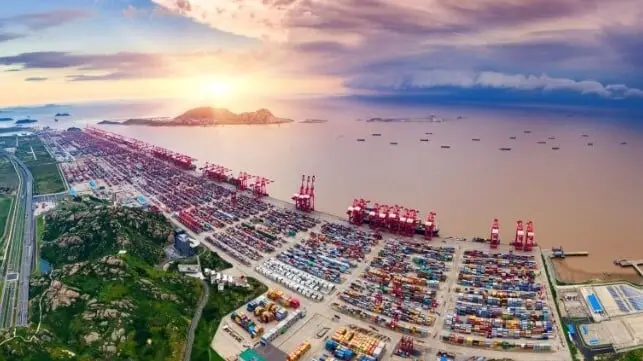
Lloyd’s Register (LR) Class News 22/2025 has issued a critical alert to the maritime industry, following a significant increase in machinery and electrical failures among vessels operating in the Yangtze River Estuary. The update, based on directives from the Shanghai Maritime Safety Administration (MSA), urges immediate action from shipowners, operators, and managers to avoid severe Port State Control (PSC) penalties and operational disruptions. [lr.org]
Table of Contents
Toggle🚨 Why the Urgency? Insights from Lloyd’s Register
According to Lloyd’s Register, over half of recent navigational incidents in the Yangtze River Estuary are linked to technical failures, including:
- Main engine breakdowns
- Steering gear malfunctions
- Power blackouts
Given the estuary’s high traffic density and challenging environmental conditions, these failures pose major risks to:
- Navigational safety
- Environmental protection
- Crew welfare
- Operational continuity
The Shanghai MSA, as highlighted by Lloyd’s Register, has adopted a zero-tolerance policy. Any vessel experiencing technical issues in the region will now face expanded PSC inspections, with potentially severe financial and reputational consequences. [lr.org]
🔍 Key PSC Inspection Focus Areas (Lloyd’s Register Guidance)
Lloyd’s Register Class News outlines that vessels in Shanghai Port territory will be scrutinized for:
- Maintenance records of machinery and electrical systems
- Crew competency and emergency preparedness
- ISM Code compliance
- History of deficiencies and corrective actions
Unresolved or concealed defects may result in:
- Vessel detention
- Heavy fines and repair costs
- Reputational damage
- Suspension of compliance certificates. [lr.org]
⚙️ Lloyd’s Register: Preventive Measures for Ship Operators
To avoid PSC penalties and ensure safe operations, Lloyd’s Register recommends the following:
a. Pre-departure and Pre-entry Checks
- Test main and auxiliary engines
- Verify steering and rudder systems
- Inspect power generation and emergency backups
- Check bilge, ballast, firefighting, and shutdown systems
b. Critical Operational Procedures
- Follow strict protocols during fuel changeovers and generator operations
- Monitor high-power equipment usage
- Conduct emergency drills (e.g., blackout recovery, bridge resource management)
c. Maintenance and Training
- Adhere to manufacturer-recommended maintenance schedules
- Train crew on emergency response and troubleshooting
- Ensure engineers are proficient in PMS and defect reporting. [lr.org]
📢 Mandatory Deficiency Reporting
Lloyd’s Register emphasizes that any machinery or electrical defect must be reported immediately to:
- Shanghai MSA
- Flag State Administration
- Recognized Classification Society
Concealing defects is a violation of SOLAS, MARPOL, and ISM Code and will lead to legal action and vessel detention. [lr.org]
✅ Immediate Action Required
Lloyd’s Register and the Shanghai MSA urge all maritime stakeholders to:
- Reinforce safety culture onboard and ashore
- Prioritize system verification before voyages
- Promote transparent reporting and continuous improvement
