
Synopsis
- Current Representation: Women make up approximately 1.2% of the global seafarer workforce, though shore-based roles show higher parity.
- Strategic Growth: Trilateral agreements and new shipbuilding zones are creating technical entry points for female engineers and logistics experts.
- Policy Drivers: The U.S. Maritime Action Plan and IMO mandates are prioritising workforce diversification to address labour shortages.
- Technological Shift: The transition to LNG and FSRU technologies is lowering physical barriers and emphasising high-tech maritime skill sets.
The Current State of the Maritime Workforce
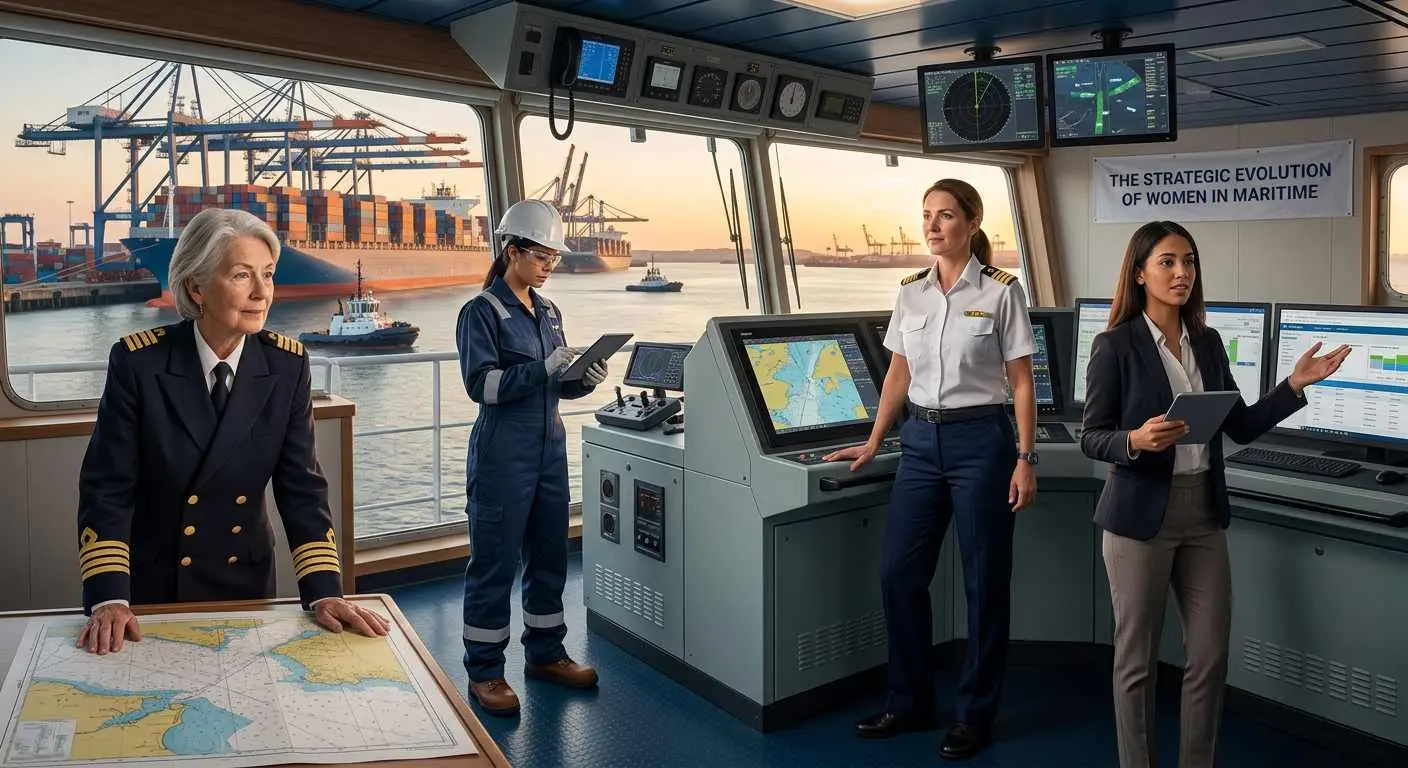
The maritime industry is among the most male-dominated sectors worldwide, despite ongoing digital and environmental transitions. The BIMCO/ICS Seafarer Workforce Report indicates that women constitute a small proportion of the workforce, although their representation in technical roles is gradually increasing. Despite the sector’s responsibility for over 90% of global trade, women encounter persistent systemic barriers both at sea and onshore. This report presents current statistics and insights from IMO–WISTA surveys and related research to clarify the industry’s status.
Global Statistical Overview
The following table outlines the current distribution of women within the maritime sector based on recent industry benchmarks:
| Sector | Estimated Percentage of Women | Primary Roles |
| Global Seafarers | 1.2% | Deck Officers, Hospitality (Cruise) |
| Shore-based Management | 18% – 24% | Logistics, Legal, HR, Chartering |
| Shipbuilding & Engineering | 10% | Naval Architecture, Systems Design |
| Port Operations | 15% | Crane Operations, Customs, Administration |
Global Female Participation in Maritime: The 2024–2025 Snapshot
The second IMO–WISTA Women in Maritime Survey, published in 2025, offers the most detailed, data‑driven assessment of the sector’s gender distribution:
- 176,820 women were employed across maritime sectors in 2024—up from 151,979 in 2021.
- Despite this growth, women represent just under 19% of the total maritime workforce sampled. This is a decrease from 26% in 2021, not because of a reduction in female participation, but due to expanded survey coverage in 2024 that included more organizations and sectors where overall female representation is lower. This adjustment provides a more accurate picture of the industry as a whole.
- In national maritime authorities, women account for 19% of the workforce.
- In the private sector ashore, including ports, shipping companies, and classification societies, women represent only 16% of employees (excluding seafarers).
These figures underscore the persistent gender gap within the broader industry, a disparity that becomes even more pronounced in seafaring roles.
Women at Sea: A Persistent 1% Barrier
A particularly notable statistic is that women comprise only approximately 1% of the world’s seafarers, a figure that has remained largely unchanged for several years:
- Women represent just 1% of seafarers employed by the organisations surveyed in 2024.
- Broader research confirms that the global percentage has never exceeded 2%, despite recruitment drives and awareness campaigns.
- Even in leading maritime nations such as Germany—considered a positive outlier—the proportion of female seafarers is only around 7%, and declining in certain training streams. [zeymarine.com]
These data highlight entrenched structural obstacles, including limited role models, inadequate onboard facilities, safety concerns, and challenges related to workplace culture.
Regional Differences: Where Are Women Participating?
The survey data reveal regional disparities in female participation:
- Pacific region (public sector): Over 26% female workforce.
- Caribbean region (private sector): A remarkable 63% female participation, though in absolute numbers this is still small. This high percentage has been attributed to targeted vocational training programs, strong government incentives for female employment, and the prevalence of maritime-related services that favor flexible or part-time roles. Supportive labor policies and the active engagement of women’s advocacy organizations have also played a crucial enabling role, offering strategies that could be tailored and applied in other regions facing similar challenges.
- Europe (private sector): About 21% female participation.
- North America: The highest number of women overall (68,133), but proportionally only 18% of the total workforce.
These data points indicate that, while certain regions are making significant progress, global gender equality in the maritime sector remains distant.
Leadership and Governance: A Mixed Picture
Encouraging developments include:
- Female heads of maritime administrations doubled from 6 in 2021 to 14 in 2024. [shippingan…source.com]
- Women now represent 28% of delegates at IMO meetings (up from 21%). [shippingan…source.com]
However, leadership positions within the private sector remain largely inaccessible to women:
- Representation of women in mid‑management roles fell sharply from 39% to 20%. [shippingan…source.com]
- Senior leadership remains dominated by men, especially in traditional technical and operational roles. [shippingan…source.com]
Encouraging Signs in Emerging Maritime Sectors
While traditional maritime operations show slow progress, several emerging fields are seeing higher female participation:
- Women are increasingly represented in Environmental, Social and Governance (ESG) roles and decarbonization initiatives. [imo.org]
- Growth is also noted in maritime technology, digitalisation, and policy-making—areas aligned with broader industry transformation. [nautilusint.org]
These sectors typically require skill sets that are less dependent on traditional seafaring pathways, thereby creating new opportunities for women.
Key Barriers Identified
Across multiple reports, several persistent obstacles are highlighted:
- Workplace culture & bias: The maritime sector remains male-centric, affecting recruitment, retention, and promotion. [e-wma.com]
- Safety concerns: Women often lack safe, supportive onboard environments. [nautilusint.org]
- Family‑unfriendly policies: Only 39 IMO Member States offer workplace childcare support.
- Slow policy implementation: Many companies still lack gender-responsive policies and structured diversity training.
- Training pipeline weaknesses: Although 5% of seafaring students are women, this does not translate into long-term seafaring careers. [zeymarine.com]
Efforts to Drive Change
Industry-led initiatives are working to improve representation:
- The Diversity@Sea initiative requires at least four women on board participating ships, alongside measures such as inclusive PPE, 24/7 Wi‑Fi, and menstrual‑hygiene‑appropriate facilities.
- Early results from participating vessels indicate that crews with at least four women onboard have reported improved team cohesion and increased female retention rates. However, some companies have faced logistical challenges implementing these measures, particularly in retrofitting older ships with appropriate facilities and sourcing suitable PPE. These initial outcomes highlight both the practical benefits and the operational hurdles organisations may encounter when adopting similar policies.
- IMO and WISTA provide actionable recommendations on recruitment, leadership pathways, safer working environments, and mentorship programs.
These initiatives indicate increasing momentum; however, implementing them across the global fleet remains a significant challenge.
A Sector Slowly Shifting, But Much Work Remains
The maritime industry has achieved incremental progress toward gender equality, particularly in onshore and emerging sectors. Nevertheless, the overall trend remains evident:
- Women remain dramatically underrepresented at sea (1%).
- Their share of the overall maritime workforce has decreased proportionally despite real growth in absolute numbers.
- Leadership gaps and cultural barriers continue to impede progress.
Progress will require coordinated action among governments, maritime authorities, training institutions, unions, and industry leaders. Fostering a more diverse and inclusive maritime sector is both a social responsibility and an operational necessity in a rapidly evolving global industry.
To accelerate meaningful change, industry professionals can:
1. Establish dedicated mentorship and sponsorship programs for women at all career stages, ensuring visible pathways for advancement and retention.
2. Implement transparent recruitment targets and regular diversity reporting, holding organisations accountable and making progress measurable.
By taking these practical steps, maritime leaders can drive concrete improvements in gender equity and position their organisations to thrive in the sector’s future.
Barriers to Entry and the “Shadow” Challenges
Although corporate agreements and government policies establish a framework for growth, the maritime industry continues to face unique retention challenges. Beyond official statistics, the sector must address the human factors associated with long-term seafaring careers.
Technical and Safety Hurdles
- Infrastructure Design: Many older vessels were not designed with gender-neutral facilities, a factor that modern Newbuildings (newly constructed ships) are now addressing.
- Safety and Security: Maritime security remains a concern. Recent reports of incidents, such as the firefight involving a Florida-registered speedboat near Cuba, underscore the inherent risks of maritime patrol and border guard duties.
Sanctions and Legal Complexity: The emergence of ‘shadow fleets’ and intricate oil trading networks, such as the one tentatively identified as Coral Energy, has created a volatile legal landscape. Women in maritime legal and compliance roles are at the forefront of identifying these critical vulnerabilities in global trade. For example, in 2024, a female compliance officer at a major European shipping company played a key role in uncovering irregularities tied to unauthorised oil transfers. Her investigative work not only led to tighter internal vetting processes but also prompted a broader review of international due diligence protocols, highlighting how women are driving tangible improvements in sector transparency and risk mitigation.
Maritime Industry Integration
The integration of women into the maritime sector has become a strategic necessity, extending beyond considerations of social equity. The U.S. Maritime Action Plan is driving the expansion of the merchant marine, while international partners such as South Korea contribute essential technical expertise. As a result, the industry is positioned for a significant transformation in its workforce.
By focusing on high-tech shipbuilding and strengthening supply chains, the maritime industry can overcome labour shortages and build a more resilient, diverse, and technologically advanced future.
Sources:
- Maritime Labour Statistics Report (2025)
- U.S. Department of State: Maritime Action Plan Summary
- BIMCO/ICS Seafarer Workforce Report