

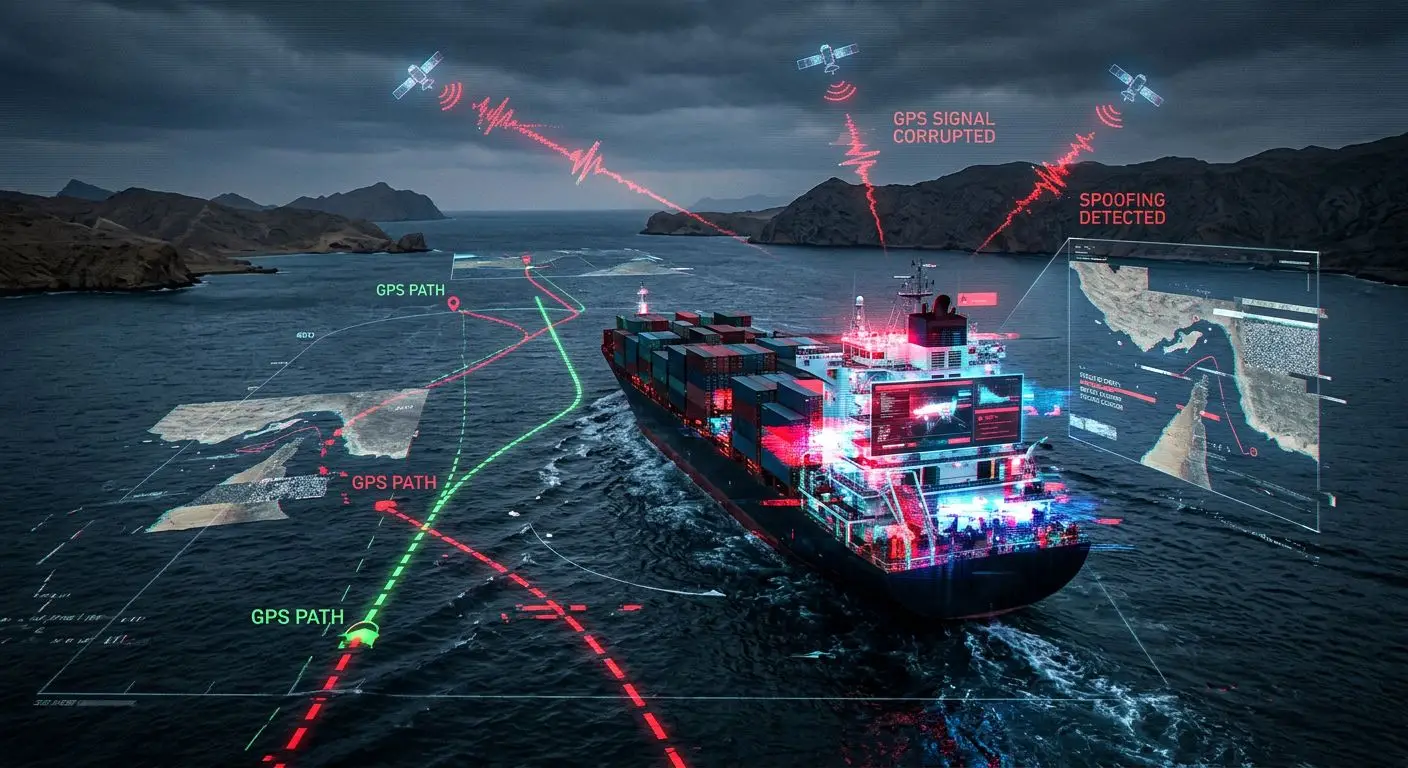
Maritime navigation is facing an unprecedented wave of disruption as Spoofing—the intentional manipulation of GPS and AIS signals—intensifies across global shipping lanes. Today, with escalating geopolitical tensions and the ongoing US–Iran conflict, Spoofing has evolved from a niche electronic warfare tactic into a major navigational and commercial hazard impacting thousands of vessels in real time.

What Is Spoofing and Why It Matters Now
Spoofing occurs when attackers broadcast counterfeit GPS or AIS signals, causing ships to receive false positional data. This can make a vessel appear miles off course, on land, inside restricted zones, or even at airports. Unlike jamming—which blocks signals—Spoofing is more deceptive, feeding realistic‑looking but entirely fabricated coordinates into a ship’s navigation systems.
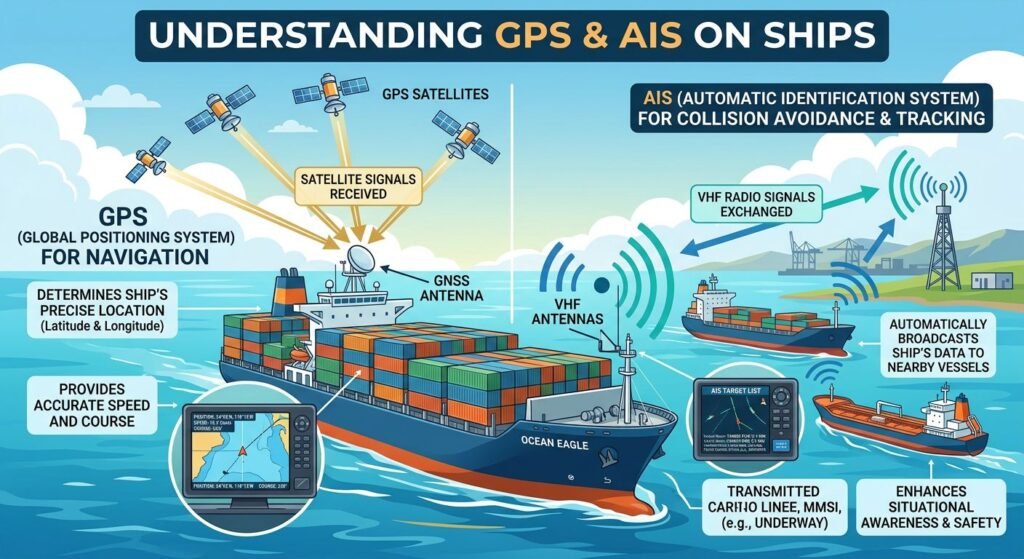
In an era where shipping depends heavily on satellite data for routing, collision avoidance, dynamic positioning, and port operations, Spoofing is now one of the most serious threats to maritime safety.
How US–Iran Tensions Escalated the Spoofing Crisis
The Gulf region, especially the Strait of Hormuz, has become the center of global Spoofing activity. Following intense military exchanges between the US, Israel, and Iran, electronic interference surged dramatically.
1. Over 1,100 Ships Disrupted Within 24 Hours
According to military officials, immediately after US‑Israeli military strikes on Iran, vessels across the UAE, Qatari, Omani, and Iranian waters reported severe navigation failures. Ships appeared at airports, nuclear power plants, and far inland—clear signs of coordinated Spoofing attacks.
2. Spoofing Clusters Multiply Rapidly
Maritime intelligence systems detected 38 new interference clusters within just one day, demonstrating deliberate, widespread electronic manipulation of vessel positions.
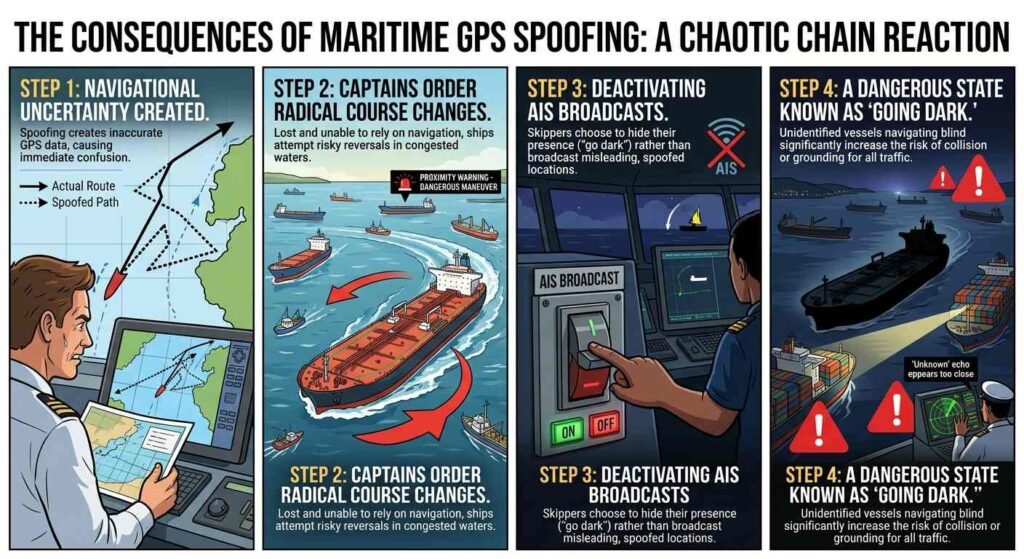
3. Tankers Forced to Reverse Course or Go Dark
Spoofing created such severe navigational uncertainty that tankers had to reverse direction or deactivate AIS broadcasts entirely, a dangerous state known as “going dark.”
Spoofing Threats in the Persian Gulf and Strait of Hormuz
The Gulf remains one of the world’s most strategically sensitive areas, handling nearly 20% of global oil and gas shipments. Spoofing in this region now presents both navigational and geopolitical risks.
AIS Manipulation and False Port Calls
Ships are being spoofed to appear as though they visited sanctioned ports in Iran, triggering compliance investigations and causing insurers and regulators to flag innocent vessels.
Growing Interference Due to Israel–Iran Escalation
Electronic interference, including Spoofing, has intensified following Israeli strikes and Iranian retaliation. The Joint Maritime Information Centre (JMIC) confirmed severe GPS disruptions affecting vessels in the Eastern Mediterranean and Persian Gulf.
Countries Advising Ships to Avoid the Region
Greece, Britain, and India have issued formal warnings urging merchant vessels to avoid the Gulf of Aden and the Strait of Hormuz, or to navigate with extreme caution through them.
The Global Expansion of Spoofing Beyond the Gulf
Spoofing is no longer confined to conflict zones. In 2025–2026, electronic interference escalated worldwide:
A Global-Scale Disruption
AIS jumps exceeded 6,300 km, with deceptive signals emerging in the Black Sea, Gulf of Guinea, Eastern Mediterranean, and beyond.
Spoofing Exploited for Crime, Sabotage, and Sanctions Evasion
Cyber intelligence experts report Spoofing being used for illegal fishing, smuggling, sanctions evasion, and to mislead authorities by faking vessel tracks.
Operational Risks Created by Spoofing
1. Collision & Grounding Hazards
False GPS signals can redirect vessels into hazardous waters or cause them to deviate from traffic separation schemes—dramatically increasing the risk of collision or grounding.
2. Port Entry Failures & Berthing Delays
Spoofing disrupts pilotage, tug coordination, and berthing alignment, often resulting in aborted port entries or dangerous near‑miss scenarios.
3. Dynamic Positioning (DP) Failures
Offshore vessels relying on DP systems can suddenly drift if fed spoofed data—risking catastrophe for the crew and infrastructure.
4. Legal & Regulatory Consequences
Spoofed AIS tracks can trigger:
- Sanctions investigations
- Insurance claim disputes
- Detentions during port inspections
➡️ Source: Commercial and legal implications
🔎 Conclusion: Spoofing Is Now One of the Most Severe Threats to Global Maritime Navigation
The rise of Spoofing—amplified by current wars and especially the US–Iran conflict—has created a high‑risk environment for maritime navigation in the Gulf and across the world. With electronic warfare crossing into commercial shipping lanes, Spoofing is now a daily operational threat that endangers lives, disrupts trade, and undermines global supply chains.
As Spoofing attacks grow more sophisticated and more frequent, shipping companies must adopt stronger detection tools, implement alternative navigation methods, and enhance crew training to remain resilient in this evolving maritime battlespace.
📎 Hyperlinked References
- AIS Spoofing & Jamming in the Persian Gulf – World Ports Organisation
https://www.worldports.org/ais-spoofing-and-jamming-in-the-persian-gulf-a-growing-maritime-security-concern-says-skuld/ - IMarEST: Catastrophic Threat of GPS Spoofing
https://www.imarest.org/resource/mp-the-potentially-catastrophic-threat-of-gps-spoofing-in-shipping.html - Windward: GPS Jamming Becoming a Global Maritime Threat
https://windward.ai/blog/gps-jamming-is-now-a-mainstream-maritime-threat/ - GPS Spoofing Threats & Cybersecurity – Saturn Partners
https://saturnpartners.com/2025/12/gps-spoofing-maritime-cybersecurity/