

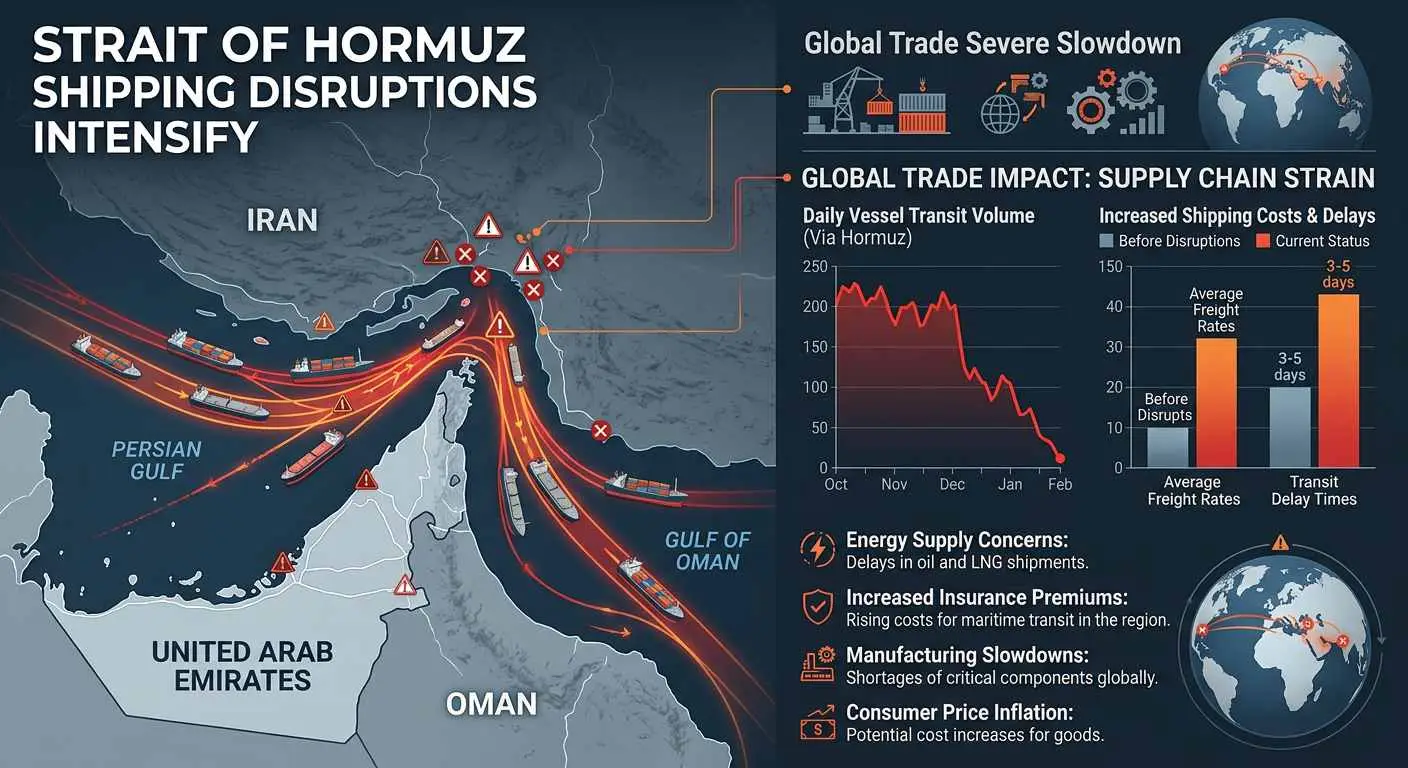
The Strait of Hormuz—one of the world’s most critical maritime chokepoints—is once again at the center of global shipping instability. Between 12–14 March 2026, tensions in the Persian Gulf escalated sharply, triggering widespread port closures, shipping delays, and unprecedented vessel restrictions. As a result, global supply chains are experiencing severe ripple effects, with energy markets, commercial trade routes, and port operations around the Middle East under immense pressure.
How will the world’s economy be affected? And how close are we to another financial crisis that will impact households and economies in general?
Near-Standstill Shipping Through the Strait of Hormuz
This dramatic slowdown stems from escalating regional conflict, targeted attacks on commercial shipping, and mounting operational hazards. The restricted vessel flow is significantly impacting both inbound and outbound trade from key ports across the Persian Gulf.
Major Global Carriers Suspend Bookings to Middle Eastern Ports
- COSCO, one of the world’s largest shipping companies, has suspended new bookings to several Gulf countries.
- Maersk halted bookings, allowing exceptions for critical goods like food and medicine.
- MSC imposed temporary suspensions for all cargo to Middle Eastern countries in the Gulf.
Port Closures Spread Across the Region
- The Port of Salalah in Oman was temporarily shut down for damage assessment following conflict-related impacts.
- The Port of Fujairah in the UAE experienced operational pauses and later reopened, though it continues to operate under elevated risk.
Global Supply Chain Impacts
1. Crude Oil and LNG Supply
2. Container Shipping Delays
3. Freight Rate Instability
4. Increased Risk Exposure
Why This Matters for Global Trade
- Affect energy security across Asia, Europe, and North America.
- Increase shipping costs and insurance surcharges.
- Trigger supply chain shortages in fertilizers, chemicals, electronics, and a wide range of consumer goods.
- Force global carriers to redesign their service rotations and strategic alliances.
- Cause long-term congestion to shift to alternative shipping hubs.
Outlook: What to Expect Next
- Ongoing booking restrictions for at least several weeks
- Rerouting vessels via the Cape of Good Hope or Red Sea alternatives, depending on evolving safety assessments
- Higher freight rates, especially for refrigerated and hazardous cargoes
- Potential regulatory responses from international bodies
- Further port closures or reopenings, depending on conflict developments
