

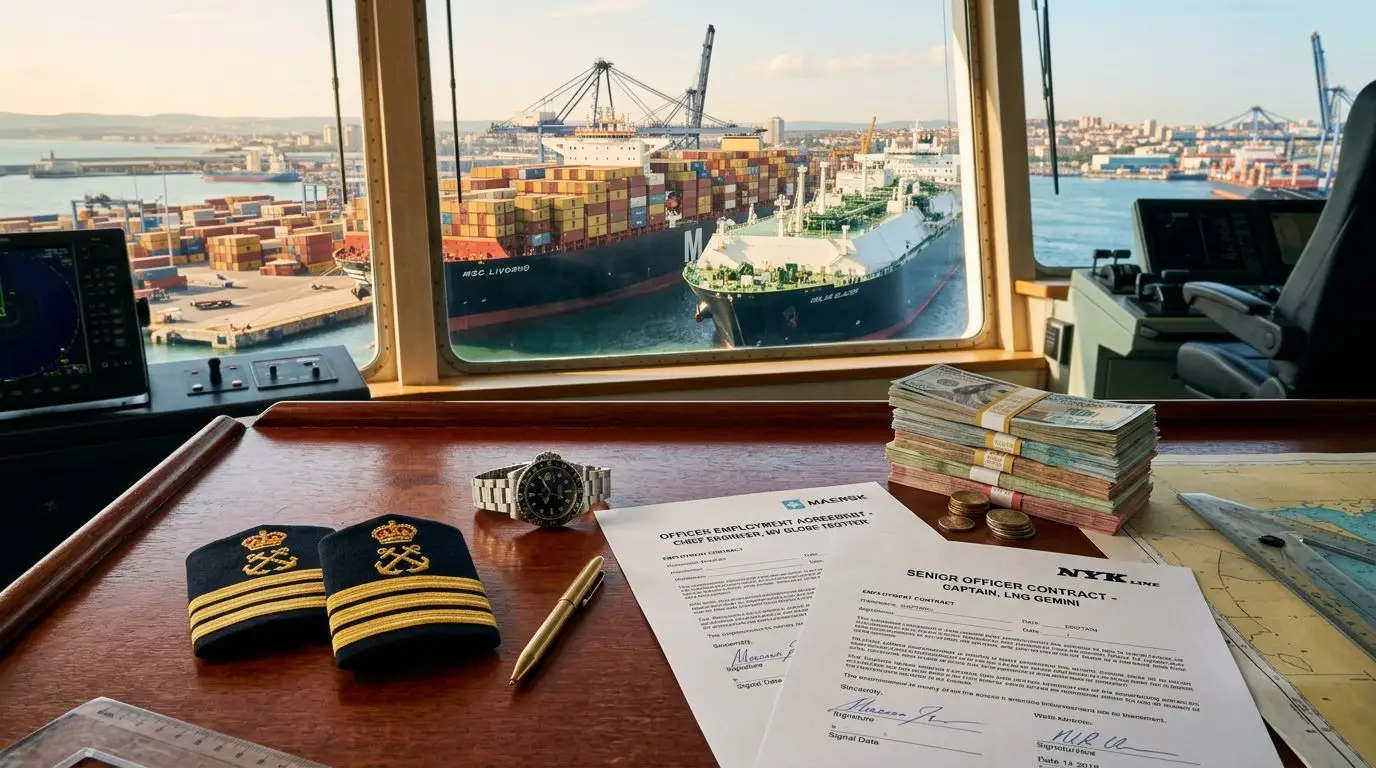
Why do two seafarers with the same rank earn different pay? Many newcomers to the maritime industry are surprised by the wide variation in salaries. For instance, a Second Officer might earn $2,500-$3,000 per month on a dry bulk carrier, $3,800-$5,000 on chemical or crude oil tankers, and $5,500 or more on high-specification LNG carriers. While these ranges vary by company and region, they show how job type and company choice influence income. To really understand Merchant Navy salaries and the Merchant Navy Salary breakdown, you need to look beyond rank.
Pay depends on the type of vessel, the company’s nationality, and the contract details. If you want the most accurate and current salary information, try checking company career websites, joining maritime forums, and talking to current seafarers. These steps can help you get realistic details about what companies are truly offering for each role.
While the maritime industry is often viewed as well-paying, pay varies by role and ship. Understanding the reasons for these differences is crucial for career planning.

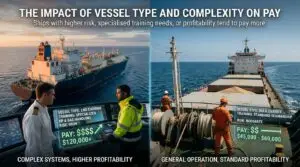
The Impact of Vessel Type and Complexity on Pay
The type of ship you work on is the main factor affecting pay in the merchant navy. Ships with higher risk, specialised training needs, or profitability tend to pay more.
Crude oil tankers, chemical tankers, and LNG carriers pay the most because of their risks and advanced training requirements. Dry bulk carriers and general cargo ships are less technical, so they usually pay less.
Pay differences extend to offshore support vessels (OSVs) and cruise ships. OSVs often pay more but offer shorter contracts, with typical durations of 2 to 3 months on board. In contrast, cruise ship contracts usually last from 4 to 8 months, depending on the role and the cruise line. Cruise ship roles might pay less but can offer unique benefits such as travel, amenities, and an international work environment, which may be appealing if you value experience over pay.
Understanding Maritime Wage Scales and Seniority
Most well-known shipping companies follow standardised wage scales, often shaped by unions such as the International Transport Workers’ Federation (ITF). These wage scales are usually just the minimum. Companies that want to attract and keep skilled officers often pay more than these base rates.

Seniority is also important. In addition to rank, pay increases are meant to reward officers for their loyalty and experience. For example, someone who has worked for the same company for five years will almost always earn more than a new officer at the same rank. This extra pay often comes as ‘re-joining bonuses’ or ‘seniority pay’ added to the base salary.
The flag of the vessel and the nationality of the ship owner can also affect both the currency and the amount you are paid. For example, an officer working on a high-end European-owned ship may earn differently from someone on a regional coastal vessel, even if their daily work is similar.
Beyond the Base: Seafarer Contract Benefits
When looking at Merchant Navy salaries, it is important not to focus only on the basic monthly wage. The total pay package includes various contract benefits that can significantly enhance the job’s real value.
Key benefits include leave pay. Some companies offer consolidated salaries that include leave, while others pay a basic rate plus extra for each leave day. For example, on a consolidated contract, you might receive $3,000 per month, including both your work period and leave time, so your pay stays the same every month whether you are onboard or on leave. In contrast, a separate leave pay contract might offer $2,700 per month while you are onboard, and then pay an additional amount, such as $100 per day, for each day of leave you accrue. This can increase your total yearly pay, especially if you use all your leave. This impacts your annual pay and leave, so always compare contract terms.
Pension and social security contributions are another important benefit. These can be a big advantage in the long run and are often included in permanent contracts with leading companies.
Health insurance is also crucial. Good medical coverage for you and your family is especially important if you work in high-risk environments.
Performance bonuses are another benefit to look for. Many companies reward good safety records, fuel-saving efforts, or successful inspections (like SIRE or CDI for tankers). Weighing these different packages is one of the key decisions officers make when choosing their next contract.
When comparing job offers, it helps to use a simple checklist to evaluate each contract. Look for details about base salary, vessel type, leave pay structure, pension and social security, health insurance coverage, opportunities for performance bonuses, length of contract, and chances for promotion. Check whether salaries are consolidated or if you will receive separate payments for leave, and ask about any extra allowances or travel benefits. Here are some key questions you can ask recruiters or employers to help you get a clearer picture:
– Is leave pay included in the salary or paid separately?
– What are the contract lengths, both onboard and off?
– What is the promotion path for this rank and position?
– Are there performance bonuses or rejoining bonuses available?
– Does the contract include pension or social security contributions?
– What kind of health insurance is provided, and does it cover family members?
– What currency will I be paid in, and are there exchange rate considerations?
– Are travel and repatriation costs covered?
– How is overtime calculated and paid?
Comparing these points side by side makes it easier to see which offer truly suits your priorities and long-term goals.
Conclusion
There is no single standard salary in the maritime industry. Your pay depends on your skills, the risks of your vessel, and how long you stay with an employer. For example, Chief Officer Rahul T., who started his career on bulk carriers, shared: “When I switched from bulk carriers to LNG tankers after gaining additional certification, my salary nearly doubled. Seniority with the same company also earned me yearly bonuses that made a big difference over time.” Stories like these highlight how vessel type and loyalty can directly impact your earnings. By learning how wage scales and seniority work, you can make better choices for your career. To stay informed, research specific companies and vessel types, and talk to current seafarers about their experiences. Gathering up-to-date information will help you better understand what to expect and plan your next steps.
Ultimately, even in the same rank, your salary depends on the value you bring to your ship and employer. By focusing on what matters to you—high monthly pay or long-term benefits—you can find a path in the merchant navy that fits your financial goals.
References
(2024). Seaman Salaries on Different Ships in the Maritime Industry. Sea-Man.org. https://sea-man.org/seaman-salaries.html
(2026). Seafarer Salaries in 2026: Average Pay for Maritime Jobs. INFO SEAMAN ONLINE JOB HIRING. https://www.infoseaman.com/2026/03/seafarer-salaries-in-2026-average-pay.html
(2026). Cruise Ship Salaries 2026: The Complete Guide. Selective Crew. https://selectivecrew.com/blog/cruise-ship-salaries-2026-complete-guide
