

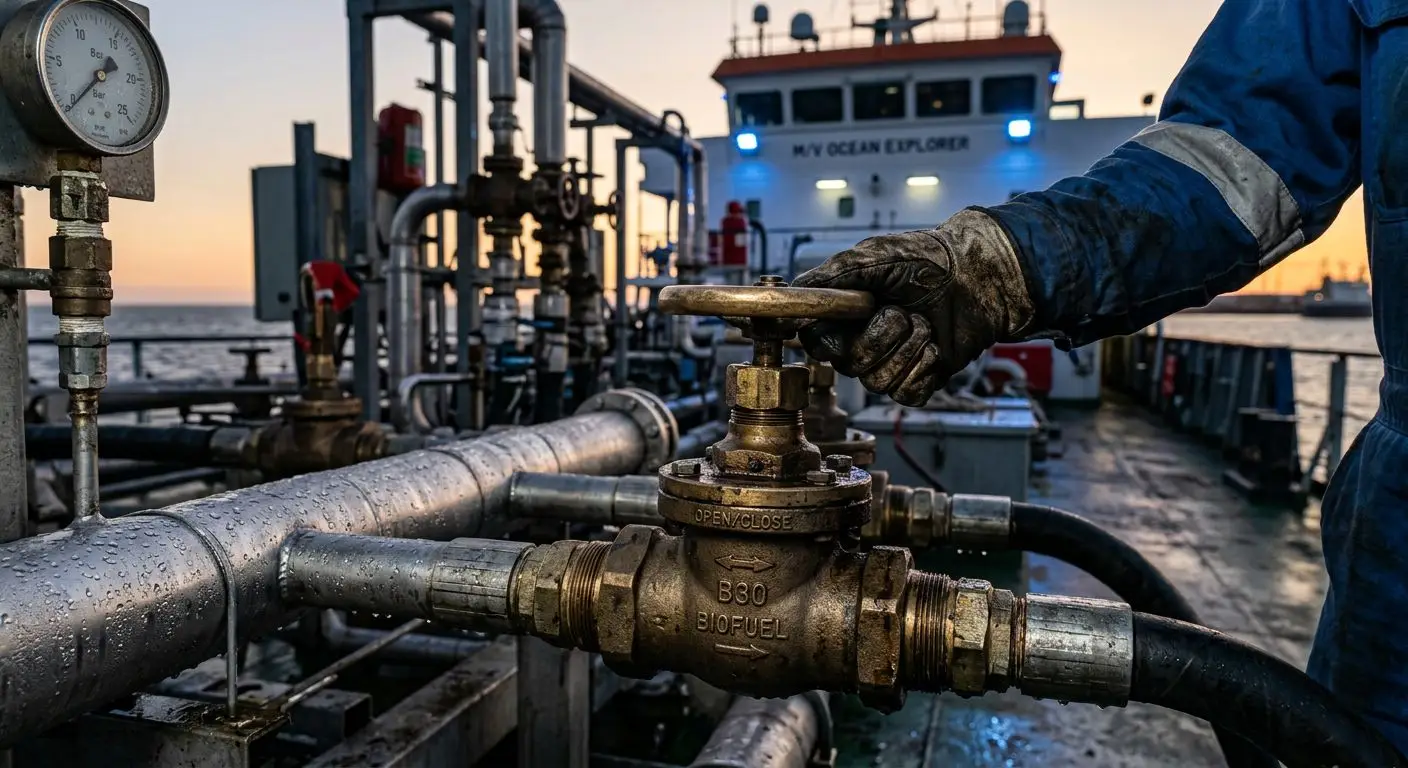
Biofuel Surges: Navigating the Spike in Biofuel Bunker Prices
The global shipping industry is currently facing a significant economic hurdle as biofuel bunker prices surge.
In major bunkering hubs like Rotterdam, the price for B30 biofuel blends (B30 biofuel blends consist of 30% biofuel typically FAME (fatty acid methyl ester- and 70% conventional fuel, such as VLSFO (very low sulfur fuel oil) or other mineral oils) has spiked by approximately $152 per ton in a single week.
This sharp increase is creating new pressures for ship owners and operators who are already balancing the technical demands of a transitioning fleet with the volatile realities of global energy markets. As the industry moves toward greater sustainability, understanding the drivers of these costs is essential to maintaining operational competitiveness.
The Correlation Between Conventional Bunker Fuel Costs and Biofuels
The primary driver behind the recent spike in bio-bunkers is the rising cost of conventional bunker fuel. Because most marine biofuels are sold as blends—such as B30, which consists of 30% biofuel and 70% conventional fuel—the price of the final product is heavily tethered to the underlying fossil fuel market.
Recent geopolitical tensions in the Middle East have disrupted supply chains and narrowed the availability of Very Low Sulfur Fuel Oil (VLSFO), causing a ripple effect across all blended products.
In Rotterdam specifically, the Rotterdam B30 VLSFO price has reached new heights, reflecting a market in which supply security now takes precedence over price optimisation. Analysts suggest that as long as conventional oil markets remain volatile due to restricted flows through maritime chokepoints like the Strait of Hormuz, the cost of bio-blends will continue to mirror these upward trends. This reality highlights a structural vulnerability: even as the industry tries to shift away from fossil fuels, it remains financially bound to them during this bridge phase.
Regulatory Drivers: RED III Maritime Legislation and Decarbonization
Beyond immediate market volatility, the long-term trajectory of Biofuel Bunker Prices is being shaped by rigorous new environmental standards. The implementation of RED III maritime legislation is a cornerstone of the European Union’s strategy for decarbonising the shipping industry. This legislation sets higher targets for renewable energy use in the transport sector and mandates strict sustainability and traceability standards for feedstocks.
Compliance with these regulations is no longer optional. Ship owners must now navigate a complex web of requirements, including the FuelEU Maritime regulation and the EU Emissions Trading System (EU ETS).
These frameworks penalise high-carbon emissions, effectively making biofuels more attractive despite their higher nominal cost. However, the surge in demand for compliant feedstocks such as Used Cooking Oil (UCO) and Palm Oil Mill Effluent (POME) has created a supply-side squeeze, further inflating end-user prices.
Operational Challenges and Marine Biofuel Blending
The transition to greener fuels is not just a financial challenge; it is a significant operational one for those working on the front lines. Managing new fuel types requires specialised knowledge and rigorous safety protocols. For crew members, navigating these maritime careers or challenges means constantly adapting to new technologies and bunkering procedures.
Marine biofuel blending requires careful monitoring to ensure compatibility with existing ship engines. While B30 blends are generally considered “drop-in” fuels that do not require extensive engine modifications, issues such as microbial growth and fuel stability during long-term storage remain concerns for chief engineers.
Key factors currently influencing the bio-bunkering landscape include:
– Rising feedstock costs: Increased competition for UCO and other sustainable biomass.
– Regional price spreads: Wide variations in price between hubs like Rotterdam, Singapore, and Houston.
– Supply chain bottlenecks: Limited production capacity for advanced biofuels compared to total global shipping demand.
– Policy shifts: Changes in government subsidies or rebate multipliers that can cause sudden price “shocks.”The Future of Biofuels in a Volatile Market
As we look toward late 2026 and beyond, the role of biofuels will remain critical but complicated. The International Maritime Organization (IMO) continues to tighten its Carbon Intensity Indicator (CII) ratings, pushing more carriers toward alternative energy sources. While the current spike in Biofuel Bunker Prices is painful, many industry experts view it as a necessary growing pain in the shift toward a net-zero future.
For shipping companies, the best strategy involves a mix of long-term contracts to hedge against spot price volatility and continued investment in onboard energy efficiency. By reducing a vessel’s overall energy demand, operators can mitigate the impact of high fuel prices, whether the fuels are conventional or renewable.
Biofuel supply challenges
The recent $ 152-per-ton jump in the Rotterdam B30 VLSFO price serves as a stark reminder of the shipping industry’s complex relationship with energy. While the drive toward decarbonising shipping industry standards is fueled by a genuine need for sustainability and compliance with RED III maritime legislation, the economic reality remains tied to conventional bunker fuel costs.
Navigating this era requires a delicate balance of regulatory foresight, operational excellence, and financial agility. As the market eventually stabilises, those who have invested in both green technology and robust procurement strategies will be best positioned to lead the next generation of global trade.