

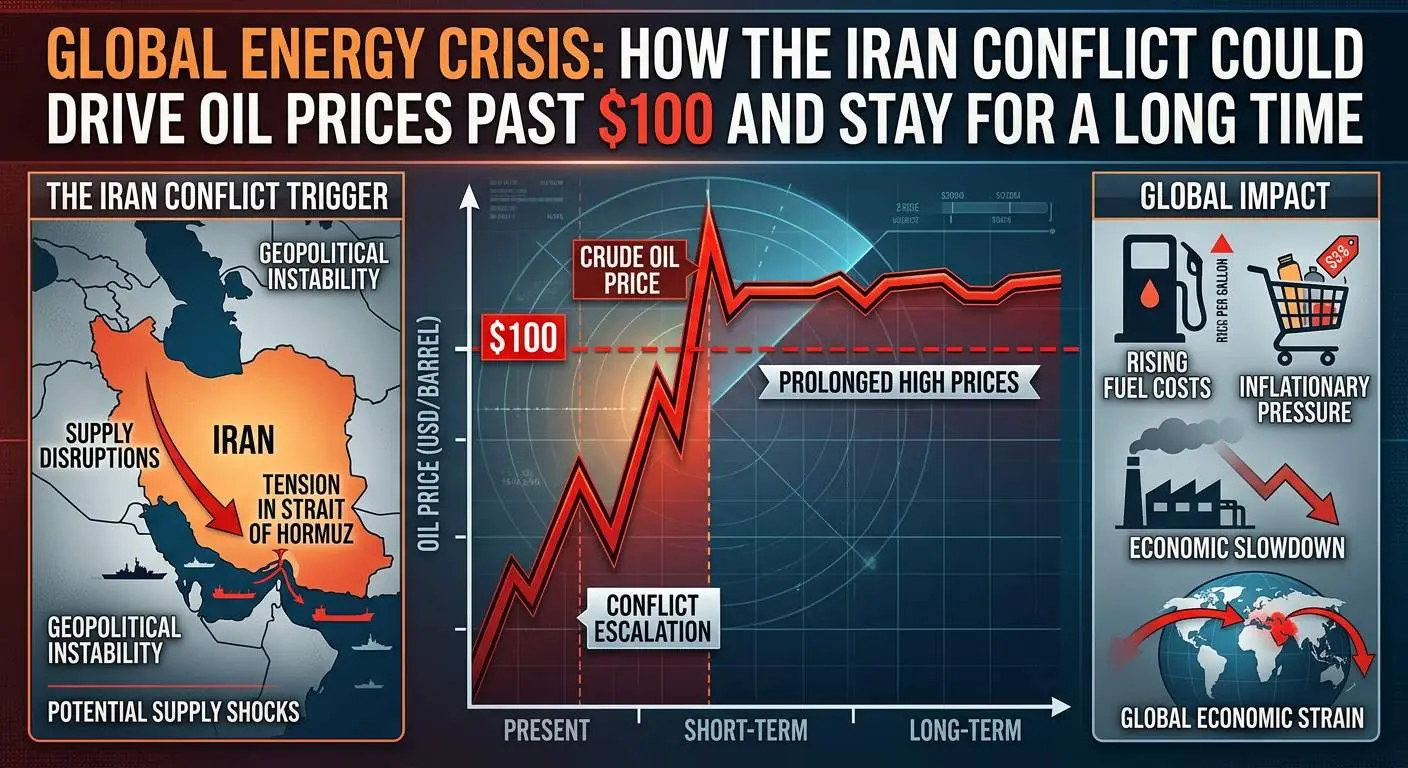
There is no doubt that everyone understands that due to the conflict in the Middle East, oil production will decrease, leading to an increase in prices based on the “supply and demand” principle in financial markets. The key question is how long oil prices will remain elevated and which countries will benefit from this situation, while others may face significant inflationary pressures due to the high cost of oil.
Will the US benefit from having enough oil reserves to supply its consumers with financially viable oil? What about Europe, Russia, and China? Unfortunately, these are not rhetorical questions, as we do have some answers. The global economy has many parameters and variables, making it difficult for anyone, even AI, to predict what will happen.
The global energy market is facing a major shake-up. As the conflict involving the United States, Israel, and Iran enters its second week, the impact on your wallet is already becoming clear. With nearly 20% of the world’s oil and natural gas supply currently suspended, experts are warning that high prices might be here to stay—even if the fighting stops soon.
Oil prices jumped to a historic high on Monday, March 9, 2026. Oil markets are experiencing extreme volatility and historic price jumps as the conflict in the Middle East intensifies.
After the markets opened with a massive “gap up” (a sudden jump in price), both major benchmarks surpassed the $100 mark for the first time since 2022.
Current Oil Prices (Intraday)
Prices have fluctuated wildly today, hitting 30% gains at their peak before pulling back slightly on news of a potential release of G7 emergency reserves.
| Benchmark | Early Peak Today | Current Trading Level (Approx.) |
| Brent Crude (International) | $119.46 | $107 – $114 |
| WTI Crude (US Standard) | $119.54 | $103 – $111 |
Key Drivers for Today’s Surge
- Strait of Hormuz Blockade: The waterway remains effectively closed. Tanker traffic has reportedly dropped to near zero, cutting off roughly 20% of the world’s daily oil supply.
- Production Shutdowns: Because they cannot export their oil, producers in Iraq, Kuwait, and the UAE have begun shutting down oil fields as their storage tanks reach maximum capacity.
- Infrastructure Damage: Reports of Israeli strikes on oil depots in Tehran and Iranian strikes on regional energy facilities have added a “fear premium” to the price.
What to Watch For
Analysts warn that if the de facto blockade of the Strait of Hormuz lasts for more than a month, Brent crude could test the $150 per barrel mark. However, prices saw a brief dip this morning following reports that the US and other G7 nations are coordinating a massive release of emergency oil stockpiles to stabilize the market.
Here is a look at what is happening with oil prices and how high they might go.
How High Could Prices Go?
Financial experts and market analysts are painting a grim picture for the coming months.
- The $100 Milestone: Goldman Sachs has warned that if shipping disruptions continue, oil prices could easily climb above $100 per barrel.
- Record-Breaking Gains: US crude oil recently saw its largest weekly gain since 1983, settling at just under $91 per barrel. Analysts believe this momentum will continue upward as supply remains tight.
- Impact at the Pump: In the United States, the average petrol price has already hit $3.41 per gallon. If crude oil stays high, consumers can expect to see those numbers continue to rise.
A Long Road to Recovery
One of the biggest concerns for the global economy is that “stopping the war” won’t immediately “fix the prices.”
According to Al Jazeera News, energy experts at Rystad Energy note that restarting oil fields is not like flipping a light switch. Depending on the age of the oil field and how it was shut down, it could take weeks or even months to return to normal production levels. Additionally, repairs to damaged refineries and terminals will take time and significant investment.
The Global Ripple Effect
The high cost of energy is creating a “state of near-emergency” for many nations.
- Developing Countries: Nations in Africa and small states dependent on sea trade are facing severe economic uncertainty.
- Inflation: Egypt and other regional players are warning of growing inflation as the cost of moving goods increases.
- Natural Gas: It isn’t just oil. Qatar, which provides 20% of the world’s liquefied natural gas (LNG), has declared “force majeure” on exports following drone attacks, threatening heating and electricity supplies globally.
Summary
The world is shifting from fearing a “possible” crisis to dealing with a “real” one. With supply lines blocked and infrastructure damaged, the energy market is in a fragile state. Whether you are filling up your car or paying your monthly utility bill, the effects of this prolonged conflict are likely to be felt for the foreseeable future.