

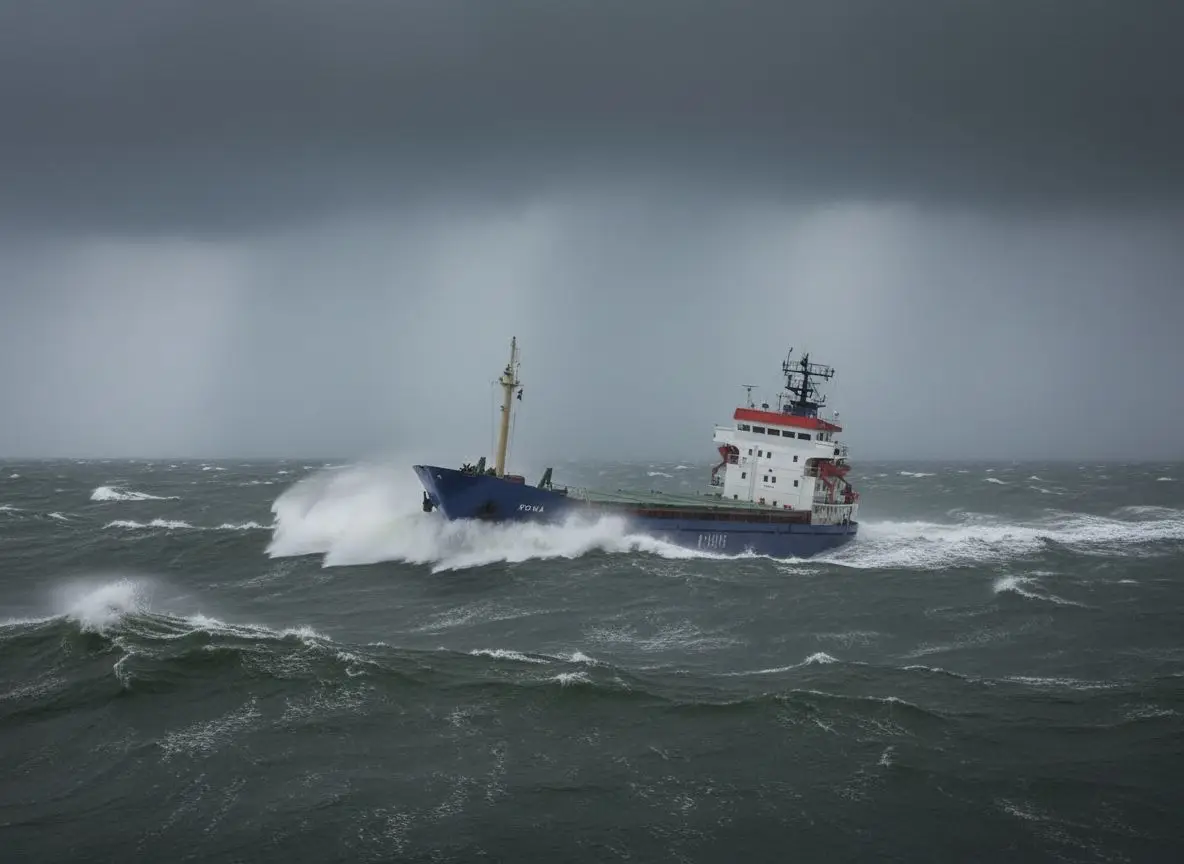
On 14 January 2026, the maritime industry witnessed a significant incident as the Iranian cargo ship Rona sank in the Caspian Sea off the coast of Turkmenistan. The event, which saw all 14 crew members safely rescued, has drawn global attention due to the vessel’s route, one long associated with sensitive cargo flows between Iran and Russia. As news spreads that a cargo ship has sunk in such a scrutinised corridor, maritime professionals are left to assess the implications for safety, security, and regional trade.

The Incident: Iranian Cargo Ship Sinks, Crew Rescued
Timeline and Rescue Operation
The Rona, an Iranian-flagged general cargo ship, issued a distress call while en route to Russia’s Port of Astrakhan. Turkmenistan’s Coast Guard responded swiftly, rescuing all 14 crew members—citizens of Iran and India—according to international maritime protocols. The rescue operation was praised for its efficiency and adherence to global safety standards, averting any loss of life despite challenging conditions in the Caspian Sea.
Vessel Details and Route
The Rona, built in 1983, measured 114 metres in length and had a displacement of 2,453 tons. AIS tracking data showed the vessel made at least 20 calls at Russian ports, including Astrakhan, Azov, and Makhachkala, and at Iranian ports, including Amirabad and Anzali, between October 2024 and December 2025. This route is notable for its overlap with corridors previously identified as conduits for Iranian arms shipments to Russia.
Strategic and Security Implications
A Route Under Scrutiny
The fact that this cargo ship sank on a route under international scrutiny has reignited discussions about the Caspian Sea’s role in regional security. Investigations by outlets such as CNN and The Wall Street Journal have previously highlighted this corridor as a primary channel for moving ammunition and military cargo from Iran to Russia. While there is no official confirmation regarding the Rona’s cargo at the time of sinking, the vessel’s travel pattern has fuelled speculation and concern within the maritime community.
Maritime Security and Emergency Response
The incident underscores the importance of robust emergency response protocols and international cooperation. Turkmenistan’s rapid mobilisation of rescue assets and adherence to maritime law ensured the safety of all crew members. For shipping companies, this serves as a reminder of the unpredictable risks faced on even routine voyages, and the necessity of preparedness for when a cargo ship sinks unexpectedly.
The Rona’s loss is not an isolated incident. In recent years, several cargo ships have sunk due to various causes, including mechanical failures and conflict-related incidents. Each time a cargo ship sinks, it prompts industry-wide reflection on safety, security, and the changing risks of maritime trade. For further reading on maritime accidents and emergency responses, see Maritime-Hub.com’s Editorial Insights and Maritime Accidents Section.
