
Maersk & Hapag-Lloyd Restore Asia-Europe Suez Routes
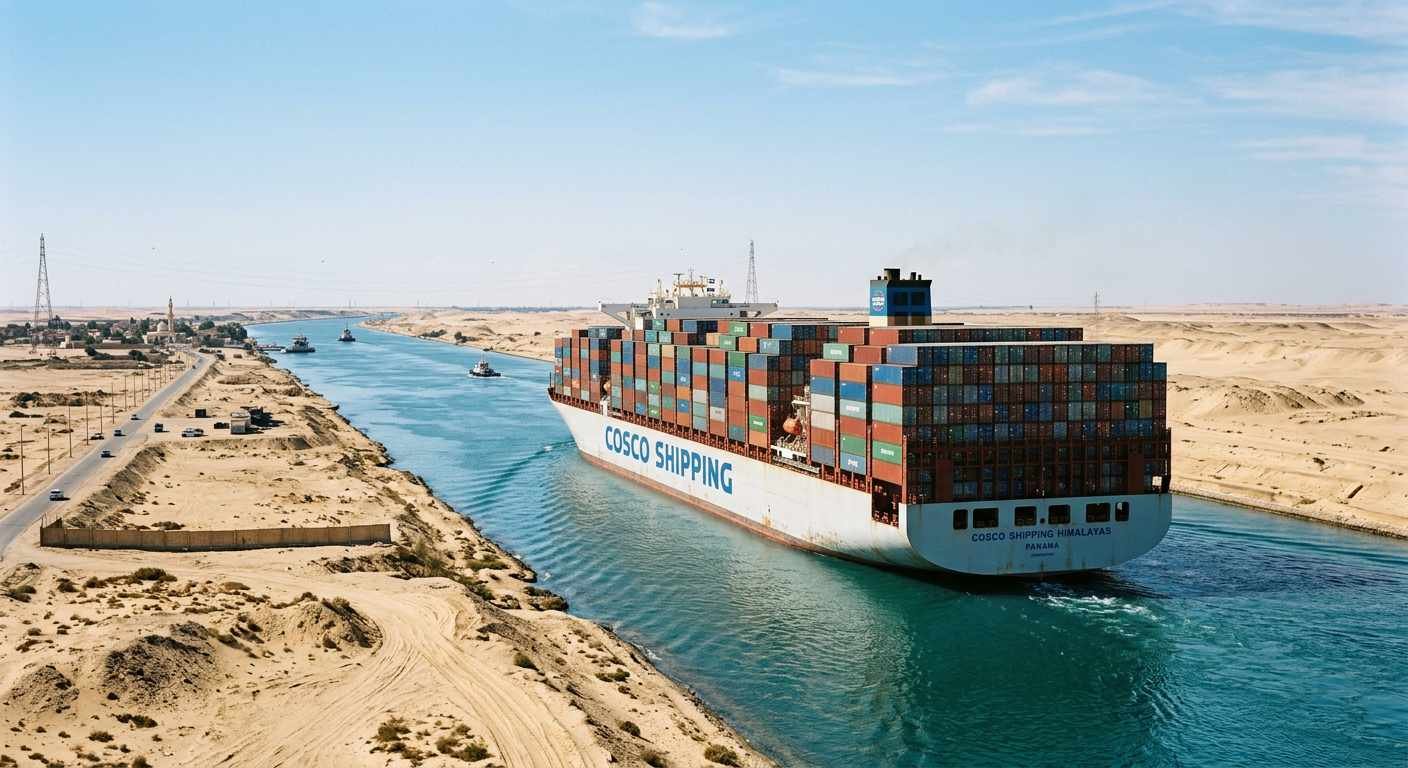
Maersk and Hapag-Lloyd have announced a structural shift for key Asia-Europe Suez routes within their Gemini Cooperation network. The carriers are moving their last three Cape-routed services—the AE1, AE2, and AE3 loops—back to the trans-Suez corridor instead of routing around the Cape of Good Hope.
Phased Resumption of Suez Canal Transit
The structural transition to the Suez Canal transit will occur in a phased rollout based on first loading port departure dates. According to customer advisories issued by the carriers, the AE2 service will lead the return when the container ship Mary Maersk departs Ningbo on December 4, 2026. The AE3 service follows on December 20 with the Alette Maersk departing Shanghai, while the AE1 service will transition on January 14, 2027, with the Damietta Express sailing from Shanghai.
Maritime shipping analyst Linerlytica noted that the move makes Gemini the first major ocean carrier alliance to restore Suez routing across all of its Asia-Europe services. The revised rotations include bidirectional transits through the Red Sea and Suez Canal, bypassing the longer African detour that carriers adopted following security threats in late 2023.
Network Impact and Ocean Freight Capacity
While the operational change specifically targets ocean carrier routes serving Europe and the Middle East, its broader impact extends to global trade networks, including U.S. trade lanes. Transitioning back to the shorter Suez route significantly reduces sailing times between Asia and Northern Europe. Shorter voyage durations effectively release effective ocean freight capacity that had been absorbed by longer rotations around southern Africa.
Industry logistics provider DHL Global Forwarding cautioned that while the return loosens vessel availability, operational delays will not dissipate immediately. DHL estimated that network adjustments and repositioning of container ships could take six to twelve months, noting that more than 10% of the global container fleet remains impacted by port congestion.
Meanwhile, container shipping rates have shown signs of stabilizing, with spot freight benchmarks easing across key global trade corridors ahead of the schedule adjustments.
Operational Significance
The return of Gemini’s services to the Suez Canal signifies a major step toward normalizing global liner schedules and optimizing vessel deployment. The shorter voyage helps reduce fuel consumption and shorten lead times for Asia-Europe cargo flows. However, both Maersk and Hapag-Lloyd emphasised that the continued operation of these routes remains subject to ongoing security assessments in the Red Sea region. Shippers should expect schedule adjustments as carriers rebalance fleet capacity throughout early 2027.