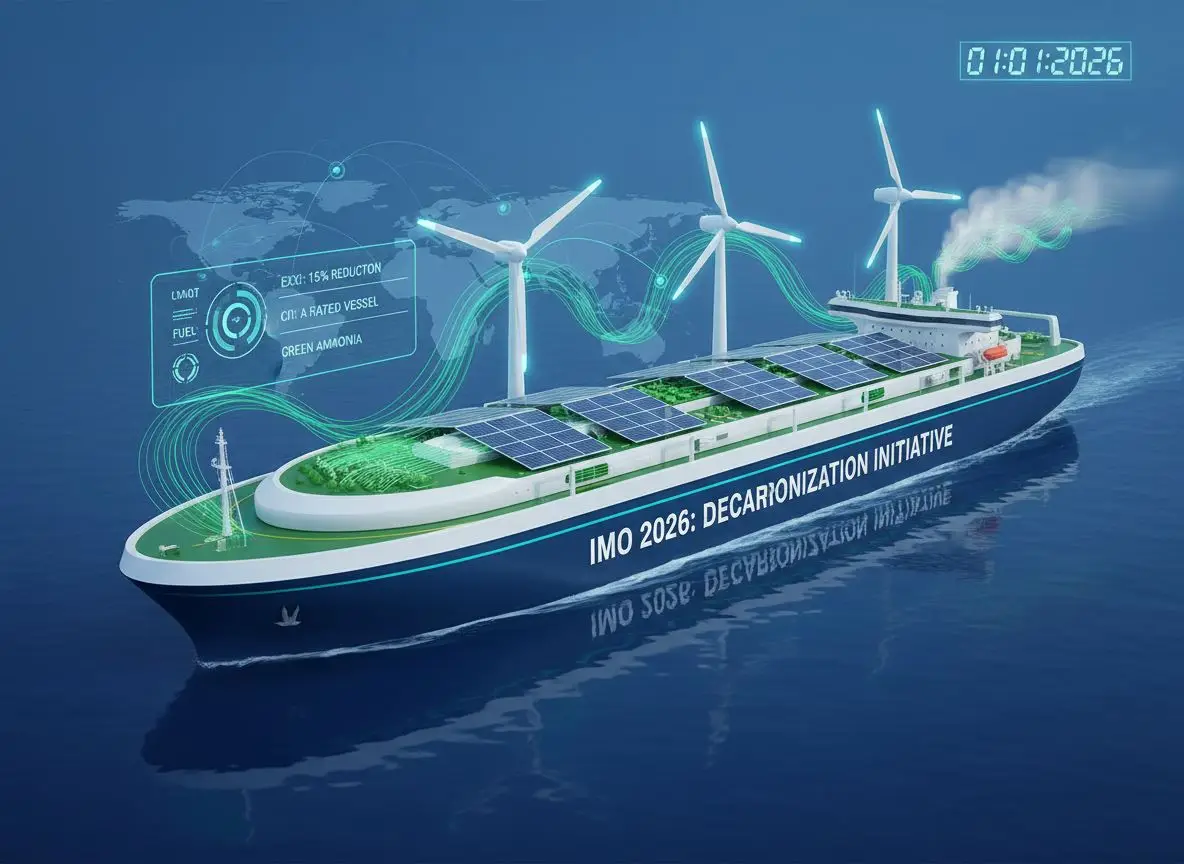
The global maritime sector entered a new regulatory era on 1 January 2026, when a comprehensive set of amendments to key IMO treaties took effect. These updates strengthen safety, environmental protection, crew welfare, and operational transparency across the shipping industry.
This article breaks down the most important changes, why they matter, and how shipowners, operators, and maritime professionals can stay compliant.
🔒 1. Stronger Protections Against Harassment & Bullying at Sea
The IMO has introduced mandatory training requirements under the STCW Code to combat:
- Sexual harassment
- Bullying
- Violence and assault
These updates ensure seafarers receive essential training on recognizing, preventing, and responding to such incidents, marking a major step toward safer and more inclusive shipboard environments.
🎣 2. Improved Training Standards for Fishing Vessel Personnel
Amendments to the STCW‑F Convention and the new STCW‑F Code modernize training and certification for fishing crews. Key enhancements include:
- Harmonized qualification standards
- Minimum competence levels
- Updated guidance for training institutions
This overhaul reflects the evolving needs of the global fishing industry.
📦 3. Mandatory Reporting of Lost Containers
Lost containers pose serious risks to navigation and the marine environment. New amendments to MARPOL and SOLAS require:
- Masters to report lost containers to nearby ships, coastal states, and flag states
- Flag states to notify IMO
- Detailed reporting of container numbers, positions, and circumstances
This change aims to improve maritime safety and environmental protection worldwide.
⚙️ 4. New Safety Rules for Lifting Appliances & Anchor Handling Winches
A new SOLAS II‑1/3‑13 regulation introduces requirements for:
- Design and construction
- Operation
- Inspection and maintenance
Supported by two IMO guidelines, these rules reduce risks associated with onboard lifting operations and anchor handling equipment.
🛢️ 5. Enhanced Safety for Ships Using Oil Fuel
To prevent the supply of non‑compliant fuel, amendments to SOLAS II‑2 now require:
- A certified declaration from fuel suppliers
- Confirmation that fuel meets the minimum flashpoint of 60°C
This measure reduces fire hazards linked to low‑flashpoint fuels.
❄️ 6. Polar Code Expansion to Non‑SOLAS Ships
The Polar Code now applies to:
- Fishing vessels ≥ 24 m
- Pleasure yachts ≥ 300 GT (not in trade)
- Cargo ships 300–500 GT
These vessels must follow stricter navigation and voyage planning rules when operating in polar waters.
🛠️ 7. Updated ESP Code Requirements
New amendments strengthen oversight of firms conducting hull thickness measurements for bulk carriers and oil tankers. Administrations must now audit these firms to ensure proper organization and management.
📡 8. Electronic Inclinometers Required on New Ships
From 2026, new:
- Containerships ≥ 3,000 GT
- Bulk carriers ≥ 3,000 GT
must be equipped with electronic inclinometers to record roll motion, improving stability monitoring and accident prevention.
🧯 9. PFOS Fire‑Extinguishing Media Ban
To protect crews and the environment, PFOS‑containing extinguishing agents are now prohibited on:
- All new ships from 1 January 2026
- Existing ships by their first survey after that date.
🚗 10. Fire Safety Upgrades for Vehicle & Ro‑Ro Spaces
New SOLAS II‑2 amendments require:
- Fixed fire detection systems
- Fire patrol systems
- Comprehensive video monitoring
These measures address the growing risks associated with vehicle and ro‑ro cargo fires.
📦 11. Updated IMDG Code (Amendment 42‑24)
The latest revision of the IMDG Code is now mandatory for all ships carrying dangerous goods in packaged form, ensuring safer global transport of hazardous materials.
🌾 12. Grain Code Enhancements
A new class of loading conditions has been added for special compartments, improving safety during bulk grain transport.
🔥 13. IGF & IGC Code Amendments
Key updates include:
- Improved safety for low‑flashpoint fuel systems
- Approval of high‑manganese austenitic steel for cryogenic service
These changes support safer adoption of alternative fuels and advanced materials.
🛟 14. New Lifeboat Ventilation Requirements
The LSA Code now mandates enhanced ventilation for totally enclosed lifeboats installed on or after 1 January 2029.
🗺️ 15. ECDIS Performance Standard Updates
A phased rollout of new IHO specifications (S‑98, S‑100, S‑101) begins in 2026, with full mandatory compliance for new installations by 2029. These updates improve digital charting and route‑exchange capabilities.
📈 Conclusion
The IMO’s 2026 regulatory package is among the most significant updates in recent years. From crew welfare to environmental protection and advanced safety systems, these changes aim to modernize global shipping and reduce risks across all maritime sectors.
Staying compliant is not just a legal requirement—it’s a competitive advantage in an increasingly safety‑ and sustainability‑driven industry.
