
Quick Summary
- WinGD introduces a high-pressure LNG dual-fuel engine, enhancing maritime technology.
- This innovation targets the growing demand for supersize container ships.
- Implications for maritime safety and environmental compliance are significant.
- The move aligns with evolving IMO guidelines for emission reductions.
- Industry players anticipate shifts in maritime logistics and port management requirements.
It’s an exciting time in the maritime industry! The latest buzz comes from WinGD, a prominent player in marine power systems, which recently launched its innovative high-pressure LNG dual-fuel engine aimed specifically at the rapidly growing market for supersize container ships. It seems like every day, we’re talking about advancements in shipbuilding and maritime technology, but this development has the potential to reshape not only vessel operations but also broader shipping logistics.
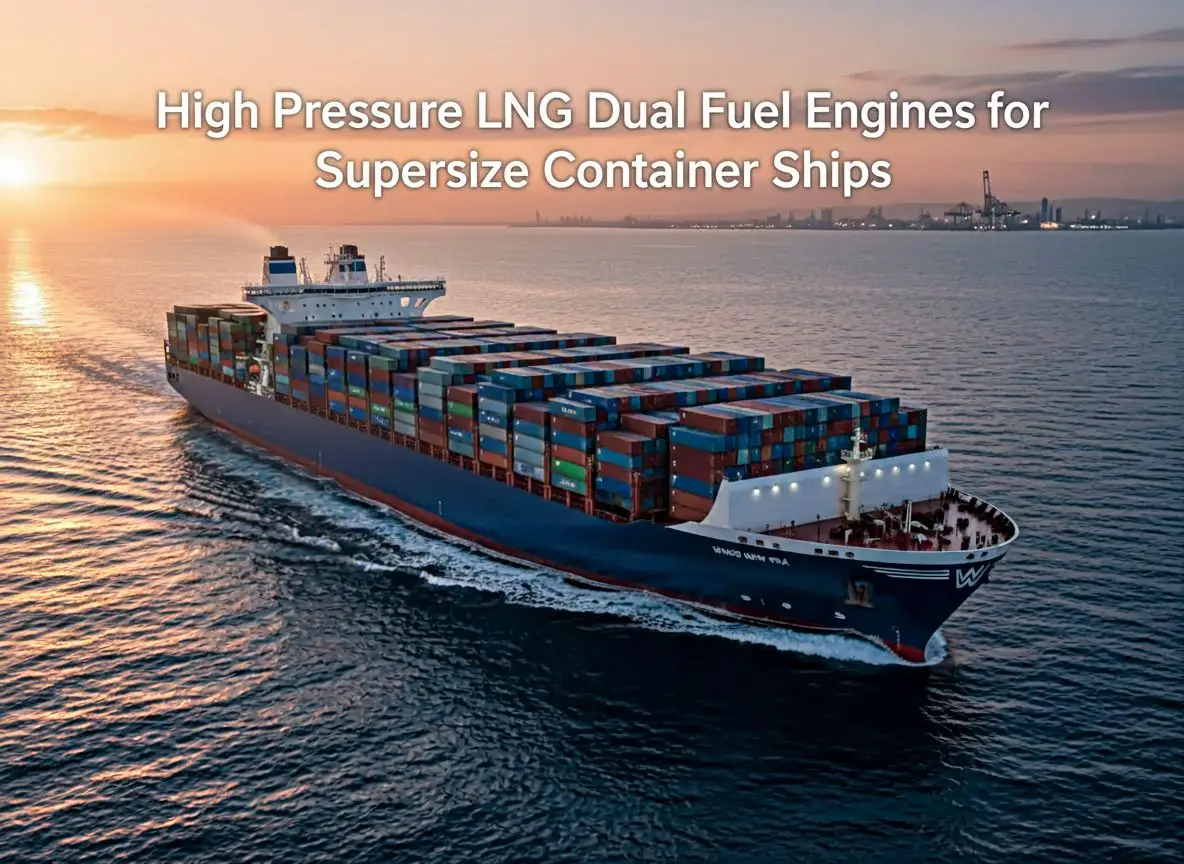
The global shipping industry is at a crossroads, facing mounting pressure to decarbonise while maintaining operational efficiency. Swiss marine power company WinGD has unveiled a groundbreaking solution: the X-DF-HP, its first high-pressure LNG dual-fuel engine designed specifically for ultra-large container vessels (ULCVs). Launched at Marintec China 2025, this innovation promises to redefine propulsion for the world’s biggest ships.
Here’s where it gets interesting. Benny Hilstrom, WinGD’s vice president of market development, candidly stated, “What do you want? We have it all,” which signals a robust commitment to meeting the evolving needs of the global shipping industry. With increasing pressure on maritime companies to adhere to stringent emissions regulations and provide more efficient fuel options, this new engine could be a game-changer.
Why This Matters
- Energy Transition Challenges: With the IMO’s Net Zero Framework paused and regional regulations tightening, shipowners need flexible, future-proof solutions.
- LNG as a Bridge Fuel: LNG remains a cost-competitive, low-risk pathway to compliance with FuelEU Maritime regulations well into the next decade.
The demand for larger container ships
The surge in demand for larger container ships has been impossible to overlook, especially as global shipping drives more of the world’s economy. Supersize vessels, often referred to as mega-ships, have become a staple in the maritime landscape, capable of transporting thousands of TEU (twenty-foot equivalent units). However, this growth has brought challenges related to fuel consumption and emissions. For anyone in the maritime logistics space, these concerns are no small matter.
Key Features of the X-DF-HP
- High-Pressure LNG Technology: Delivers superior fuel efficiency and lower greenhouse gas emissions compared to existing high-pressure engines.
- Power for Giants: Available in X82 and X92 bore sizes, tailored for the immense power demands of ULCVs.
- Tier III Compliance: Meets IMO Tier III standards in both gas and diesel modes using only a standard SCR system.
- Fuel Flexibility: Compatible with LNG, bio-LNG, e-LNG, and renewable methane blends. Retrofit options for methanol, ethanol, and ammonia ensure long-term adaptability.
- Operational Efficiency: Simplified installation thanks to standard auxiliary system requirements, reducing CAPEX and maintenance costs.
Key Developments
What’s really happening here is that the introduction of WinGD’s high-pressure LNG engines sends a strong signal to shipowners and operators that cleaner, greener solutions are not only on the horizon but here now. The adoption of LNG as a marine fuel has been gaining traction, and rightly so, given its potential to reduce emissions compared to traditional heavy fuel oil.
Benefits for Shipowners
- Decarbonisation Pathway: Enables progressive emissions reduction without costly retrofits.
- Future-Proof Investment: Designed to accommodate evolving fuel regulations and sustainability goals.
- Enhanced Reliability: Built on WinGD’s proven high-pressure Diesel cycle expertise, ensuring trouble-free propulsion for the most demanding trade routes.
Additionally, these high-pressure systems are designed to optimise combustion efficiency, resulting in significant fuel savings. The bottom line is that operators who stay ahead of the curve in adopting these technologies will likely reap the benefits, including reduced fuel costs and improved compliance with maritime regulations.
Industry Impact
The X-DF-HP engine represents a strategic leap forward for container shipping. By combining high efficiency, fuel flexibility, and regulatory compliance, WinGD offers operators a practical solution to navigate the energy transition while maintaining competitive performance. First deliveries are expected in 2028, marking a new era for LNG-powered supersize container ships.
Future Implications
The ramifications of WinGD’s innovations extend beyond immediate operational changes. We can expect a ripple effect through the supply chains of maritime logistics and even into environmental discussions. As shipping firms increasingly turn to dual-fuel engines, there may be a marked decline in reliance on heavy fuel oil, catalyzing further investments in LNG infrastructure.
This shift may also influence maritime regulations as authorities observe their impact. Moreover, evolving standards set by bodies such as the IMO may pave the way for even stricter compliance measures worldwide, particularly in European and Asian maritime markets, where regulatory landscapes are particularly watchful.
Conclusion
As we see these trends take shape, the key takeaway here is the necessity for maritime professionals to stay informed and ready to adapt. With WinGD’s launch of the high-pressure LNG dual-fuel engine, the maritime landscape is poised for transformation.
What should you do about this? Start evaluating your operations, and if you’re in a position to embrace advanced technologies like these, now’s the time to do it. The industry’s future is leaning toward cleaner, more efficient practices, and you definitely want to be part of that conversation.
References
- WinGD Adds High-Pressure LNG Dual-Fuel Engine
- International Maritime Organization Guidelines
- International Chamber of Shipping
