

Top 5 Maritime Hubs Evolving Under Current Geopolitical Pressures
The global shipping landscape is undergoing a radical transformation as political instability and economic shifts redefine traditional trade corridors. Today, Global Maritime Hubs are no longer just centers of cargo volume; they have become the front lines of geopolitical strategy. As major powers reassess their dependencies, these ports are forced to adapt to a world where efficiency must be balanced with security. For stakeholders in the shipping industry, understanding how these hubs are evolving is critical for maintaining long-term supply chain resilience in an increasingly fragmented global market.
The Strategic Evolution of Global Maritime Hubs
In 2026, the traditional hierarchy of ports is being challenged by the need for robust geopolitical risk management. While the world’s largest ports have historically focused on throughput and scale, the current climate demands a pivot toward security and adaptability. Regional conflicts in the Middle East and Eastern Europe have underscored the vulnerability of maritime port infrastructure to sudden closures and kinetic threats. Consequently, emerging hubs are positioning themselves as vital alternatives for carriers seeking to mitigate the risks of congested or contested waters.
Top 5 Hubs Adapting to a New Global Order
1. Singapore: Enhancing Resilience through Technology
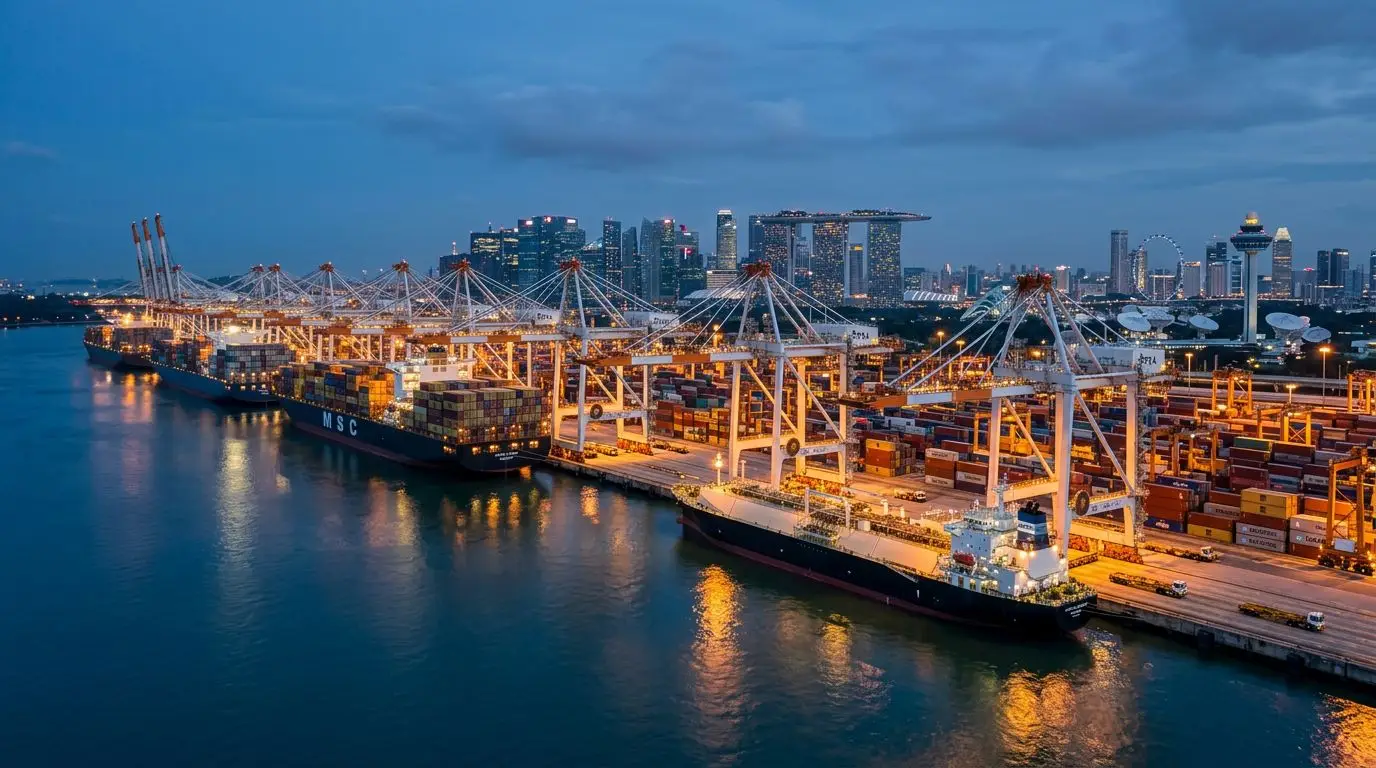
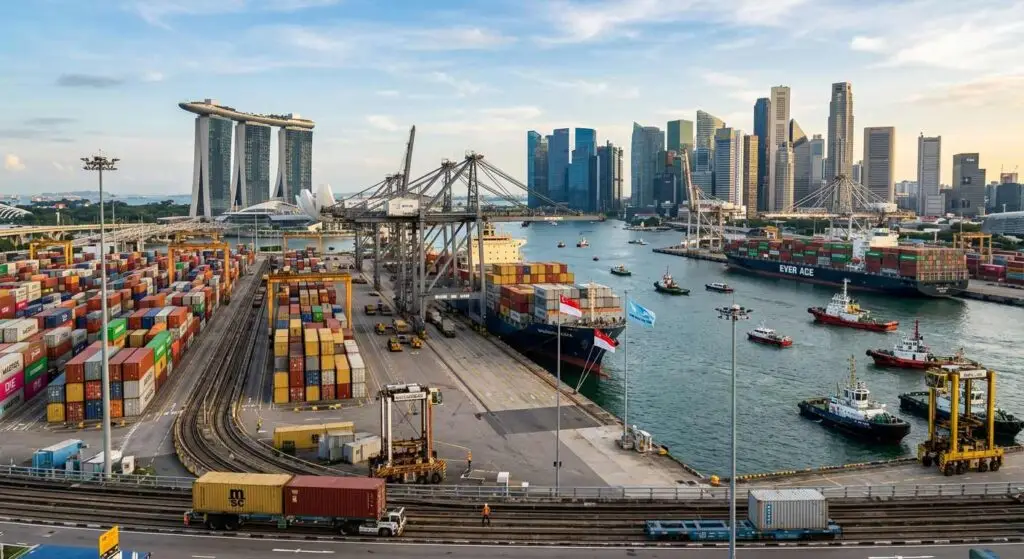
Singapore remains the gold standard for Global Maritime Hubs by integrating AI-driven logistics to manage supply chain resilience. As a primary gateway between the Indian and Pacific Oceans, Singapore has invested heavily in automated terminal operations to ensure that even during regional disruptions, cargo continues to flow with minimal delay. Their commitment to maritime industry standards ensures they remain a preferred neutral ground for international trade.
2. Galveston and Houston, USA: The Rise of Energy Resilience
With the United States cementing its position as a leading energy exporter, the Gulf Coast ports of Galveston and Houston are rapidly expanding their maritime port infrastructure. The development of specialized LNG bunkering facilities allows these hubs to support the global transition to cleaner fuels while providing a stable domestic supply that is less susceptible to the volatility of overseas chokepoints.
3. Tanger Med, Morocco: The Gateway to the Atlantic
Strategically located at the entrance to the Mediterranean, Tanger Med has benefited significantly from the diversification of trade routes. As shippers seek to bypass traditional European bottlenecks or avoid the high-risk zones near the Suez Canal, this Moroccan hub has become a critical node for North-South and East-West trade, offering a secure alternative for transhipment.
4. Mumbai and Mundra, India: Powering the Global South
India’s ports are seeing unprecedented growth as the “Global South” takes a more prominent role in international commerce. By diversifying their trade routes and investing in massive infrastructure projects, these hubs are reducing the industry’s historical over-reliance on East Asian manufacturing centres. This shift is essential for global firms practising “friendshoring” to align their supply chains with stable political partners.
5. Port of Lazaro Cardenas, Mexico: The Nearshoring Powerhouse
As North American trade blocs become more established, this Mexican hub is adapting to manage the significant increase in cargo resulting from nearshoring. By offering a closer alternative to production sites in Asia, it helps companies minimise geographic distance and reduce their exposure to geopolitical tensions in the Pacific. This, in turn, strengthens the resilience of regional supply chains.
Navigating Strategic Maritime Chokepoints and Risks
The modern seafarer must operate in a high-stakes environment where strategic maritime chokepoints—such as the Strait of Hormuz or the Bab el-Mandeb—can become restricted at a moment’s notice. The recent blockade of Iranian ports and the subsequent oil supply disruptions have proven that no route is entirely immune to political coercion. For those navigating maritime careers or challenges, this means adapting to new safety regulations and war-risk premiums that can reach up to 10% of a vessel’s hull value.
To counter these threats, shipping lines are adopting the following strategies:
– Real-time satellite vessel tracking to anticipate regional conflict zones.
– Joint naval patrol agreements to secure essential corridors.
– Expanded inventory buffer models, shifting from 30-day to 90-day planning horizons.
– Investment in dual-fuel vessels to maintain bunkering flexibility across different global regions.Integrating Geopolitical Risk Management into Operations
Effective geopolitical risk management is now a prerequisite for any successful maritime operation. Carriers are no longer just looking for the fastest route; they are looking for the most “defensible” one. This has led to a surge in “South-South” trade, where developing nations in Africa, South America, and Southeast Asia trade more frequently with one another, bypassing traditional Western and East Asian hubs to avoid the crossfire of trade wars and sanctions.
Furthermore, the expansion of the EU Emissions Trading System (EU ETS) has added a regulatory layer to these geopolitical shifts. Ports that can offer green bunkering and meet International Maritime Organization (IMO) decarbonization targets are becoming more attractive, as they help shippers avoid the rising costs of environmental levies. Hubs that fail to invest in sustainable infrastructure risk becoming “stranded assets” in a market that increasingly values green compliance alongside physical security.
Conclusion: A Future Defined by Adaptability
The evolution of Global Maritime Hubs reflects a broader shift toward a more cautious and diversified global trading system. While the pursuit of efficiency remains important, the lessons of the mid-2020s have taught the industry that resilience is the true currency of the sea. By focusing on trade route diversification and strengthening maritime port infrastructure in politically stable regions, the shipping world can protect itself against the “black swan” events that have become all too common. As we look toward the remainder of 2026, the hubs that prioritize security, technology, and sustainability will be the ones that lead the next generation of global trade.