

Maersk Q3 Earnings Analysis: Resilience Amid Global Supply Chain Volatility
The global shipping industry is currently navigating a complex landscape defined by geopolitical tensions, shifting trade patterns, and a cooling economic climate.
Despite these substantial hurdles, A.P. Moller – Maersk has demonstrated significant operational resilience in its latest financial reporting. The recent announcement of Maersk’s Q3 earnings has caught the attention of investors and industry experts alike, revealing a company successfully pivoting its strategy to maintain profitability. By focusing on integrated logistics and strategic alliances, the Danish giant is proving that even in a market defined by calibration, efficiency remains the primary driver of success.
Strategic Gains and the Role of the Gemini Cooperation
One of the most significant contributors to the company’s current financial health is the launch and maturation of the Gemini Cooperation. This operational alliance with Hapag-Lloyd has enabled Maersk to optimise its East-West network, providing greater service reliability for customers while reducing unit costs. In an era where ocean freight rate stability is often elusive due to regional conflicts, the hub-and-spoke model utilised by this cooperation ensures that cargo continues to move efficiently. By concentrating volumes through key hubs, Maersk can maintain high vessel utilisation rates, which reached an impressive 94% during this period.
The impact of this alliance is clearly visible in the third-quarter data. While market rates have softened compared to the record highs of 2024, Maersk’s proactive capacity management has helped mitigate the impact on its bottom line. This strategic move aligns with the company’s long-term vision of becoming a truly integrated end-to-end logistics provider, moving beyond simple port-to-port transportation. Such structural changes are essential for the industry to move away from the chronic boom-and-bust cycles that have historically plagued maritime commerce.
Vincent Clerc on Navigating Economic Headwinds
During the earnings call, Maersk CEO Vincent Clerc emphasised the importance of staying the course amid market volatility. Clerc noted that while revenue in the Ocean segment faced pressure from a 31% year-on-year drop in loaded freight rates, other areas of the business provided a necessary buffer. His leadership has been central to the company’s “Integrator” strategy, which seeks to provide holistic supply chain solutions. This approach is designed to help global clients navigate maritime careers and challenges more effectively by providing more predictable, visible logistics data.
Clerc highlighted several key performance indicators for the quarter that underscore this stability: Group revenue reached USD 14.2 billion, reflecting resilient performance despite a 10% decline from the previous year.
– EBITDA stood at USD 2.7 billion, driven by strong volumes and rigorous cost discipline.
– EBIT reached USD 1.3 billion, allowing the company to raise the lower end of its full-year 2025 financial guidance.
– Terminals achieved record volumes and profitability, particularly in North America, Europe, and Africa.
The CEO’s focus on cost control and productivity gains has allowed Maersk to upgrade its full-year EBIT forecast to a range of $3.0 to $3.5 billion. This optimistic revision suggests that the company’s internal improvements are successfully offsetting the external pressures of a “bleak” earnings environment predicted by some analysts.
Logistics and Terminals: The Engines of Profitability
A standout feature of the latest Maersk Q3 earnings report is the continued improvement in logistics and services profitability. As the company expands its land-side operations, including warehousing and fulfilment, it is creating more predictable, less volatile revenue streams than the spot market for ocean freight. In Q3 2025, the logistics segment saw EBIT rise to USD 218 million, driven by cost control and the performance of “Fulfilled by Maersk” services. This diversification is critical for long-term sustainability, especially as the industry prepares for a potential surplus of vessel capacity.
Similarly, the terminals business, operated under APM Terminals, emerged as a star performer. With an EBIT of USD 571 million, it actually contributed more to the overall profit this quarter than the traditional ocean shipping division. High utilisation rates of 89% across its global network have enabled better tariff management and improved margins. This performance highlights the value of owning the infrastructure through which goods flow, providing a level of control that pure-play carriers lack.
Maersk Q3 Earnings and the Global Market Outlook
Despite broader economic uncertainty, container market volume growth has remained surprisingly robust. Maersk recently revised its market growth forecast upward to approximately 4%, citing strong demand across various consumer sectors and a “bubble” of activity leading up to the Chinese New Year. However, this growth is balanced against the ongoing risks posed by Red Sea disruptions, which are now expected to persist into 2026. These disruptions have forced vessels to take the longer route around the Cape of Good Hope, increasing fuel consumption and operating costs.
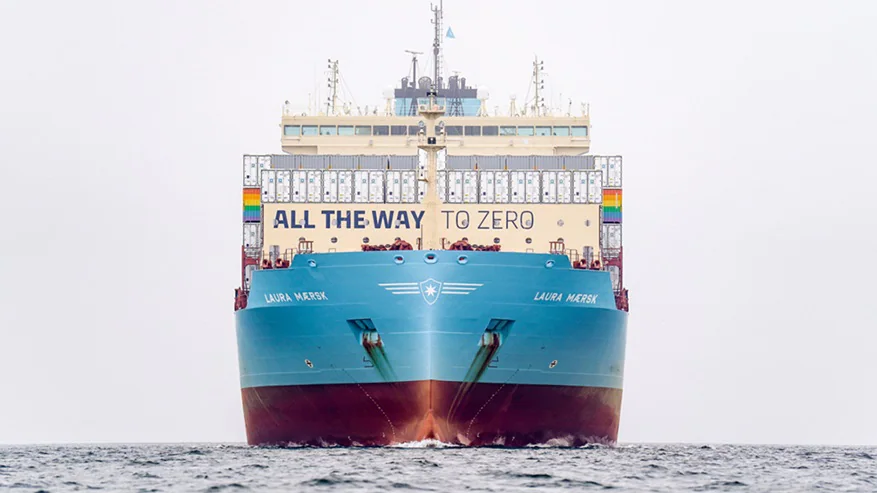
To maintain its authoritative position in the market, Maersk continues to adhere to the highest industry standards for safety and environmental stewardship. The company is currently leading the transition to green shipping with its investment in methanol-enabled vessels, aiming to meet International Maritime Organisation (IMO) targets for decarbonization. This commitment to sustainability is not just an ethical choice but a strategic one, as global shippers increasingly demand carbon-neutral supply chains.
Q3 earnings
Maersk’s Q3 earnings reflect a maritime leader in a successful transition. By leveraging the efficiencies of the Gemini Cooperation and doubling down on logistics integration, Maersk is building a business model capable of withstanding significant external shocks.
Under the leadership of Vincent Clerc, the company is not just reacting to global challenges but proactively reshaping its network to meet them. For shippers and investors, the message is clear: while the seas of global trade may remain choppy, operational discipline and a diversified strategy are the anchors that will lead to a successful voyage into the future.