
Suez Canal Resilience: Navigating Stability Amid Regional Tensions
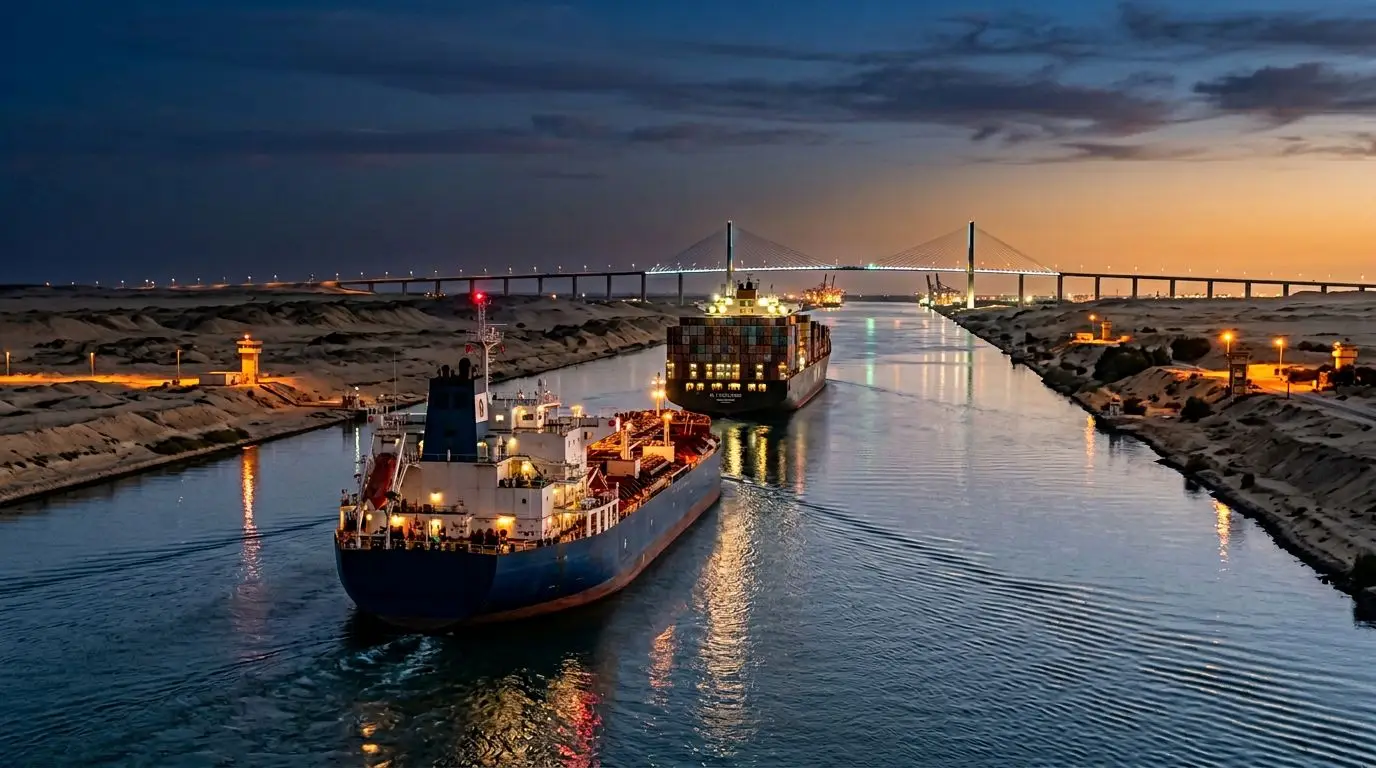
The global maritime industry is currently demonstrating remarkable resilience, with the Suez Canal maintaining steady operations despite ongoing geopolitical friction.
Recent Suez Canal Traffic Updates indicate that while the landscape remains complex, the waterway continues to serve as a vital artery for international trade. For shipping companies and logistics providers, this stability is a cornerstone of global supply chain resilience, allowing for more predictable scheduling in an era defined by volatility.
As regional conditions evolve, understanding the intersection of security and commerce is essential for any maritime stakeholder.
The Economic Recovery and Suez Canal Revenue Impact
Despite the challenges of the past two years, the Suez Canal Authority (SCA) has reported significant financial recovery.
By early 2026, revenues reached approximately $449 million, a notable increase compared to the same period in the previous year. This growth is largely attributed to a gradual return of confidence among major shipping lines following localised ceasefires and improved diplomatic efforts. The Suez Canal’s revenue impact remains a critical metric for Egypt’s economy, which relies heavily on these foreign-currency inflows to support national infrastructure projects.
Navigation statistics for the first half of the 2025/2026 fiscal year show a 16% increase in net tonnage. This surge suggests that while some carriers remain cautious, the fundamental demand for the shortest route between Asia and Europe remains unshakable. The completion of the southern sector upgrade has further enhanced this, increasing navigational safety by 28% and allowing the canal to handle ultra-large container vessels with greater efficiency.
Advancing Red Sea Maritime Security and Risk Management
The primary factor influencing Suez Canal Traffic Updates is the state of maritime security in the Red Sea. While the intensity of active threats has decreased since the peaks in 2024, the region is still classified as high risk by major insurance underwriters. To combat this, multinational naval frameworks, such as Operation Prosperity Guardian, continue to provide a defensive presence for commercial hulls.
The industry has moved toward a more sophisticated risk-assessment model. Rather than abandoning the route entirely, many carriers now utilise a hybrid strategy. This involves:
– Prioritising the Suez Canal for high-value or time-sensitive shipments.
– Maintaining contingency plans for rapid rerouting should tensions escalate.
– Implementing enhanced on-board security measures and real-time satellite tracking. For those navigating these waters, the human element is just as critical as the technical one. Professionals operating in these high-stakes environments often seek guidance on managing maritime careers and challenges, as the psychological and operational pressures of transiting restricted zones require specialised training and support.
The Shift from Cape of Good Hope Rerouting
For much of 2024 and 2025, the standard operating procedure for many global fleets was to reroute via the Cape of Good Hope. While this path offers a safer alternative from a kinetic standpoint, it adds approximately 10 to 14 days to a voyage and increases fuel costs by over $1 million per round trip. This massive expenditure and the resulting carbon footprint have put immense pressure on carriers to return to the Suez corridor.
As we progress through 2026, the stability of the maritime trade corridor is becoming more apparent. Shipbuilders and operators are under pressure to optimise asset utilisation, and the 6,000 extra nautical miles required for the African route are increasingly difficult to justify in a buyer’s market. However, analysts warn that a sudden, uncoordinated mass return could lead to port congestion in Europe and Asia, potentially offsetting the time savings gained by the shorter canal transit.
A New Standard for Global Supply Chain Resilience
The lessons learned over the past few years have fundamentally changed the industry’s view of maritime trade corridor stability. Volatility is no longer seen as a temporary hurdle but as a structural reality of modern trade. Consequently, resilience is now built on flexibility rather than fixed routing.
Key trends for 2026 include:
– Multi-tier transparency: Shippers are demanding visibility deeper into their supply chains to anticipate disruptions before they reach the water.
– Digital Twin technology: Classification societies like DNV are using virtual replicas of vessels to monitor structural integrity and performance in real-time.
– Decarbonization focus: The return to Suez is partly driven by the need to meet IMO 2030 targets, as shorter routes significantly lower total emissions per TEU.Conclusion
The Suez Canal’s ability to remain a stable focal point for trade despite regional tensions is a testament to its enduring strategic importance. While Red Sea maritime security remains a moving target, the combination of technological upgrades, naval protection, and diplomatic progress is paving the way for a more normalised operating environment. For the global economy, the canal is more than just a shortcut; it is a symbol of a logistics system that has redefined itself through crisis, proving that even in the most turbulent waters, stability is achievable through innovation and international cooperation.
As we move forward, the maritime world will continue to monitor these developments, balancing the need for speed with the imperative of safety.
