

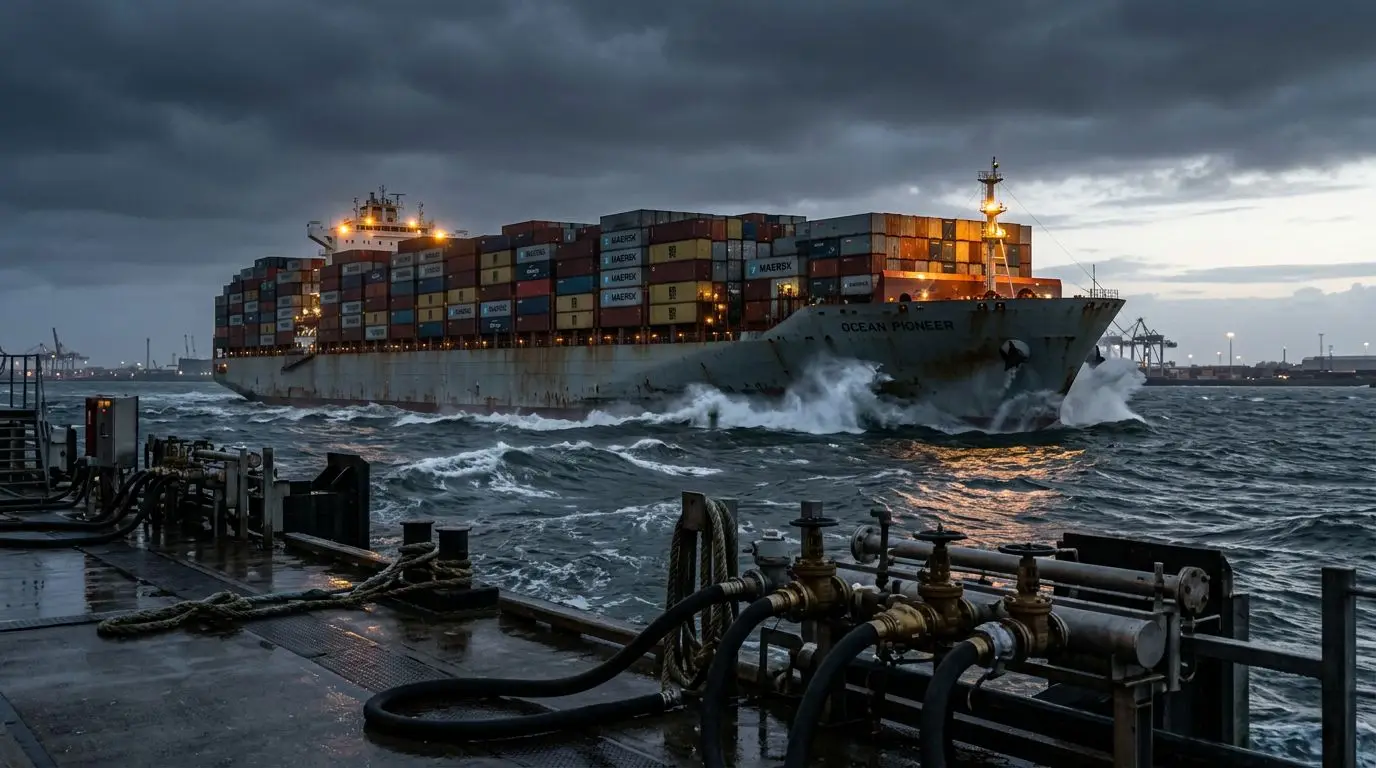
Navigating the Storm: How Shipping Companies are Managing Rising Shipping Fuel Costs
The global maritime industry is currently facing a significant period of transition and economic pressure.
At the heart of these challenges are Shipping Fuel Costs, which typically account for 50% to 60% of a vessel’s total operating expenses. As geopolitical tensions disrupt major trade routes and energy markets, the cost of keeping the world’s fleet moving has become increasingly unpredictable.
For carriers and cargo owners alike, understanding the mechanics of these costs is no longer just a matter of accounting—it is a critical requirement for survival in a volatile global market.
The Reality of Bunker Fuel Price Volatility
The shipping industry has always been sensitive to the energy market, but recent years have seen unprecedented volatility in bunker fuel prices. Geopolitical events, such as the shutdown of the Strait of Hormuz or conflicts in the Middle East, can cause fuel prices to spike by tens of thousands of dollars per voyage within days.
When the supply of crude oil is constrained, the price of refined marine fuels such as Very Low Sulfur Fuel Oil (VLSFO) or Marine Gas Oil (MGO) follows suit, often with even greater intensity.
For a large container ship, a single “fill-up” can cost between $5 million and $10 million.
When prices rise sharply, even a 10% increase in fuel costs can translate into hundreds of thousands of dollars in unplanned expenses for a single transatlantic transit. This volatility makes long-term budgeting nearly impossible for many operators and has led to the widespread adoption of protective measures.
Understanding the Emergency Bunker Surcharge
To recover these sudden, extraordinary expenses, many ocean carriers implement an Emergency Bunker Surcharge (EBS). Unlike the standard Bunker Adjustment Factor (BAF), which is updated on a predictable monthly or quarterly cycle, the EBS is a reactive measure. It is typically triggered by extreme market disruptions that push fuel prices beyond the normal range covered by existing agreements.
For importers and logistics managers, the EBS can be a source of frustration because it is often announced with very little notice. However, for shipping lines, it is a necessary mechanism to maintain service stability during crises. These surcharges are essential to cover the additional fuel consumption when vessels are forced to reroute, such as taking the long journey around the Cape of Good Hope to avoid high-risk zones.
The Impact of Maritime Decarbonization Regulations
Beyond the immediate market spikes, the industry is also affected with the long-term costs of maritime decarbonization regulations. The International Maritime Organisation (IMO) has set ambitious targets to reach net-zero emissions by or near 2050. To achieve this, new frameworks such as the Carbon Intensity Indicator (CII) and the Energy Efficiency Existing Ship Index (EEXI) have been introduced to measure and limit the carbon emissions of the global fleet.
Additionally, regional initiatives like the EU Emissions Trading System (EU ETS) now require shipowners to pay for their carbon emissions when operating in European waters. These regulations are effectively placing a price on carbon, adding a new layer of complexity to the total cost of fuel. While these measures are vital for the environment, they represent a significant financial burden, reshaping the competitive landscape of the maritime sector.
Innovations in Vessel Fuel Efficiency Technologies
In response to these financial and regulatory pressures, many companies are investing heavily in vessel fuel efficiency technologies.
These innovations aim to reduce the amount of energy required to move cargo, thereby lowering both costs and emissions. Some of the most effective strategies include:
– Slow Steaming: Reducing a vessel’s speed from 24 knots to 18 knots can cut fuel consumption by up to 40%.
– Air Lubrication Systems: Creating a layer of air bubbles under the ship’s hull to reduce friction against the water.
– Advanced Hull Coatings: Specialized paints that prevent marine growth, ensuring the hull remains sleek and efficient.
– Digital Twins: Using high-fidelity virtual replicas of ships to monitor structural stress and optimise engine performance in real-time. As technology evolves, the industry is seeing a shift in how maritime careers or challenges are approached, with a greater emphasis on data analytics and green engineering to manage fleet performance.
The Shift Toward Alternative Marine Fuels
While efficiency is crucial, the long-term solution to rising costs and emissions lies in the transition to alternative marine fuels. Many of the world’s leading shipping lines, including Maersk and COSCO, are already ordering vessels capable of running on sustainable fuels.
Methanol dual-fuel vessels and LNG-powered ships are currently the most popular choices due to existing infrastructure and lower-carbon profiles. Other options, such as ammonia and hydrogen, are being explored for their zero-carbon potential, though they face hurdles regarding toxicity and storage. While these fuels are currently more expensive than traditional bunker oil, the “green premium” is expected to narrow as production scales and carbon taxes increase the cost of fossil fuels.
Fuel Costs
The challenge of rising Shipping Fuel Costs is a multi-dimensional problem that requires both immediate tactical responses and long-term strategic investments. From managing the impact of an Emergency Bunker Surcharge to navigating the complexities of global decarbonization mandates, shipping companies are operating in a permanent state of adaptation.
By embracing new fuel technologies and optimising operational efficiency, the industry is not just trying to lower its bills; it is building a more resilient and sustainable framework for the future of global trade. Success in this new era will belong to those who can balance the cold reality of energy costs with the innovative spirit required to navigate a greener horizon.