
Hengli Engine Delivers China’s First Domestically Built 8G95 LNG Dual-Fuel Engine
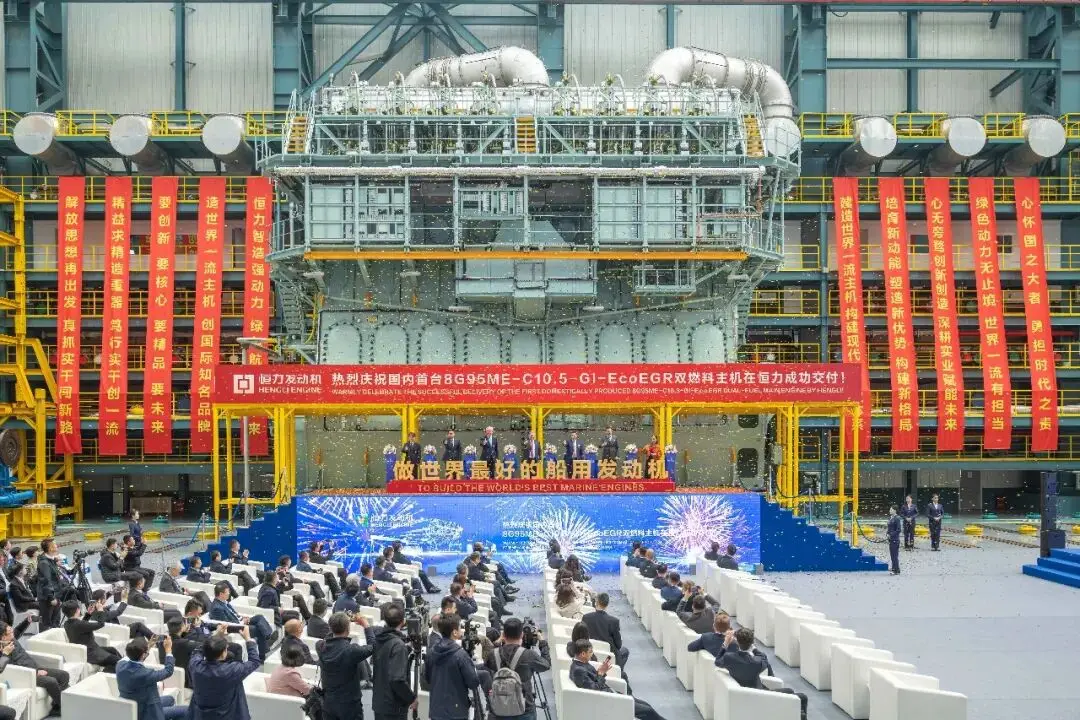
The global maritime industry has reached a significant milestone in its pursuit of sustainable shipping with the successful delivery of the first domestically produced 8G95 LNG dual-fuel engine in China.
Manufactured by Hengli Engine, a subsidiary of Hengli Heavy Industries, this massive power plant marks a breakthrough in high-pressure natural-gas marine dual-fuel technology. As the industry faces mounting pressure to reduce its carbon footprint, this delivery marks a pivotal moment for domestic manufacturing and the global transition toward cleaner maritime propulsion systems.
The Rise of Marine Dual-Fuel Technology and Hengli Engine
The successful delivery of the 8G95ME-C10.5-GI engine on April 21, 2026, in Dalian, China, is more than just a technical achievement; it is a strategic shift for the country’s shipbuilding sector.
For years, the domestic market faced a gap in the construction of dual-fuel engines in this specific power class. Hengli Engine has now filled that void, demonstrating that it can compete at the highest levels of marine engineering.
By leveraging a dual-engine strategy of shipbuilding and engine manufacturing, Hengli Heavy Industries is overcoming industrial bottlenecks. This integrated approach ensures they are no longer dependent on external suppliers for the core propulsion systems of their vessels. As the world’s largest single-site shipbuilding base, the facility is now equipped to handle everything from bulk carriers and VLCCs to ultra-large container ships.
Technical Specifications of the 8G95ME-C10.5-GI
The 8G95ME-C10.5-GI is a marvel of modern engineering, standing 16 meters tall and weighing over 1,600 tons. It delivers a staggering maximum power output of 74,725 horsepower, making it the most powerful high-pressure natural gas dual-fuel engine currently available in China.
During the development process, the research team at Hengli overcame several critical technical challenges:
– High-pressure direct natural gas injection into cylinders
– Integrated high-pressure exhaust gas recirculation (EcoEGR)
– Advanced dynamic cylinder control for optimised combustion
– Compliance with IMO Tier III emission standards without external control devices.
This engine has received its main engine class certificate from Det Norske Veritas (DNV), confirming its reliability and safety for international operations. The use of EcoEGR technology allows the engine to significantly reduce nitrogen oxide emissions, aligning perfectly with global maritime decarbonization goals.
Fueling the Future: Ultra-Large Container Ship Propulsion
The first batch of these engines is destined for some of the largest vessels on the water. They will be installed on 21,000-TEU and 24,000-TEU ultra-large container ships currently under construction for Mediterranean Shipping Company (MSC). Providing propulsion for ultra-large container ships requires a balance of immense power and extreme efficiency, and the 8G95 model is designed to deliver both.
As shipping lines look to optimise their fleets, the ability to switch between liquefied natural gas (LNG) and conventional diesel provides operational flexibility. This is particularly important for shipowners navigating the complexities of modern maritime careers or challenges, where staying ahead of environmental regulations is a prerequisite for long-term profitability. You can explore more about these industry shifts and the evolving nature of the workforce in this guide on maritime careers or challenges.
The Broader Impact on Maritime Decarbonization
The maritime industry is currently responsible for approximately 3% of global greenhouse gas emissions. To meet the International Maritime Organisation’s (IMO) target of reaching net-zero emissions by or around 2050, the adoption of green fuels is non-negotiable. The delivery of this LNG dual-fuel engine in China is a clear indicator that the infrastructure for this transition is maturing.
Hengli’s newly operational Phase II assembly workshop has positioned the company as a leader in low-carbon and zero-carbon solutions. Their strategy covers four dual-fuel engine types: LNG, LPG, methanol, and ammonia. Offering a variety of eco-friendly power options, they support the global shift away from heavy fuel oil.
Hengli Dual Fuel Engine
The delivery of the first domestically built 8G95 LNG dual-fuel engine by Hengli Engine is a landmark event that reinforces China’s position as a global leader in high-end marine equipment. By combining massive power with eco-friendly performance, this engine sets a new standard for ultra-large container ship propulsion.
As the industry continues to prioritise maritime decarbonisation, the innovations emerging from Dalian will play a crucial role in shaping a more sustainable future for global trade. With an order book filled through 2030, Hengli Heavy Industries and Hengli Engine are well positioned to drive the next generation of green shipping technology, demonstrating that domestic manufacturing is ready to meet the world’s most demanding environmental and technical standards.
