
The IMO Net-Zero Framework: Navigating the 2026 Delay and the Future of Green Shipping
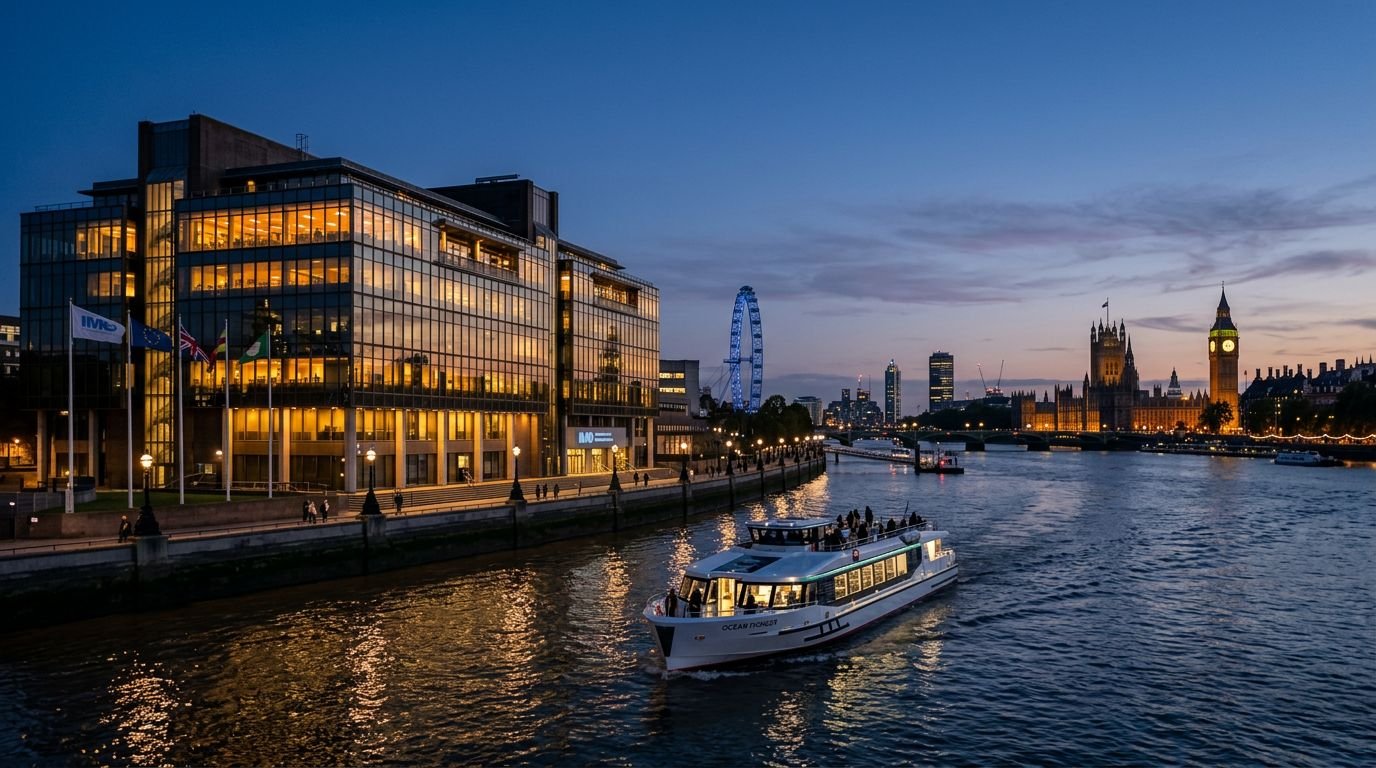
The global maritime industry stands at a pivotal crossroads following the latest round of negotiations at the International Maritime Organisation (IMO) in London.
While the ambitious IMO Net-Zero Framework remains the guiding light for the sector’s transition to a sustainable future, a recent vote has shifted the immediate landscape. In a narrow 57-to-49 decision, member states opted to delay the formal adoption of these landmark maritime decarbonization regulations. This move postpones the implementation of critical technical and economic measures, pushing the official finish line to late 2026.
Despite this tactical delay, the framework’s core components—a global fuel standard and a pricing mechanism—have survived intense political pressure.
For shipowners, port authorities, and technology providers, this period represents a “wait-and-see” phase that nonetheless demands proactive preparation. Understanding the nuances of this delay and the ongoing conflict between member states is crucial for anyone dealing with the complexities of modern maritime careers or the challenges posed by the current regulatory environment.
The MEPC 85 Timeline and the Road to 2026
The decision to postpone adoption was not taken lightly. The revised MEPC 85 timeline now targets late November 2026 for the formalisation of the framework.
This one-year postponement was mainly prompted by a coalition of major economies and developing countries, who expressed concerns about technological readiness and the risk of placing a disproportionate economic burden on smaller states.
The delay means that the legally binding requirements, which were originally slated to begin affecting the market by 2027, will likely be pushed to enter into force in 2028 at the earliest.
During this interim period, the IMO’s Marine Environment Protection Committee will focus on refining implementation guidelines. These guidelines are crucial for defining how greenhouse gas (GHG) fuel intensity will be measured on a “well-to-wake” basis and how the proposed credit-trading schemes will function in practice.
Debating the Global Carbon Pricing Mechanism
At the heart of the controversy is the proposed global carbon pricing mechanism. This economic measure is designed to bridge the price gap between conventional fossil fuels and zero- or near-zero emission (ZNZ) fuels, such as green methanol, ammonia, and hydrogen. Proponents argue that without a mandatory levy, the industry lacks the financial incentive to invest in expensive new technologies.
However, the “levy versus fund” debate has created a significant rift:
– Immediate Green Levies: High-ambition states and small island developing nations are pushing for high-price levies to generate substantial revenue for a “just and equitable transition.”
– Economic Protectionism: Countries concerned about rising freight costs fear that a global tax could increase shipping expenses by more than 10%, hurting their export competitiveness.
– Revenue Allocation: Deep divisions remain over how the generated funds—potentially billions of dollars—should be managed and distributed to support developing states in building green bunkering infrastructure.
The Global Fuel Standard: A Technical Mandate
While the economic debate captures headlines, the technical pillar of the IMO Net-Zero Framework is the global fuel standard. This standard will mandate a phased reduction in the GHG intensity of energy used on board ships. Unlike previous regulations that focused solely on exhaust emissions, this new standard adopts a life-cycle approach, ensuring that the environmental impact of fuel production is also accounted for.
This transition forces shipowners to evaluate their fleet renewal programs through a long-term lens.
Ships ordered today will likely be in service well into the 2040s, making them subject to the most stringent phases of these upcoming regulations. The uncertainty created by the 2026 delay makes investment decisions difficult, yet those who move early toward dual-fuel capabilities may find themselves at a competitive advantage once the “tacit acceptance” period of the new MARPOL Annex VI amendments concludes.
Maintaining Momentum in Maritime Decarbonization Regulations
The IMO Secretary-General, Arsenio Dominguez, has emphasised that this delay should not be viewed as a failure, but as an opportunity to build trust and reach a broader consensus. The framework’s survival despite calls for a total scrap proves that the industry’s commitment to net-zero by 2050 remains fundamentally intact.
Furthermore, the delay at the international level may accelerate regional actions. The European Union’s FuelEU Maritime regulation is already in motion, and other regions may implement their own maritime green levies if the IMO process appears stalled. This “patchwork” of regulations is exactly what the global shipping industry hopes to avoid, as it creates administrative hurdles and uneven playing fields.
IMO Negotiations
The conclusion of the IMO negotiations in London marks a momentary pause in a decade-long journey toward sustainable trade.
While the MEPC 85 timeline provides a clear path forward, the next twelve months will be defined by intense diplomacy and technical refinement. The IMO Net-Zero Framework is more than just a set of rules; it is the first attempt to transition an entire global economic sector away from fossil fuels.
For shipowners and shipbuilders, the message is clear: the regulations are coming. Whether through global consensus or regional mandates, the shift toward a global fuel standard and carbon pricing is inevitable. The maritime world must use this additional year to bridge the gap between ambition and implementation, ensuring that the transition to net-zero is not just fast but fair for every nation involved in global commerce.