
AYK Energy Secures Record Marine Battery Contract for Electric Ferries
Marine energy storage manufacturer AYK Energy has been awarded a landmark marine battery contract to supply 165 MWh of battery systems for three new fully electric catamaran ferries. The deal is the largest battery order in commercial ferry history and marks a major milestone in vessel electrification.
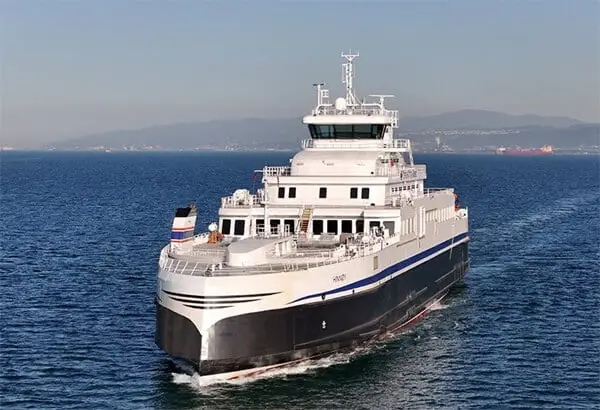
Incat Tasmania in Australia is building three electric catamaran ferries for the Danish ferry operator Molslinjen. Under the agreement, AYK Energy has contracted with the system integrator Wärtsilä, which will supply the integrated electric propulsion systems and waterjet drives for the vessels.
Technical Innovations and System Weight
Each of the three fast ferries will carry a 55 MWh DNV-certified Polaris battery system using lithium iron phosphate (LFP) chemistry. A critical factor in securing the contract was AYK Energy’s ability to reduce each ferry’s battery pack weight from over 700 tonnes to under 400 tonnes. The more than 300-tonne reduction was achieved through new LFP battery cell selection, automotive-inspired manufacturing processes, and a lightweight aluminium enclosure structure.
According to Molslinjen Chief Executive Carsten Jensen, the significant weight savings were decisive in enabling large, high-speed vessels to operate efficiently across the Kattegat. Operating on routes linking Denmark’s Jutland and Zealand, the ferries will reach service speeds of up to 40 knots and accommodate up to 1,500 passengers and 500 vehicles each. To maintain high-frequency sailing schedules, the ferry battery systems are designed to support rapid 30-minute high-power charging at port terminals.
Safety Standards and Fleet Expansion
Safety considerations played a central role in the selection process. The Polaris system incorporates patented thermal management and fire suppression technologies tailored specifically for marine environments. Torsten Büssow, Director of Wärtsilä’s electrical integration division, noted that large ferry projects require balancing rapid charging needs with stored-energy range and strict weight constraints, particularly on aluminium hulls.
Delivery of the vessels will be staggered, with the first ferry scheduled to arrive in Denmark in late 2027 and enter service in the first quarter of 2028. The remaining two ferries are expected to follow in 2028 and 2029. Once operational, the catamarans are expected to become the largest fully electric ferries operating in Europe.
The record-breaking contract signals a broader shift towards large-scale marine energy storage solutions in short-sea shipping. For shipowners, operators, and port authorities, the successful deployment of 55 MWh battery systems on high-speed commercial routes sets a key operational benchmark for zero-emission passenger transport. The project also shows how advances in battery energy density and dedicated port charging infrastructure are enabling full vessel electrification across high-capacity maritime trade corridors.