

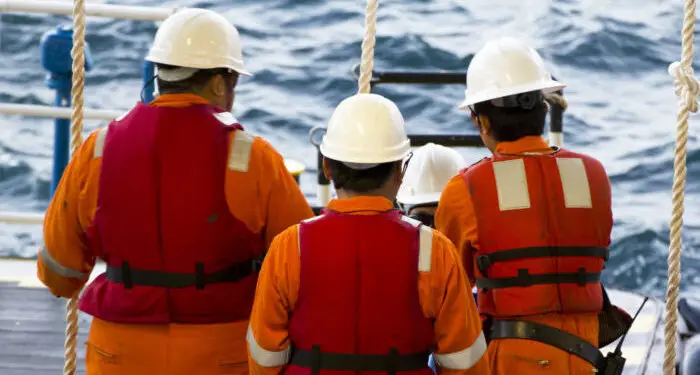
The international maritime community is facing a severe humanitarian and operational crisis, with approximately 20,000 seafarers and 15,000 cruise passengers stranded in the Persian Gulf. Following the outbreak of conflict between the United States, Israel, and Iran on February 28, 2026, major shipping companies have suspended all transits through the Strait of Hormuz. While the waterway is not legally closed, Iranian military officials have threatened to “burn” any vessel attempting passage, rendering the route operationally unsafe and leaving over 1,000 vessels unable to exit the region.
The Facts
Stranded Personnel: According to the International Maritime Organization (IMO), roughly 20,000 merchant sailors and 15,000 cruise passengers are currently unable to leave the Arabian Gulf due to the deteriorating security situation.
Vessels Trapped: Industry analysts from Clarksons Research estimate that approximately 3,200 vessels of all types—including 112 crude tankers—are currently inside the Persian Gulf, representing about 4% of global shipping tonnage.
Transit Suspension: Major container carriers, including Maersk, MSC, Hapag-Lloyd, and CMA CGM, have indefinitely suspended all bookings and transits through the Strait of Hormuz.
Military Threats: On March 2, 2026, Ebrahim Jabbari, a senior advisor to the Commander-in-Chief of the Islamic Revolutionary Guard Corps (IRGC), stated on Iranian state television that Iran would “attack and set ablaze any ship attempting to cross” the strait.
Casualties and Attacks: At least nine commercial vessels have been hit by projectiles or drones since the conflict began. Confirmed fatalities include three seafarers and two port workers. Notable incidents include the tanker Skylight, where two crew members were killed, and the MKD Vyom, which suffered a fatal drone boat strike.
Insurance and Economic Impact: Marine insurers have largely withdrawn war risk cover for the area or implemented “single voyage” agreements with massive premiums. Brent crude prices have surged toward $100 per barrel as the strait typically carries 20% of the world’s oil supply.
Regional Port Status: Major hubs such as Jebel Ali in the UAE and the Port of Bahrain have experienced operational disruptions or temporary shutdowns due to drone-related fires and safety concerns.
Official Statements
Arsenio Dominguez, Secretary-General of the International Maritime Organization (IMO): “I am deeply concerned for the safety and well-being of the 20,000 seafarers affected in the region. Beyond the economic impact of these alarming attacks, it is a humanitarian issue. No attack on innocent seafarers is ever justified.”
Ebrahim Jabbari, Senior Advisor to the IRGC Commander-in-Chief: “The Strait of Hormuz has been closed. We will attack and set ablaze any ship attempting to cross… We will not let oil be exported from the region.”
Joint Maritime Information Center (JMIC) Update: “While no formal legal closure of the Strait of Hormuz has been declared, the operational environment reflects active kinetic hazard conditions… the regional maritime threat is assessed as CRITICAL.”
U.S. Central Command (CENTCOM) Statement: “The Iranian regime has harassed and attacked international shipping in the Gulf of Oman for decades. Those days are over.”
