

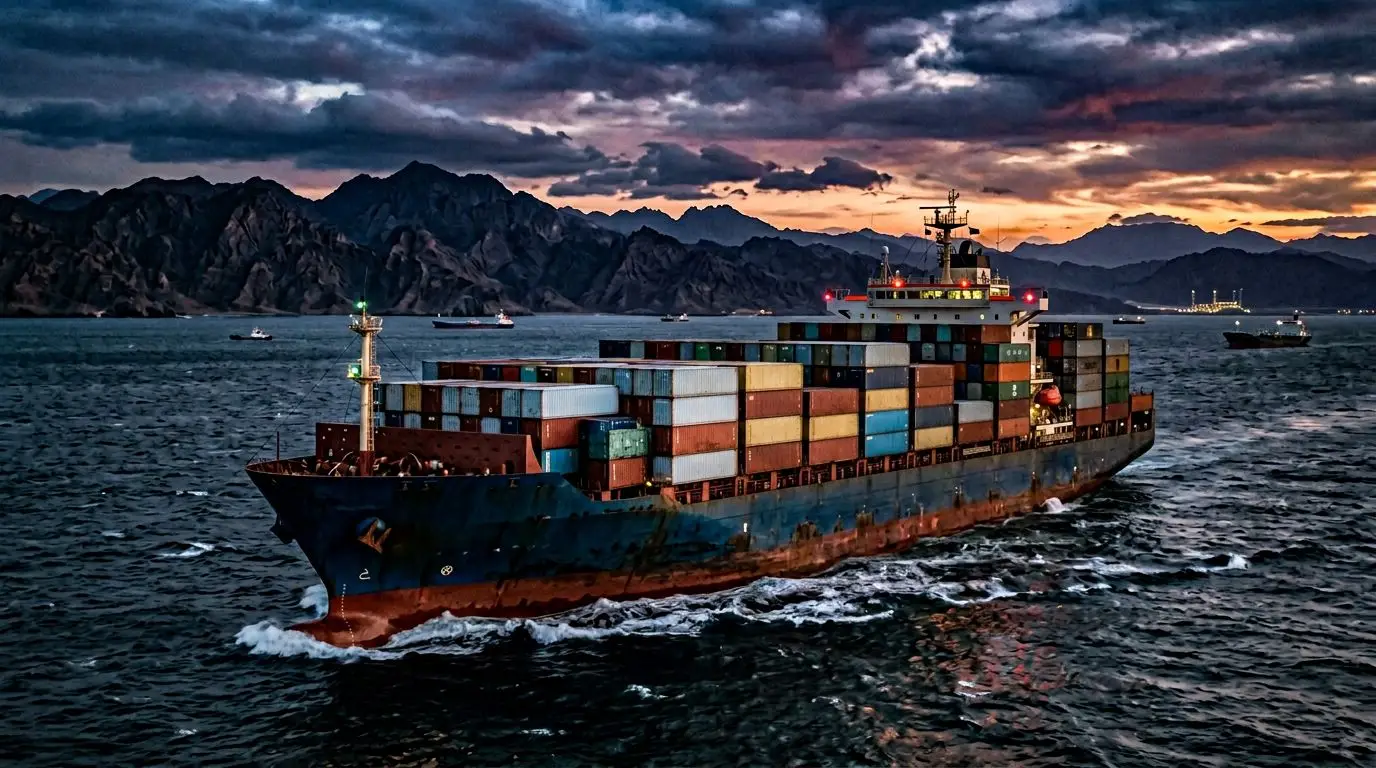
A Month That Redefined Maritime Risk
March 2026 will likely be remembered as one of the most dangerous months for global shipping in modern history. Following the outbreak of direct military conflict between Iran, Israel, and the United States on February 28, 2026, commercial vessels transiting the Middle East found themselves caught in an increasingly hostile maritime environment. Within days, the Strait of Hormuz, a chokepoint responsible for roughly one‑fifth of global seaborne oil trade, became the epicentre of a rapidly expanding security crisis.
By the end of March, at least 30 confirmed incidents involving merchant ships, ports, and maritime infrastructure had been recorded. These ranged from drone strikes and explosive attacks to forced diversions, seizures, and port closures. What began as sporadic missile incidents quickly evolved into a selective blockade, fundamentally altering how ships could — or could not — move through the region.
Timeline of Ships Attacked in Early March 2026
Most of the most severe attacks occurred during the first half of March, immediately following Iran’s effective closure of the Strait of Hormuz on March 1, 2026. These incidents demonstrated a clear pattern: vessels that ignored Iranian routing instructions, attempted to use the traditional Omani side of the strait, or were linked to the United States or Israel faced heightened risk.
Confirmed Vessel Attacks (March 1–March 18)
- March 1 – Skylight (Oil Tanker)
Abandoned after an attack; two crew members were killed. - March 1 – MKD VYOM (Oil Tanker)
Abandoned; one crew member killed. - March 1 – Hercules Star (Oil Tanker)
Sustained minor damage from a projectile. - March 1 – Athe Nova (Asphalt Tanker)
Hit by drones while attempting to cross the strait. - March 2 – Stena Imperative (Products Tanker)
Struck in port; one dock worker killed. - March 4 – Safeen Prestige (Container Ship)
Hit and abandoned after sustaining damage. - March 5 – Sonangol Namibe (Oil Tanker)
Hull damaged by an unmanned explosive boat. - March 6 – Mussafah 2 (Tugboat)
Sunk following an attack; four crew members died. - March 11 – Mayuree Naree (Bulk Carrier)
Struck and set ablaze, three crew members were reported missing. - March 11 – Safesea Vishnu (Oil Tanker)
Hit by explosives and set on fire. - March 11 – One Majesty (Container Ship)
Minor damage from a projectile. - March 11 – Star Gwyneth (Bulk Carrier)
Hit above the waterline; minor structural damage. - March 12 – Source Blessing (Container Ship)
Struck by a projectile; crew reported safe. - March 18 – Parimal (Chemical Tanker)
Hit and abandoned after a projectile strike.
These attacks underscore the breadth of vessels affected — oil tankers, container ships, bulk carriers, chemical tankers, and even tugboats — highlighting that no commercial segment was immune.
The “Tollbooth” Strategy: Iran’s New Control Regime
By early March, Iranian forces — particularly the Islamic Revolutionary Guard Corps (IRGC) — shifted from isolated strikes to a structured maritime control system. Analysts began referring to Iran’s approach as a “tollbooth” strategy, in which Tehran asserted de facto authority over who could transit the strait and under what conditions. [cbsnews.com]
Key Elements of the Strategy
- Iran‑Approved Safe Corridors
Ships were instructed to hug routes close to Iran’s shoreline rather than the traditional Omani side. - Political Screening of Vessels
Ships linked to the U.S., Israel, or allied commercial networks were routinely targeted or denied passage. - Selective Permissions
Iran publicly named “friendly” countries — including China, Russia, India, Iraq, and Pakistan — as eligible for passage, though approvals remained inconsistent.
This approach transformed the Strait of Hormuz from a neutral international waterway into a selectively controlled maritime gate, a development with profound implications for global trade.
Escalation After March 18: Interceptions and Infrastructure Strikes
Between March 18 and March 30, 2026, Iranian actions expanded beyond direct vessel strikes to include interceptions, forced withdrawals, and attacks on port infrastructure.
Attacks and Interceptions (March 18–March 30)
- March 18 – MT Parimal (Chemical Tanker)
Hit and abandoned after a projectile strike. - March 18 – MV Mayuree Naree (Bulk Carrier)
Seized and moved from Omani to Iranian waters following its earlier attack. - March 24 – Unnamed Cargo Vessel (Food Carrier)
Turned back while transporting food shipments to Pakistan. - March 24 – Unnamed Livestock Carrier
Denied transit and forced to exit the strait. - March 27 – Three Container Ships
Forced to withdraw after warnings from IRGC naval units. - March 27 – Two COSCO Ultra‑Large Container Ships
Denied passage despite Chinese ownership, highlighting the unpredictability of Iran’s permissions. - March 28 – U.S. Military Logistics Ship
Targeted and struck off the coast of Salalah, Oman. - March 28 – Salalah Port (Oman)
Hit by drones, a crane was damaged, and port operations were suspended. - March 28 – Al Taweelah Smelter (Abu Dhabi)
Sustained significant damage from a missile or drone strike.
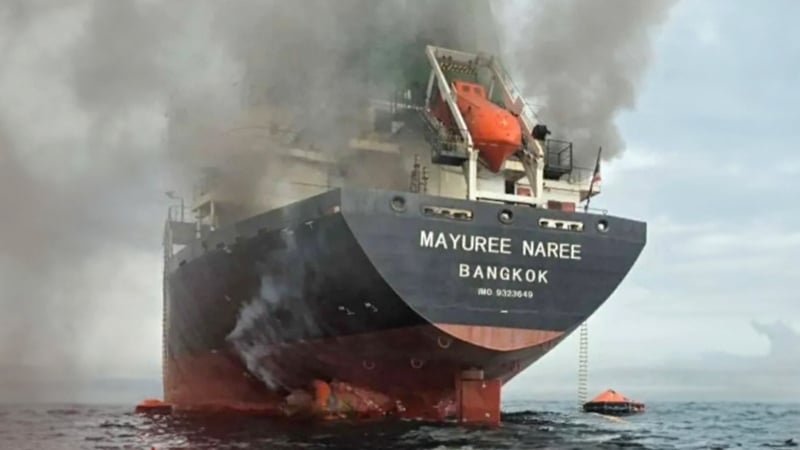
These incidents marked a clear expansion of the conflict from ship‑to‑ship engagements into regional maritime infrastructure warfare.
Red Sea Complication: Houthi Attacks Resume
Compounding the crisis, Houthi rebels in Yemen resumed attacks on shipping in the Red Sea in late March 2026. While operationally separate from Iran’s Hormuz campaign, the timing created a dual‑chokepoint threat, affecting both the Strait of Hormuz and the Bab el‑Mandeb corridor. [cnbc.com]
For shipping companies, this meant that both primary routes linking Asia to Europe were simultaneously compromised, accelerating decisions to reroute vessels thousands of miles around Africa.
Current Maritime Situation as of March 30, 2026
As of today, the maritime environment in the Middle East can best be described as highly unstable and selectively accessible.
Key Conditions
- 30 Confirmed Incidents
Involving ships and maritime infrastructure since late February. - Selective Blockade
Iran allows limited traffic but retains the right to deny passage at will. - Massive Port Disruptions
Salalah and Jebel Ali are experiencing severe congestion, delays, and cargo rollovers. - Rerouting Around Africa
Many shipping lines now prefer the Cape of Good Hope despite longer transit times and higher fuel costs.
Global maritime traffic through Hormuz remains well below normal levels, with insurers raising premiums and some withdrawing coverage altogether. [aol.com]
Implications for Global Trade and Energy Markets
The consequences of the March 2026 shipping crisis extend far beyond the region. Energy markets reacted sharply, with oil prices surging as tanker traffic declined. Container shipping schedules were disrupted worldwide, while bulk and chemical cargoes faced extended delays.
More critically, the crisis demonstrated how modern maritime trade can be strategically weaponised — not through total closure, but through selective access, ambiguity, and intimidation.
Conclusion: A New Era of Maritime Risk
The attacks on ships in March 2026 mark a turning point in maritime security. What unfolded in the Strait of Hormuz was not a temporary spike in risk, but the emergence of a new operating environment in which geopolitical alignment determines access to global trade routes.
With negotiations ongoing in Washington and regional tensions unresolved, the risk of further escalation remains high. For shipowners, insurers, and global supply chains, the events of March 2026 serve as a stark reminder: the sea is no longer neutral ground.
