

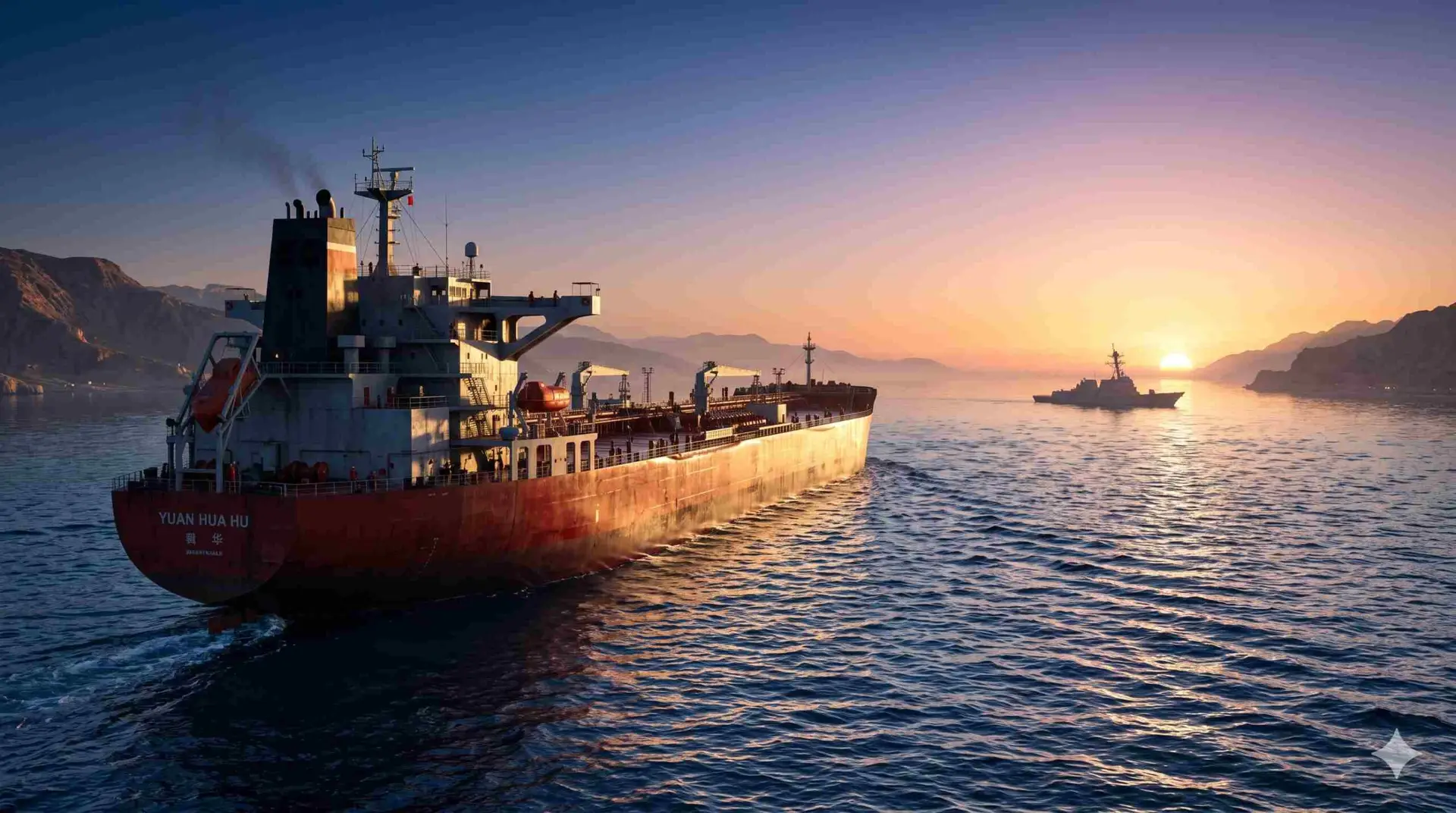
The 2026 Trump-Xi Summit: Can Diplomacy Resolve the Strait of Hormuz Oil Crisis?
The global economy currently stands at a precipice as the Strait of Hormuz Oil Crisis continues to disrupt the world’s most vital energy artery.
Following months of escalating conflict, the eyes of the world are now fixed on Beijing, where the Trump-Xi summit 2026 has become the focal point for potential de-escalation.
With nearly 20% of the world’s oil supply and significant LNG volumes stranded amid ongoing Iran-US naval tensions, the outcome of these high-stakes discussions will determine whether the maritime industry sees a return to stability or faces a prolonged era of scarcity.
The Impact of the Trump-Xi Summit 2026 on Global Markets
The meeting between U.S. President Donald Trump and Chinese President Xi Jinping represents the most significant diplomatic effort to address the current blockade since the war began in late February.
For China, the stakes are exceptionally high, as it historically receives nearly a third of its oil through the Strait. For the United States, the priority is securing Chinese commitments to pressure Tehran to permanently reopen the waterway.
Market analysts suggest that even a limited “managed competition” framework resulting from this summit could trigger a relief rally in global equities. However, the path to peace is complicated by a “dual blockade” scenario. While Iran has restricted transit through the chokepoint, the ongoing US blockade of Iranian ports remains a firm policy of the Trump administration, designed to squeeze the Iranian economy into submission. This deadlock has fueled unprecedented volatility in global energy markets, with Brent crude prices swinging wildly between $100 and $126 per barrel.
| Metric | Current 2026 Figure | Global Economic Impact |
| Total Global Supply Loss | ~12.8 million barrels per day | Largest single market disruption since the 1970s. |
| Peak Brent Crude Price | $126 per barrel | Reached in March; currently stabilizing around $107 following today’s summit. |
| Global Inventory Decline | ~4 million barrels per day | Rapidly depleting fuel buffers in importing nations. |
| Qatari LNG Capacity Lost | 17% (12.8 million metric tons/year) | Forced force majeure declarations to Asia and Europe; 3–5 year repair timeline. |
Navigating the Strait of Hormuz Oil Crisis: Security and Strategy
The physical closure of the Strait has forced the maritime industry to adopt radical survival strategies. Shipping companies are currently grappling with a “grocery supply emergency” in the Gulf and a systemic collapse of traditional trade routes. Ensuring maritime shipping corridor security has become a task of military proportions, as seen with the launch and subsequent pause of “Project Freedom,” a U.S. naval mission intended to escort merchant vessels through the high-risk zone.
| Date (2026) | Event | Immediate Consequence |
| Late February | Outbreak of U.S./Israel-Iran war | Direct military engagement begins; maritime threat level raised to maximum. |
| March 4 | Iran officially closes Strait of Hormuz | 70%+ reduction in shipping traffic; war risk insurance premiums jump from 1% to 10%. |
| March 18 | Missile attack on Ras Laffan (Qatar) | Massive blow to global LNG and helium supply; European gas prices double. |
| April 13 | U.S. enforces naval blockade of Iranian ports | “Dual blockade” deadlock locks down regional energy transit. |
| May 4–5 | “Project Freedom” launched and paused | Brief U.S. naval escort attempt halted by mutual agreement during peace talks. |
| May 14 (Today) | Trump-Xi Summit in Beijing | Joint agreement that Hormuz must remain open; markets show cautious relief. |
Industry experts from organisations like the International Energy Agency (IEA) have described this as the greatest energy security challenge in history. The crisis is characterised by several critical factors:
– Strategic Redirects: Over 67 commercial vessels have been redirected by CENTCOM forces to enforce the US blockade of Iranian ports.
– Stranded Assets: Roughly 1,550 vessels and over 20,000 mariners remain trapped in the Persian Gulf, facing significant psychological and operational strain.
– Insurance Surges: War risk insurance premiums have skyrocketed from 1% to as high as 10% of cargo value, making transit economically unviable for many shipowners.
| Crisis Dimension | Current Status / Impact |
| Stranded Assets | ~1,550 vessels and over 20,000 mariners trapped inside the Persian Gulf. |
| Strategic Redirects | Over 67 commercial vessels redirected by CENTCOM forces to enforce blockades. |
| Insurance Barriers | Protection & Indemnity (P&I) war risk cover removed by many insurers, halting legal transit. |
| “Grocery Emergency” | GCC states face 40–120% food price spikes due to 70% of maritime food imports being cut off. |
These conditions have created a new landscape for those pursuing maritime careers or facing daily shipboard challenges, as the risks of navigating active war zones redefine the profession’s safety standards.
Diplomatic Leverage and the US Blockade of Iran Ports
A major hurdle in the Beijing talks is the status of the US blockade of Iranian ports. President Trump has maintained that the naval cordon will remain until Iran agrees to roll back its nuclear program and formally guarantees the freedom of navigation. Conversely, Iran views the blockade as a violation of previous ceasefire attempts and has used its control of the Strait as its primary bargaining chip.
President Xi is expected to seek a “Goldilocks” relationship—one in which the U.S. and China cooperate enough to avoid a global depression without forming a partnership that alienates other regional allies. China has notably refrained from interfering with the American blockade thus far, despite the heavy toll on its own energy imports, signalling a cautious approach to the Iran-US naval tensions.
The Future of Maritime Shipping Corridor Security
The long-term outlook for the global shipping industry depends on whether the summit can establish a new “Board of Trade” or a similar oversight mechanism. Such an entity would be tasked with monitoring commercial issues in non-sensitive sectors, potentially allowing for a gradual resumption of trade. However, maritime industry veterans warn that the damage to infrastructure, such as the hit to Qatar’s Ras Laffan LNG complex, could take years to repair even if a diplomatic solution is reached today.
The shift toward energy diversification is also accelerating. With the Strait of Hormuz Oil Crisis exposing the region’s vulnerability, shipping giants like Maersk and COSCO are doubling down on alternative fuels and “hub-and-spoke” models to bypass regional chokepoints.
The Trump-Xi summit expectations
The Trump-Xi summit 2026 offers a rare glimmer of hope for a world weary of skyrocketing fuel prices and supply chain disruptions. While a comprehensive peace treaty remains unlikely, even a tactical truce could begin to ease the volatility in the global energy market that has defined the year. As the leaders of the world’s two largest economies negotiate in Beijing, the maritime community remains in a state of high alert, waiting to see if the Strait will once again become a gateway for global prosperity or remain a theatre of conflict. For now, the focus remains on the resilience of the seafarers and the hope that diplomacy can finally outpace the drums of war.