

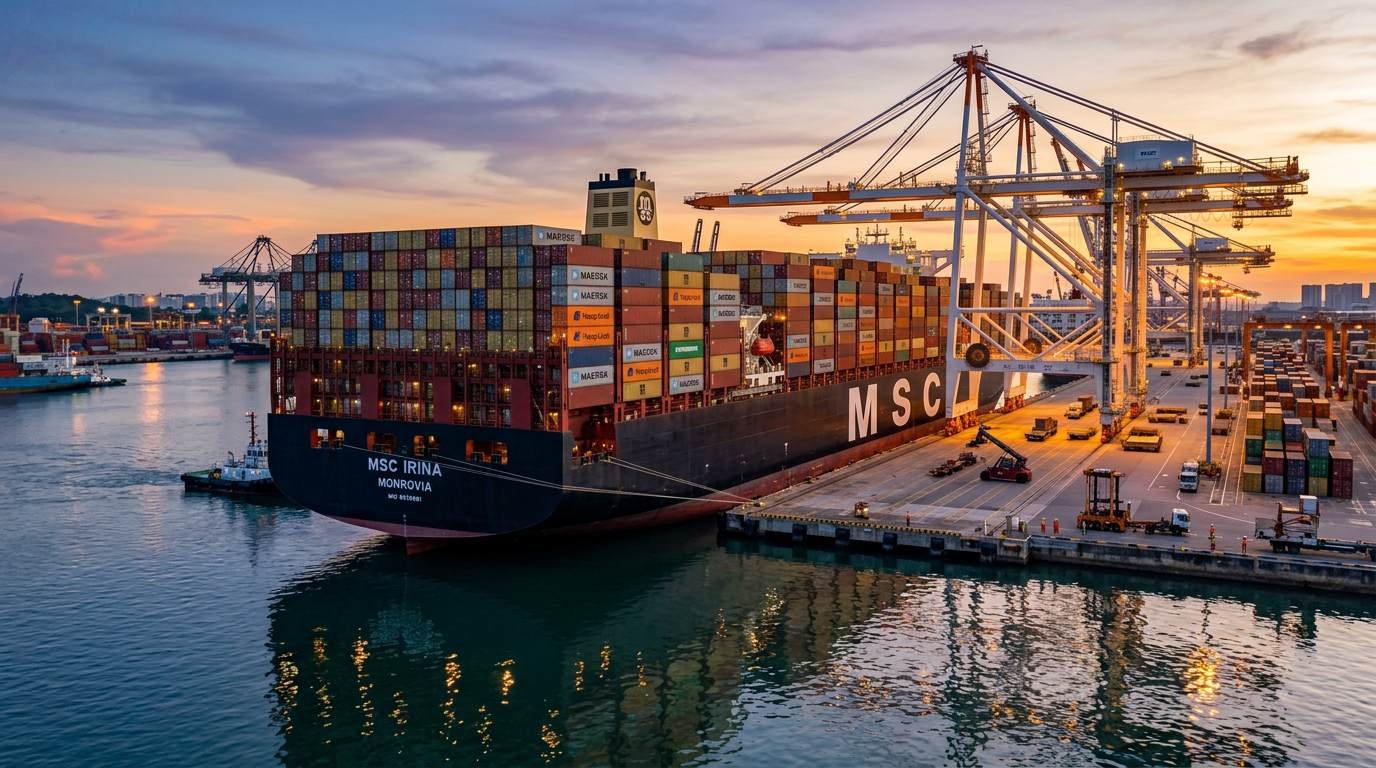
MSC Boxship Holed as IRGC Strikes Intensify in Iraqi Waters
The MSC Sariska V Attack has sent a shockwave through the shipping community after the Panama-flagged vessel was struck twice while sailing off the coast of Iraq. On the morning of June 1st 2026, the 4,814 TEU containership was targeted by what maritime security experts believe was a sophisticated uncrewed surface vessel strike. The vessel had recently completed cargo operations at the port of Umm Qasr and was transiting Iraqi territorial waters when the first impact occurred. Initial reports confirm the ship’s hull was breached, leading to an emergency MSC Sariska V damage assessment to determine the extent of the structural compromise.
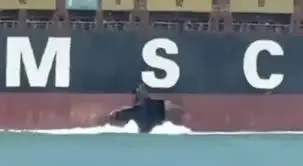
The incident occurred at approximately 09:50 UTC, marking a significant escalation in IRGC maritime attacks within the Northern Persian Gulf. While all crew members are reported safe, the precision of the strike suggests a deliberate attempt to disable the commercial asset rather than merely harass it. Local authorities and international monitoring bodies like the UKMTO are currently investigating the specific mechanics of the assault, which appears to be a direct retaliation for recent regional military confrontations.
Tactical Evolution of the Persian Gulf Security Crisis
The current Persian Gulf security crisis is no longer confined to the narrow chokepoint of the Strait of Hormuz. By targeting a vessel in the proximity of Umm Qasr port shipping lanes, the Iranian Revolutionary Guard Corps (IRGC) has demonstrated a willingness to expand its operational theatre into areas previously considered relatively stable. This move disrupts the primary maritime gateway for Iraqi reconstruction and commercial trade, forcing a total reassessment of regional risk profiles.
The use of an uncrewed surface vessel strike represents a tactical shift toward asymmetric warfare. These “sea drones” are difficult to detect via standard civilian radar and can be deployed from inconspicuous mother ships or coastal launch sites. Unlike traditional boarding actions, these kinetic strikes aim to cause physical damage, driving up repair costs and hull insurance premiums for any owner operating in the region. The MSC Sariska V damage assessment will be critical in understanding how these specific low-profile threats impact modern double-hull container designs.
Operational and Commercial Fallout for Shipowners
The fallout from the MSC Sariska V Attack extends far beyond the physical repairs required for a single ship. For the broader industry, the primary concern is the immediate spike in War Risk Additional Premiums. When a major carrier like MSC is targeted in a sovereign territorial water zone, insurers often respond by expanding “Listed Areas,” which mandates higher costs for every transit.
Daily logistics workflows are being overhauled to mitigate these risks. Operators are now faced with several difficult choices: – Implementing mandatory armed security details for all vessels transiting the Northern Gulf.
– Rerouting feeder services to bypass high-risk zones, adding days to transit times.
– Scheduling transits only during daylight hours or in escorted convoys.
– Increasing hull and machinery inspections to ensure watertight integrity before entering contested zones. Technical compliance is also becoming more burdensome. The International Maritime Organisation (IMO), through the ISPS Code, requires ships to maintain specific security levels, but when those levels are permanently elevated, the strain on crew mental health and operational budgets becomes unsustainable. Charterers are already seeing “war risk” clauses being invoked, leading to disputes over who bears the cost of delays and mandatory security enhancements.

Future Outlook and Maritime Bottlenecks
As we look toward the remainder of 2026, the industry must prepare for a period of sustained volatility. The IRGC maritime attacks are likely to continue as long as broader diplomatic tensions remain unresolved. The immediate bottleneck will be the availability of repair berths. If more vessels require dry-docking for hull repairs following similar strikes, the already tight global shipyard capacity will be pushed to its limit, causing a ripple effect of delays across the global supply chain.
Furthermore, the stability of shipping at Umm Qasr port is now under scrutiny. As Iraq’s only deep-water port, it is vulnerable to any sustained threat to its access channels, which could lead to a localised economic crisis, forcing cargo to be diverted through more expensive overland routes or secondary regional hubs. Shipowners will monitor the deployment of international naval assets to see whether a more robust protective framework, similar to Operation Prosperity Guardian, will be extended to these northern waters.
Data & Sources
– United Kingdom Maritime Trade Operations (UKMTO)
– International Maritime Organization (IMO) Maritime Safety Committee
– Dryad Global Maritime Security Analytics
