
Diverging Paths: The 2026 Classification Power Struggle
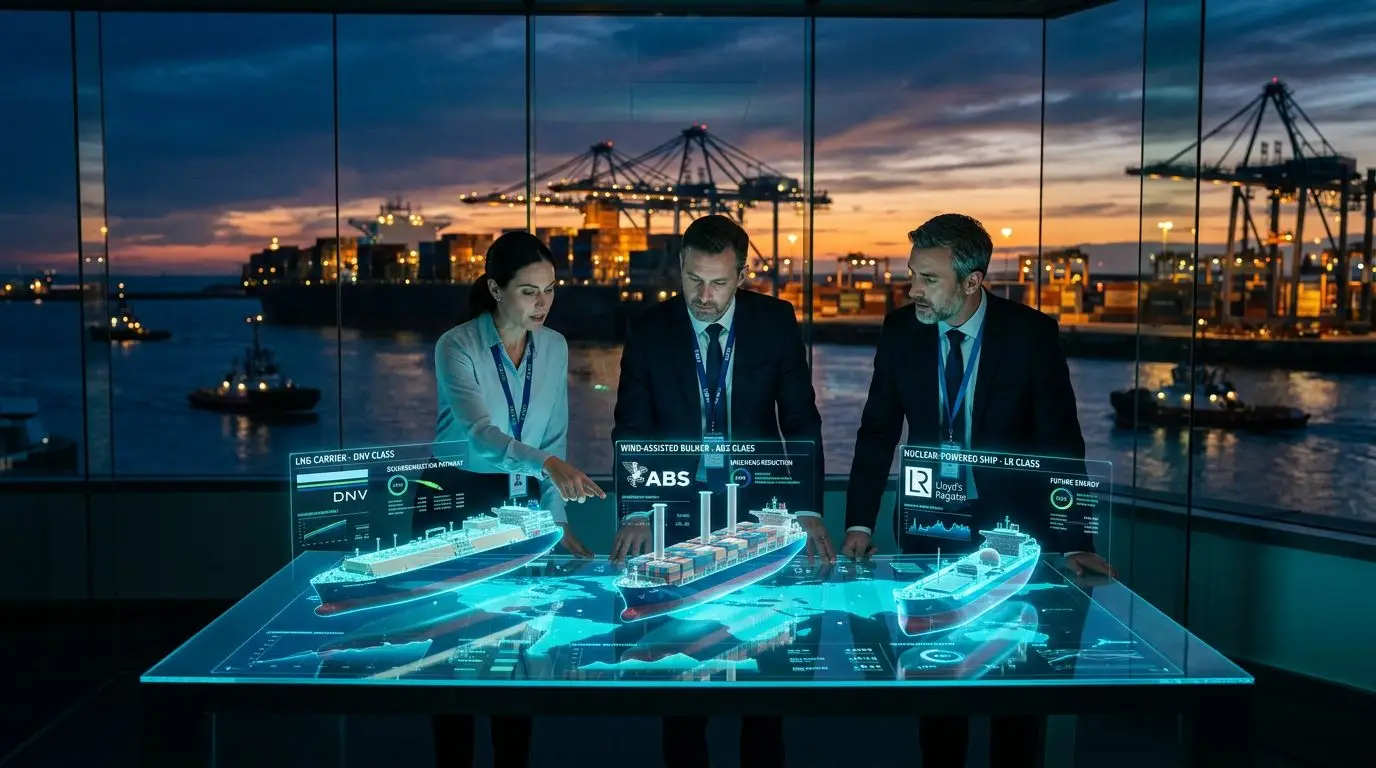
The Big Three of ship classification—DNV, Lloyd’s Register (LR), and the American Bureau of Shipping (ABS)—are locked in a high-stakes competition that has moved well beyond counting hulls or gross tonnage. We will make an effort to provide the classification societies comparison, primarily regarding regulatory requirements.
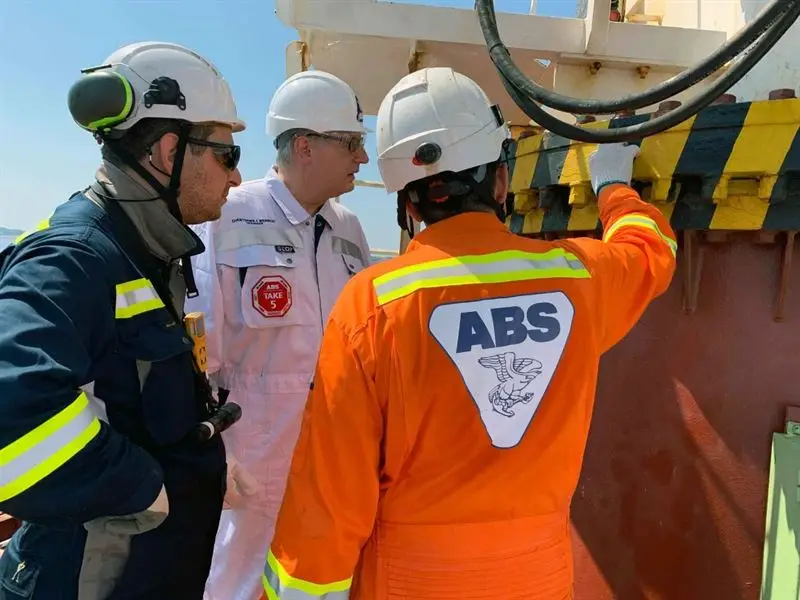
In 2026, the battleground is intellectual capital, digital integration, and the ability to act as a strategic advisor rather than a mere regulatory provider. While their fundamental mission—surveying the hull and machinery and ensuring compliance with statutory regulations—remains the baseline and their core business, these giants are taking different paths, creating advisory services to navigate the industry’s decarbonization mandate.
The Regulatory Catalyst
The IMO’s aggressive greenhouse gas reduction targets—specifically the 20% reduction benchmark for 2030 and the net-zero goal for 2050—have transformed classification from a box-ticking exercise into a major financial player.

It is such a significant regulatory burden that only large organisations, such as classification societies, can support shipowners and researchers seeking to develop cost-efficient devices for the energy transition.
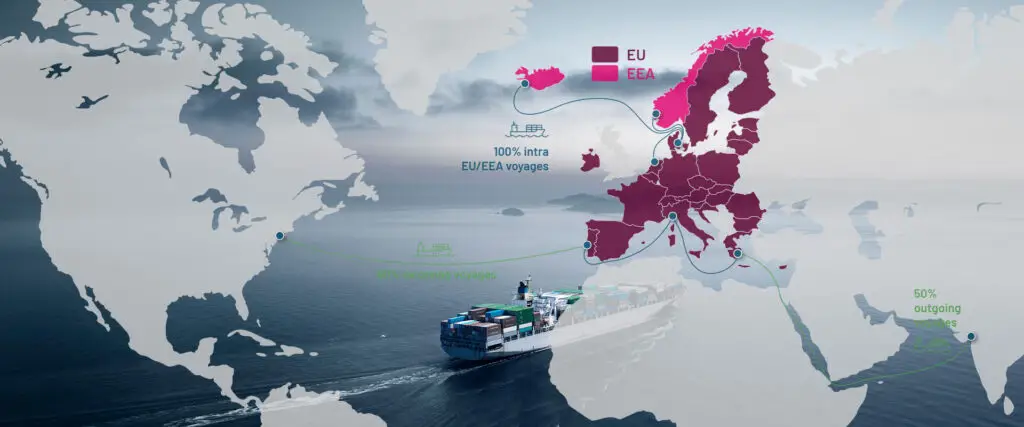
Compliance is now inextricably linked to asset value. With the EU ETS and the Carbon Intensity Indicator (CII) dictating operational costs, a vessel’s class status directly influences its tradability and insurance premiums.
Owners are no longer looking for societies that simply approve designs; they need partners capable of guiding them through the maze of multi-fuel options and complex retrofitting requirements. The result is a shift where classification societies have become the essential bridge between abstract international policy and sea-ready hardware.
Divergent Bets on Future Fuels – Classification Societies Comparison
Decarbonization dominates the R&D budgets of the Big Three, yet their specific focus areas reveal clear strategic differences:
-
DNV: The society is doubling down on methanol and battery-hybrid propulsion. Its strong footprint in the European short-sea and cruise markets gives it a unique proving ground for these technologies.
-
ABS: Positioned as the lead advocate for “gas-as-fuel” and ammonia, ABS is heavily involved in high-profile collaborations with Greek and American owners, specifically on ammonia-ready tankers.
-
Lloyd’s Register: LR has carved out a distinct niche in the “human element” of the energy transition. Rather than chasing raw tonnage, they are focusing on the safety training, risk management, and operational protocols required to handle toxic or highly flammable alternative fuels.
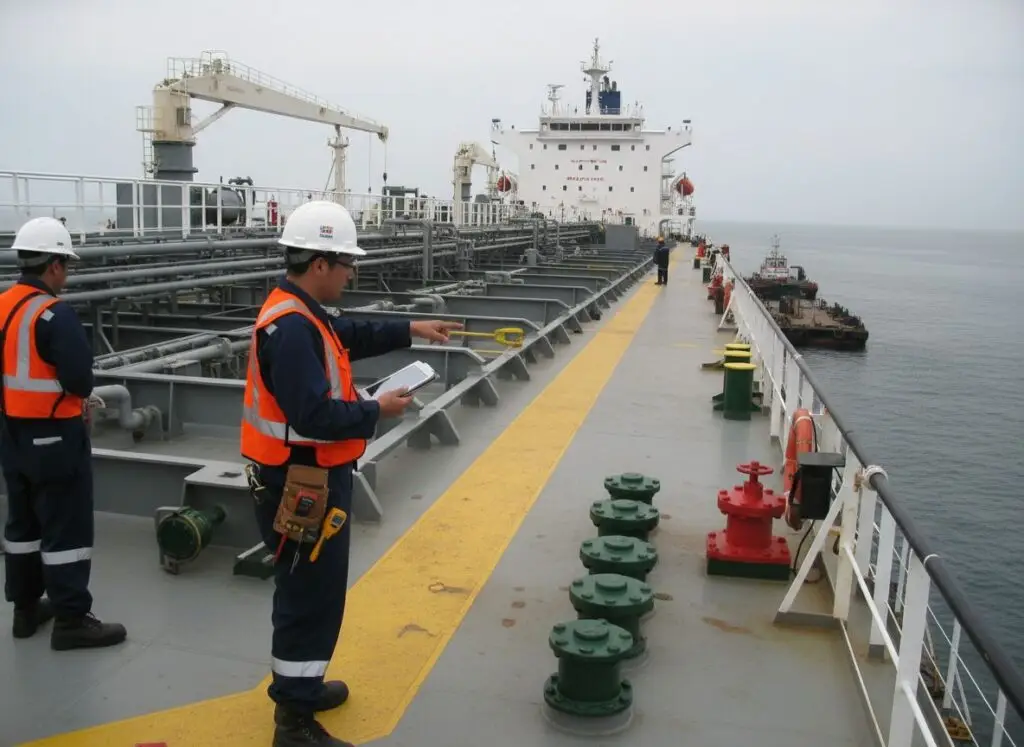
The good news for the industry is that Owners and Manufacturers can choose the classification society based on their specialisation. On the other hand, a major challenge for classification societies is investing in and building research and development teams that support the industry. It is not yet proven whether these societies have invested as required.
Many individuals from Classification Societies claim to be experts, yet in reality, they possess only limited knowledge and are far from being true subject-matter experts. This can mislead the industry and create false expectations. Inflated titles, e.g., Director or Vice President, are increasingly common, especially among busy people who interact with others lacking the necessary expertise.
Operational Reality: The Digital Mirror
For shipowners, the choice of class now dictates the operational longevity of their fleet. Selecting a society without deep expertise in a specific fuel type can result in protracted design approvals or catastrophic technical failures in mid-ocean.
The differentiator here is digital twin technology. By creating high-fidelity virtual mirrors of physical assets, societies now offer remote surveys and predictive maintenance. This capability allows owners to slash port idle time and monitor real-time fuel consumption, providing the visibility needed to keep assets on the right side of carbon regulations.
The Scoreboard: Tonnage vs. Influence
While technical expertise is the new currency, the gross tonnage scoreboard remains the traditional metric of industry scale:
| Society | Primary Market Strength | Strategic Focus |
| DNV | Container & Specialised Vessels | Data-Centric Class & Automation |
| ABS | Offshore & Large-Scale Bulkers | Gov/Navy Ties & Autonomous Tech |
| LR | Tankers & Gas Carriers | Risk Management & Energy Advisory |
These rankings remain volatile. Owners are increasingly aggressive about migrating fleets between societies to align with whoever offers the most robust path through the decarbonization transition.
Strategic Differentiators for 2026
-
DNV – Data-Centric Class: Through its Veracity platform, DNV automates compliance reporting and provides real-time performance benchmarking. For owners, this means shifting from reactive reporting to proactive operational adjustment.
-
ABS – Government and Offshore Synergy: Leveraging deep ties within the U.S. maritime and naval sectors, ABS is leading the charge in autonomous vessel research. Their work with government-backed projects gives them an edge in high-spec, unmanned operations.
-
LR – The Advisory Model: LR is pivotally moving away from high-volume hull counts to prioritise high-value consulting. They are positioning themselves as the go-to firm for the energy transition, focusing on the broader safety infrastructure that bunkering new fuels will require.

Infrastructure Bottlenecks and Stranded Assets
Looking at the 2030 horizon, the industry faces a systemic risk that no single class society can solve: the gap between regulatory ambition and bunkering infrastructure. DNV and ABS can certify a vessel for hydrogen or ammonia, but they cannot force the build-out of global supply chains.
The next 18 months will reveal a widening chasm between “technically compliant” vessels and those that are commercially viable. We are likely to see the emergence of “stranded assets”—ships that are perfectly compliant with IMO regs but economically useless due to excessive fuel costs or a lack of qualified crew to handle specialized propulsion systems. Furthermore, the massive industry-wide push for retrofitting is already straining shipyard capacity, making the timing of class approvals a critical factor in fleet maintenance schedules.
The Bottom Line
The competition between DNV, LR, and ABS is driving a necessary evolution in an industry historically known for its inertia. By competing in digital innovation and carbon-pathway consulting, these societies are accelerating the pace of modernisation.
For the shipowner, the decision is no longer about the lowest survey fee or long-standing legacy relationships. It is about identifying which society holds the data and the technical roadmap essential to keeping a fleet operational in a net-zero future. As we move through 2026, the winners will be the organisations that successfully translate complex regulatory data into actionable operational intelligence.
Data Sources:
-
International Maritime Organization (IMO) – Regulatory Standards
-
DNV Maritime Forecast to 2050 – Fuel & Technology Projections
-
Lloyd’s Register Maritime Decarbonisation Hub – Safety & Risk Analytics
-
ABS Sustainability Reporting – Technical Standards & Fleet Metrics
