
Posidonia 2026: Record Attendance and Nuclear Tech Take Center Stage in Athens
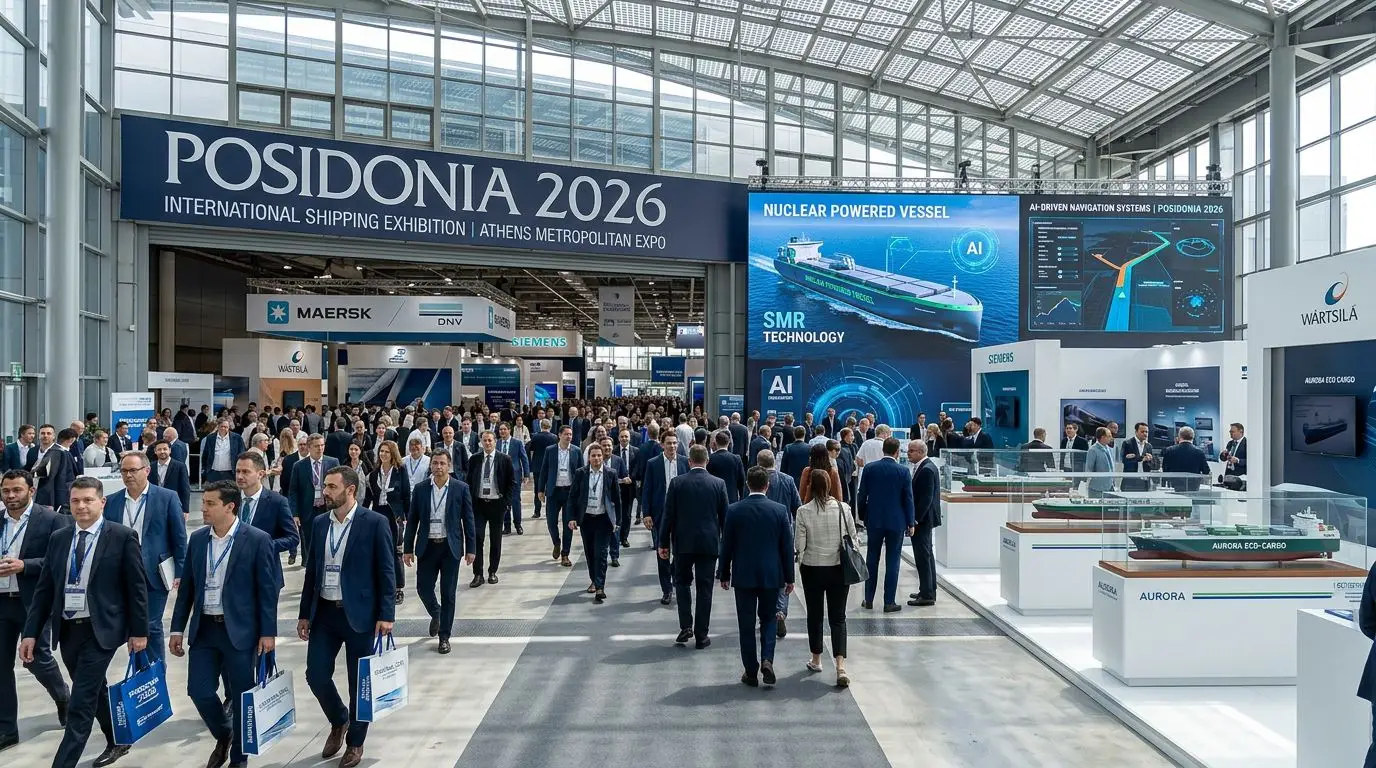
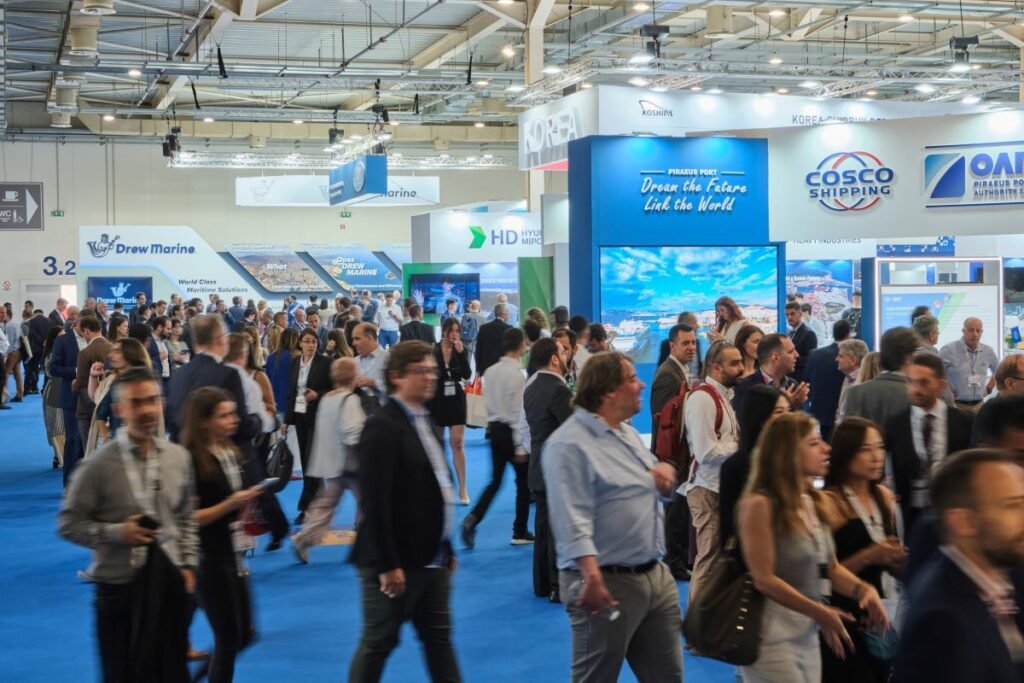
Posidonia 2026 officially opened its doors today at the Metropolitan Expo in Athens, marking its largest edition to date. With a record-breaking 2,227 exhibitors representing 83 countries, the event has firmly established itself as the premier global shipping exhibition Athens hosts biennially.
Organisers expect more than 40,000 maritime professionals to pass through the halls over the coming days, signalling a robust return to large-scale face-to-face commercial activity. While the sheer scale of the event is a headline in itself, the technical discourse on the floor is dominated by a sense of urgency regarding decarbonization and the rapid integration of high-level digital tools.
The opening ceremony, attended by heads of state and leaders from the Union of Greek Shipowners, underscored Greece’s position as the home of the world’s largest merchant fleet. This year’s agenda reflects a pivot from theoretical discussions about “green shipping” to the practical, commercial realities of selecting and securing alternative maritime fuels. However, it is the unexpected prominence of advanced nuclear technologies that has become the primary talking point of the first day, suggesting a significant shift in how the industry views the long-term path to net-zero emissions.
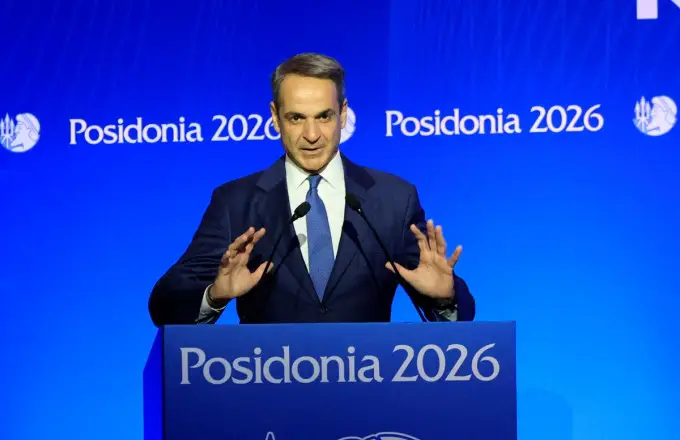
Prime Minister of Greece Kyriakos Mitsotakis, Posidonia Opening speech.
Regulatory Pressure and the Nuclear Shift at Posidonia 2026
The commercial mechanics driving the intensity of Posidonia 2026 are rooted in increasingly strict mandates from the International Maritime Organisation (IMO). With the 2023 IMO Greenhouse Gas Strategy setting a target for net-zero emissions by or around 2050, shipowners are facing a narrowing window to invest in future-proof assets. While methanol and ammonia have been the frontrunners in recent years, the debut of several maritime nuclear propulsion concepts at this year’s expo highlights a growing realisation: chemical fuels alone may not satisfy the energy density requirements of deep-sea shipping without significant logistical and cost penalties.
National ministries and international regulatory bodies are now closely examining the safety and liability frameworks required for civilian nuclear vessels. The commercial risk associated with being a “first mover” in nuclear propulsion is substantial, yet the potential for a vessel to operate for 25 years without refuelling offers a level of cost certainty that is currently impossible with volatile hydrogen-based fuels. This shift is not occurring in a vacuum; it is a direct response to the “FuelEU Maritime” regulations and the expansion of emissions trading schemes that have turned carbon from a reporting requirement into a direct balance-sheet liability.
AI Fleet Operations and Operational Realities
On the operational front, the transition to smarter vessels is no longer a luxury. AI fleet operations are being showcased not as futuristic concepts but as essential software layers that currently manage route optimisation, fuel consumption, and predictive maintenance for thousands of ships. For shipowners and charterers, the immediate impact is a data-driven tightening of daily logistics. These systems allow for “just-in-time” arrivals, reducing the time ships spend idling outside ports and significantly cutting unnecessary emissions.
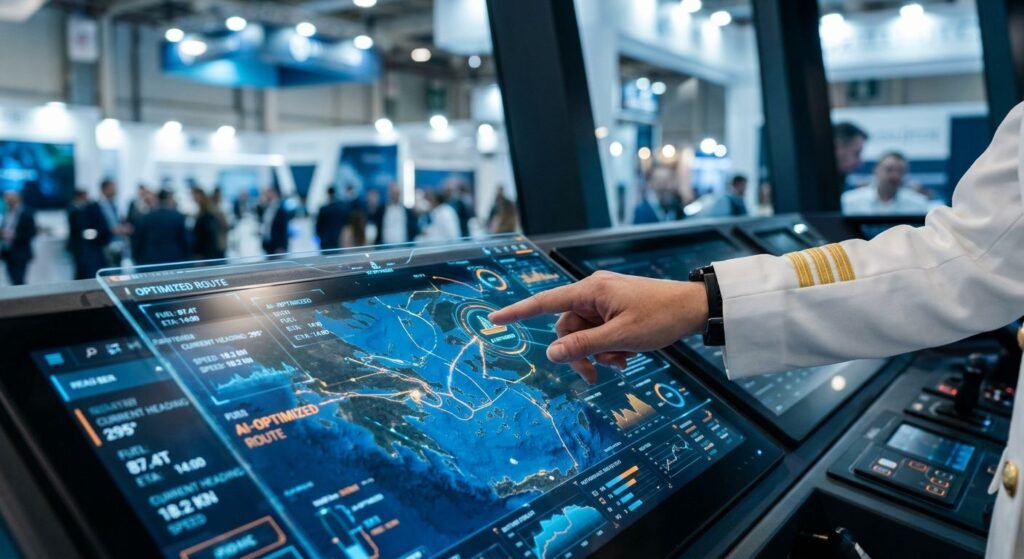
However, the rapid deployment of these technologies brings new technical compliance adjustments. Crew members must now be trained to interface with complex digital twins, and insurance firms are reassessing risks related to cybersecurity and autonomous system failures. The integration of technology is creating a tiered market in which digitally advanced fleets can secure better charter rates and lower insurance premiums than older, less efficient tonnage.
Key focus areas at the 2026 exhibition include: – Advanced nuclear modular reactors for commercial container and tanker integration.
– Real-time deployment of AI for autonomous navigation and carbon intensity management.
– The introduction of harmonised environmental benchmarking frameworks to standardise green reporting.
– Expansion of bunkering infrastructure for ammonia and methanol in Mediterranean ports.
– Next-generation carbon capture and storage (CCS) systems for retrofitting existing vessels. Standardising Sustainability through Benchmarking
One of the most critical developments at this year’s event is the introduction of new environmental benchmarking frameworks. Historically, the maritime industry has struggled with fragmented data, making it difficult for banks and cargo owners to accurately compare the carbon footprint of different carriers. These new frameworks aim to provide a transparent, standardised metric that aligns with global financial reporting requirements. This transparency is expected to accelerate “green financing,” in which preferential loan terms are tied directly to a fleet’s audited environmental performance.
For the daily logistics workflow, this means that environmental metrics are now just as important as speed and deadweight. Logistics managers are increasingly selecting vessels based on their “CII” (Carbon Intensity Indicator) ratings, as poor ratings can lead to restricted access to certain ports or higher port fees. The exhibition floor in Athens is filled with classification societies and consultancies offering services to help owners navigate this complex web of technical and financial compliance.
Future Outlook: Bottlenecks and Commercial Risks
Looking ahead, the industry must monitor several looming bottlenecks that could stall the progress seen at Posidonia 2026. While the technology for alternative fuels and nuclear propulsion is advancing, the global bunkering infrastructure remains woefully behind. There is a high risk that shipowners will invest in multi-fuel vessels only to find that the required “green” fuels are unavailable or prohibitively expensive at major hub ports. Furthermore, the regulatory approval for nuclear-powered merchant ships remains a decade-long hurdle involving complex international treaties and public perception challenges.
In the immediate term, the industry faces a talent shortage. The rapid shift toward AI and advanced engineering requires a new generation of seafarers who are as comfortable with coding as they are with traditional seamanship. Failure to address this skills gap will likely be the primary bottleneck to deploying the high-tech solutions showcased in Athens.
Posidonia Exhibition
Posidonia 2026 has successfully captured the maritime industry at a historic crossroads. The record turnout and the focus on nuclear power and AI suggest that the sector is finally moving beyond incremental changes toward a fundamental technological reset. While commercial and regulatory risks remain high, the level of innovation on display in Athens provides a clear roadmap for a more efficient, transparent, and sustainable global fleet. The coming months will be defined by how quickly the industry can turn the technical promises made at the Metropolitan Expo into operational reality at sea.
Data & Sources
– Union of Greek Shipowners (UGS)
– Global Maritime Forum (GMF)