

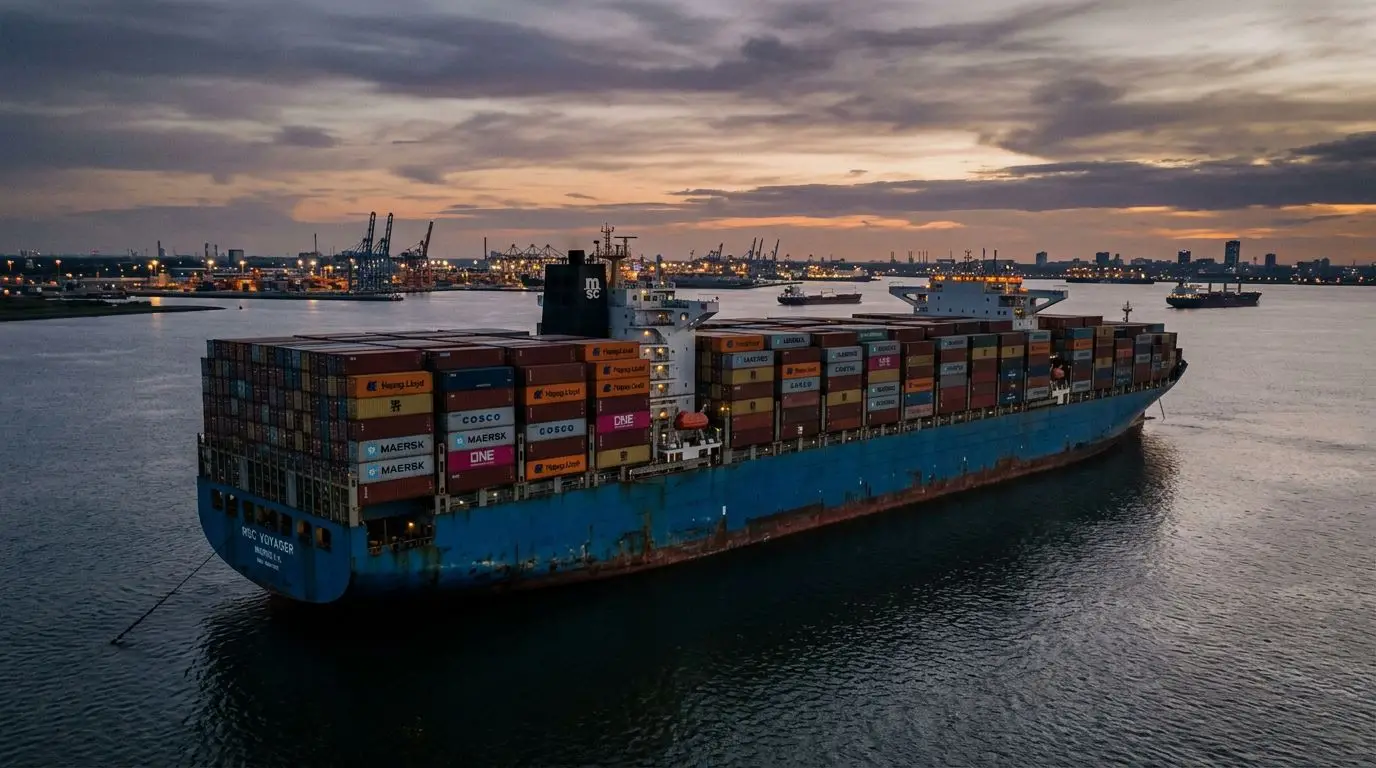
Freight Markets Under Fire: The Mechanics of the 2026 Container Rate Spike
Global shipping markets are facing intense volatility as container shipping rates surge to heights unseen since the post-pandemic recovery. The Drewry World Container Index recently posted a 23% jump in a single week, shattering predictions of a stable market in the mid-2020s. This sudden escalation stems from a brutal mix of geopolitical friction, infrastructure exhaustion, and a fundamental mismatch between global tonnage and regional demand.
While the global fleet has grown on paper, effective supply is being strangled by mandatory rerouting and structural bottlenecks. For cargo owners, predictable pricing is gone. Securing a slot now requires paying a steep premium over quoted spot rates.
The Commercial Drivers of the Squeeze
The main engine behind this market turbulence is the closure of vital trade corridors. With the Strait of Hormuz blocked and persistent threats in the Red Sea, carriers have executed a mass migration of tonnage around the Cape of Good Hope.
This detour adds 10 to 14 days to a standard Asia-Europe rotation, instantly soaking up the “excess” capacity built over the last two years. Carrier alliances have responded by aggressively pulling capacity through blank sailings to protect schedule integrity, slashing weekly capacity.
This scarcity, paired with importers’ front-loading cargo ahead of feared trade tariffs, has supercharged rates. Tight supply is worsened by the IMO’s Carbon Intensity Indicator (CII) regulations. Older, less efficient hulls are forced to slow down further to avoid carbon penalties, stretching the global pipeline even thinner.
| Key Market Indicator | Impact on Global Fleet |
| Cape of Good Hope Routing | Adds 10–14 days to Asia-Europe rotations, absorbing excess global capacity. |
| Blank Sailings (also known as a void sailing) occurs when a shipping carrier cancels a scheduled voyage or skips a specific port on their planned route.) | Aggressive schedule cancellations drastically reduce weekly slot availability. |
| IMO CII Regulations | Forces older vessels to slow down to secure compliance, reducing effective supply. |
| Cargo Front-Loading | Importers rushing bookings ahead of new tariffs, spiking short-term demand. |
Operational Fallout and the Congestion Trap
The ripple effects of these longer routes are creating bottlenecks at the quayside. Port congestion has returned as a dominant market force, with major hubs across Asia and the Mediterranean reporting yard utilisation rates exceeding 80%. When ships arrive out of window due to long-haul diversions, they overwhelm terminal labour and equipment, forcing multi-day waiting times at anchor.
This operational logjam forces shipowners and charterers to recalibrate their financial models daily. Beyond base ocean freight, shippers face a heavy layer of auxiliary surcharges designed to shift carrier risk:
-
Peak Season Surcharges (PSS): Slapped onto almost all Transpacific and Asia-Europe lanes.
-
Port Congestion Fees: Covering the cash burn of idle time and bunker consumption at anchor.
-
Emergency Bunker Surcharges: Triggered by the high fuel consumption of the longer Cape route.
-
Equipment Imbalance Fees: Levied as boxes get trapped in clogged inland networks.
For technical managers, longer voyages mean severe mechanical strain on machinery and logistical headaches securing spare parts and crew relief at non-traditional waypoints. For charterers, the financial risk has intensified; spot market quotes for a 40-foot box now fluctuate by thousands of dollars within a single booking window.
Trade Inflation and the Box Shortage
The maritime sector does not operate in a vacuum—this spike in transit costs is directly fueling global trade inflation. As the landed cost of cargo climbs, manufacturers must either absorb the margin hit or pass it down to consumers. This hits low-margin retail goods and heavy industrial components hardest, where freight accounts for a double-digit percentage of the product’s total value.
A severe container shortage in secondary export hubs such as Vietnam and India compounds the crisis. Lines are prioritizing the rapid repositioning of empty boxes back to high-yield Chinese ports. This leaves regional exporters stranded, facing weeks of delays even if they are willing to pay top dollar for a slot.
| Surcharge Type | Commercial Purpose | Impacted Trade Lanes |
| PSS (Peak Season) | Captures premium demand during volume spikes | Transpacific / Asia-Europe |
| Port Congestion | Offsets terminal delay costs and fuel burn | Select Asian & Med Hubs |
| Emergency Bunker | Covers extra fuel consumed via Cape route | All European rotations |
| Equipment Imbalance | Funds the return of empty boxes to high-yield ports | Indian Subcontinent / SE Asia |
Navigating the Q3 Bottleneck
As the industry heads into the third quarter of 2026, the immediate worry is the convergence of the traditional peak season with unresolved geopolitical flashpoints. If port productivity stays sluggish, the backlog from recent blank sailings will persist through year-end. Consequently, shippers are ditching long-term fixed contracts for hybrid models that combine index-linked rates with guaranteed space protection.
Commercial risks remain heavily weighted to the upside. Any further escalation at critical chokepoints will trigger new rounds of surcharges and easily push spot rates into five-figure territory. Right now, the priority is operational flexibility—routing cargo across multiple gateways to dodge the worst bottlenecks. The era of “just-in-time” logistics has officially given way to a “just-in-case” strategy, where carrying extra inventory is the only reliable insurance policy against an unpredictable sea.