

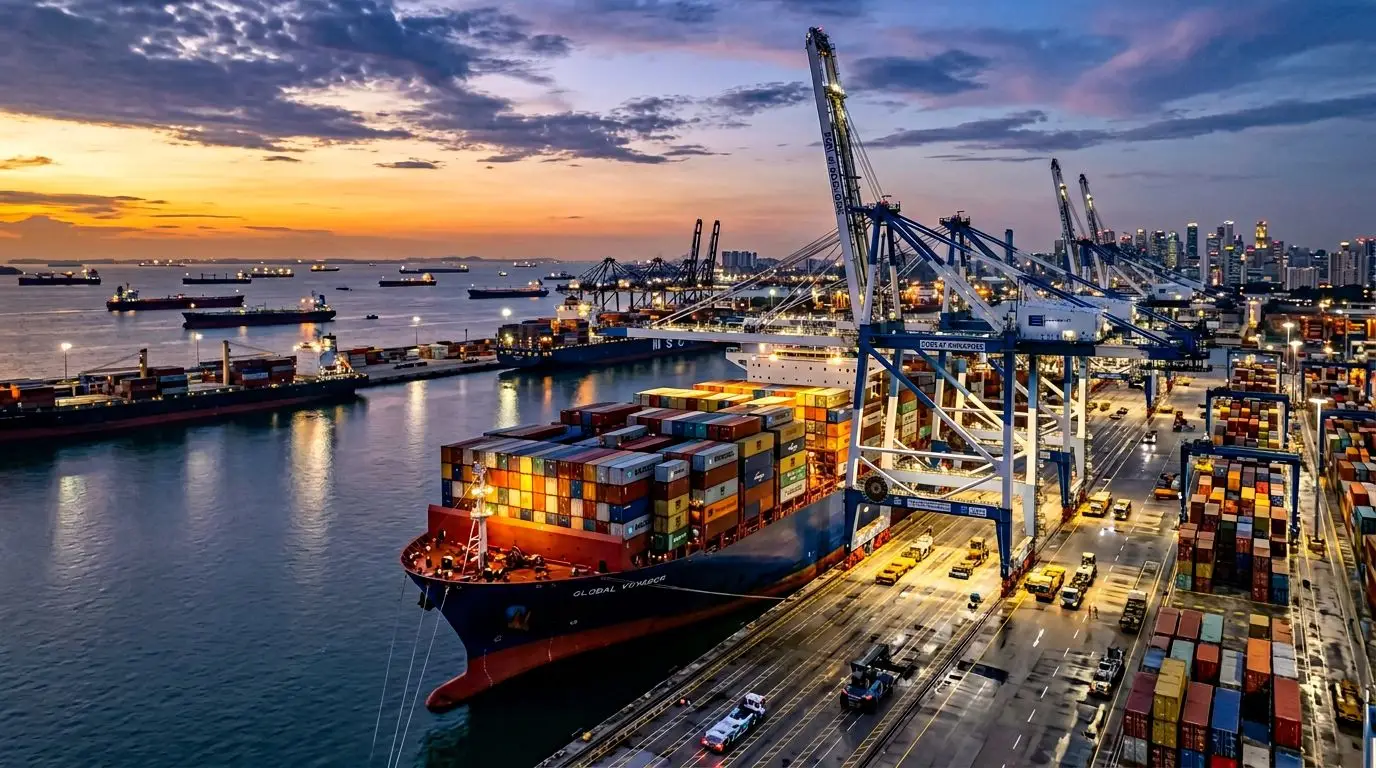
The 2026 Freight Rate Forecast for Q3 and Beyond
The global shipping industry is entering a definitive phase of recalibration as we move into the second half of the year.
For stakeholders across the supply chain, understanding the 2026 Freight Rate Forecast is essential for navigating a market defined by structural oversupply and evolving regulatory pressures. While the extreme volatility of previous years has subsided, Q3 2026 presents a unique set of challenges. Shippers are operating in a buyer’s market, with spot rates on major lanes like Shanghai-to-Rotterdam hovering around $2,543 per 40ft container—a staggering 84% decline from the 2022 pandemic-era peaks.
Navigating Container Shipping Overcapacity and Market Dynamics
The primary driver of the current downward pressure on rates is significant overcapacity in container shipping. Following a historic flood of new vessel deliveries that added 1.4 million TEU to the market in early 2026 alone, the global fleet has expanded at a rate that far outpaces demand. By Q3 2026, analysts estimate a 10% capacity surplus on major East-West trade lanes, nearly double the decade-long average of 4.5%.
Despite efforts such as blank sailings, vessel utilisation rates on Asia-Europe routes have fallen below 80%. While the IMF projects global trade growth of only 2.8% for the year, the sheer volume of new megaships entering the water makes rate stabilisation a difficult target. For those managing maritime careers, this environment demands a high level of operational efficiency to maintain profitability in a landscape where carrier EBIT margins have compressed by 60-80% year-over-year.
The Impact of Suez Canal Transit Resumption and Global Trade Tariffs
A critical turning point for the 2026 Forecast is the anticipated Suez Canal transit resumption. Following the stability of the late 2025 ceasefire, the return to traditional Suez routes from the Cape of Good Hope detour is expected to effectively release 6% of global fleet capacity back into the market. This “capacity boom” occurs because the Suez route shaves 10 to 14 days off transit times, allowing ships to complete more voyages per year.
Simultaneously, the global impact of trade tariffs is reshaping cargo flows. In the United States, specialised tariffs and policy uncertainty ahead of the expiration of the November 2026 pause have led to “front-loading,” which may leave Q3 inventories high and demand soft.
Key Factors Influencing Q3 2026 Shipping Trends:
-
Capacity Surplus: Global fleet additions are forecast to reach 1.7 million TEU by the end of 2026.
-
Cost Pressures: Despite low rates, elevated bunker costs have prompted carriers to propose emergency surcharges of up to $200 per TEU.
-
Regional Resilience: While East-West lanes struggle, South-South trade—particularly involving Sub-Saharan Africa and Brazil—continues to show stronger annual growth.
Managing Maritime Decarbonization Costs and Peak Season Trends
As we look toward peak season, carriers are attempting to offset lower base rates with surcharges related to maritime decarbonization. Under the 2026 EU Emissions Trading System (EU ETS) rules, shipping companies must now surrender allowances for 70% of their reported emissions (climbing to 100% in 2027). With carbon prices (EUA) fluctuating between €70–€100 per tonne, these environmental levies are now a material financial fixture in freight contracts.
Furthermore, the industry is seeing a surge in the use of wind-assisted propulsion. With bunker prices near $1,000 per tonne, technologies like suction wings and jet sails are now achieving a Return on Investment (ROI) of less than 1 year, making them a primary strategy for liners seeking to hedge against fuel price volatility.
Strategic Outlook for the Remainder of 2026
The 2026 freight market is a product of converging forces: a flood of new deliveries, a structural shift in demand, and the return of the world’s most vital maritime artery. For logistics professionals, the “2026 Playbook” must shift from pure cost-cutting to supply chain resilience. In conclusion, the era of simple pricing is over. Successful shippers in Q3 2026 will be those who prioritise cost predictability and leverage the data-driven tools available in the modern maritime hub.