

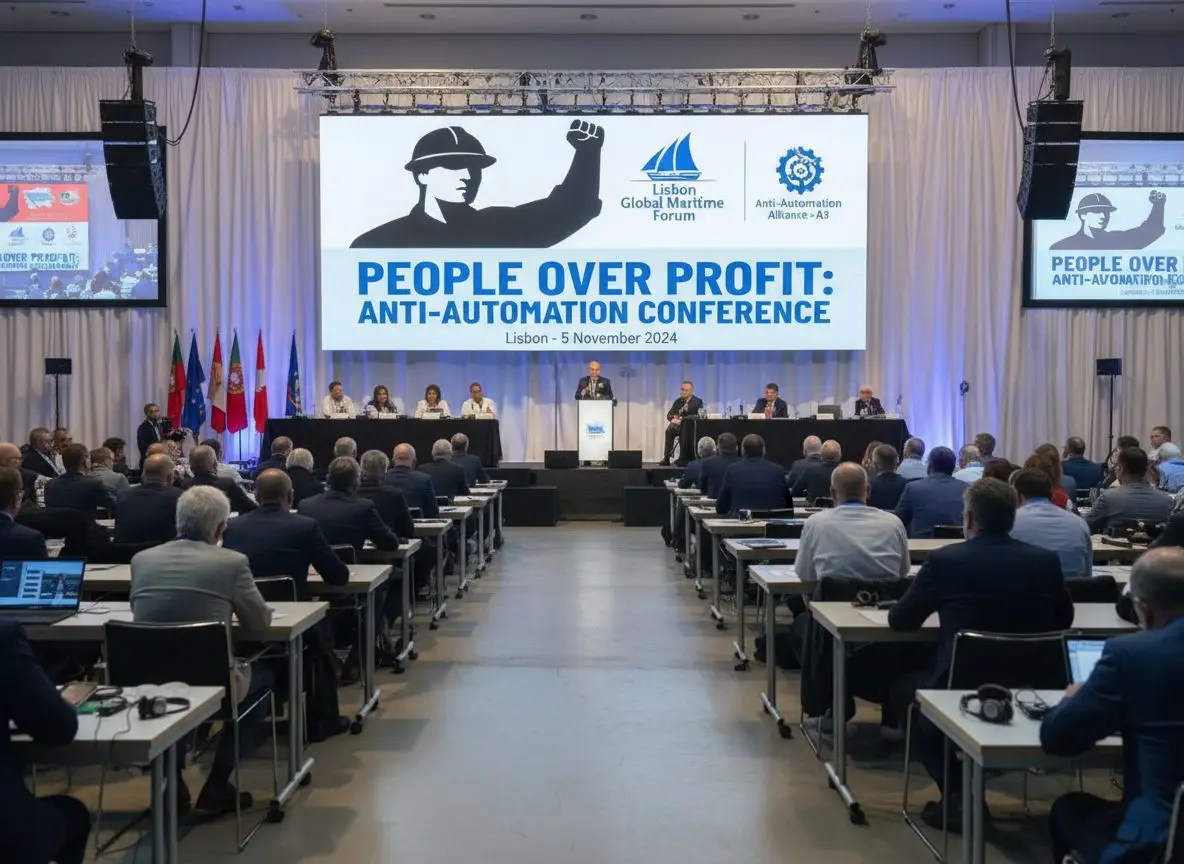
“People Over Profit: Anti-Automation Conference”
November 5 and 6, 2025, at the Pavilhão Carlos Lopes Convention Center in Lisbon, Portugal.
In a groundbreaking move, dockworker unions from over 60 countries have formed a Global Maritime Alliance to resist the rapid spread of port automation. This historic coalition was announced at the Lisbon Summit 2025, a two-day international conference focused on protecting maritime jobs and labor rights amid technological disruption.
Why Port Automation Is Sparking Global Resistance
Port automation, often marketed as a step toward modernization, has raised serious concerns among dockworkers. Unions argue that automation is being used to eliminate jobs, reduce labor costs, and undermine collective bargaining agreements.
The International Dockworkers Council (IDC) and the International Longshoremen’s Association (ILA) led the summit, emphasizing that automation threatens not only employment but also the economic stability of port communities.
Lisbon Summit Resolution: A Unified Labor Front
The summit concluded with the signing of the Lisbon Summit Resolution, officially titled:
“Protecting Employment, Communities and Collective Bargaining against Job-Destructive Automation.”
This resolution outlines a framework for global coordination, including:
- Coordinated strike actions against companies implementing automation without union consent.
- Protection of collective bargaining rights in the face of technological change.
- Demand for worker integration into future port technologies.
Real-World Successes and Union Strategies
Unions showcased successful resistance efforts, such as:
- Port of Auckland, New Zealand: The Maritime Union of New Zealand (MUNZ) halted an automation project, preserving hundreds of jobs.
- U.S. East and Gulf Coasts: The ILA secured a six-year Master Contract protecting workers from full automation and ensuring human oversight in port operations.
These victories serve as models for global replication, reinforcing the alliance’s strategic vision.
Health, Safety, and Cybersecurity Concerns
Beyond job loss, unions raised alarms about:
- Health risks from 5G systems used in remote operations.
- Cybersecurity vulnerabilities in automated port infrastructure.
- Lack of transparency in automation decision-making processes.
Global Strike Threat: A Powerful Deterrent
The alliance has pledged to launch coordinated global strikes lasting 3–4 weeks if any affiliated port introduces job-killing automation. This bold stance is designed to pressure companies and governments to negotiate with labor unions before implementing disruptive technologies.
Quotes from Union Leaders
-
Harold J. Daggett (ILA President):
“This Labor Alliance sends a clear message: dockworkers will not be erased by machines.” -
Carl Findlay (MUNZ National Secretary):
“We are not against innovation. We are against its use to erase workers from the map.” -
Jordi Aragunde (IDC Coordinator):
“For too long, companies have spoken with a single voice. Starting today, we will too.”
Conclusion: A New Era of Labor Solidarity
The formation of the Global Maritime Alliance marks a turning point in labor activism. As automation continues to reshape industries, dockworker unions are standing firm to ensure that technological progress does not come at the expense of human dignity and employment.
With global coordination, strategic planning, and a commitment to collective bargaining, the alliance is poised to reshape the future of maritime labor.
