
LNG Dominates as Alternative-Fuel Ship Orders Reach 364 in 2026
Global alternative-fuel vessel orders reached 364 ships during the first ten months of 2026, marking a 57% increase compared to the same period in 2025. According to figures from classification society DNV’s Alternative Fuels Insight (AFI) platform, liquefied natural gas (LNG) continues to dominate newbuilding activity, accounting for nearly two-thirds of all dual-fuel tonnage contracted this year.
Container Ships and Car Carriers Drive LNG Demand
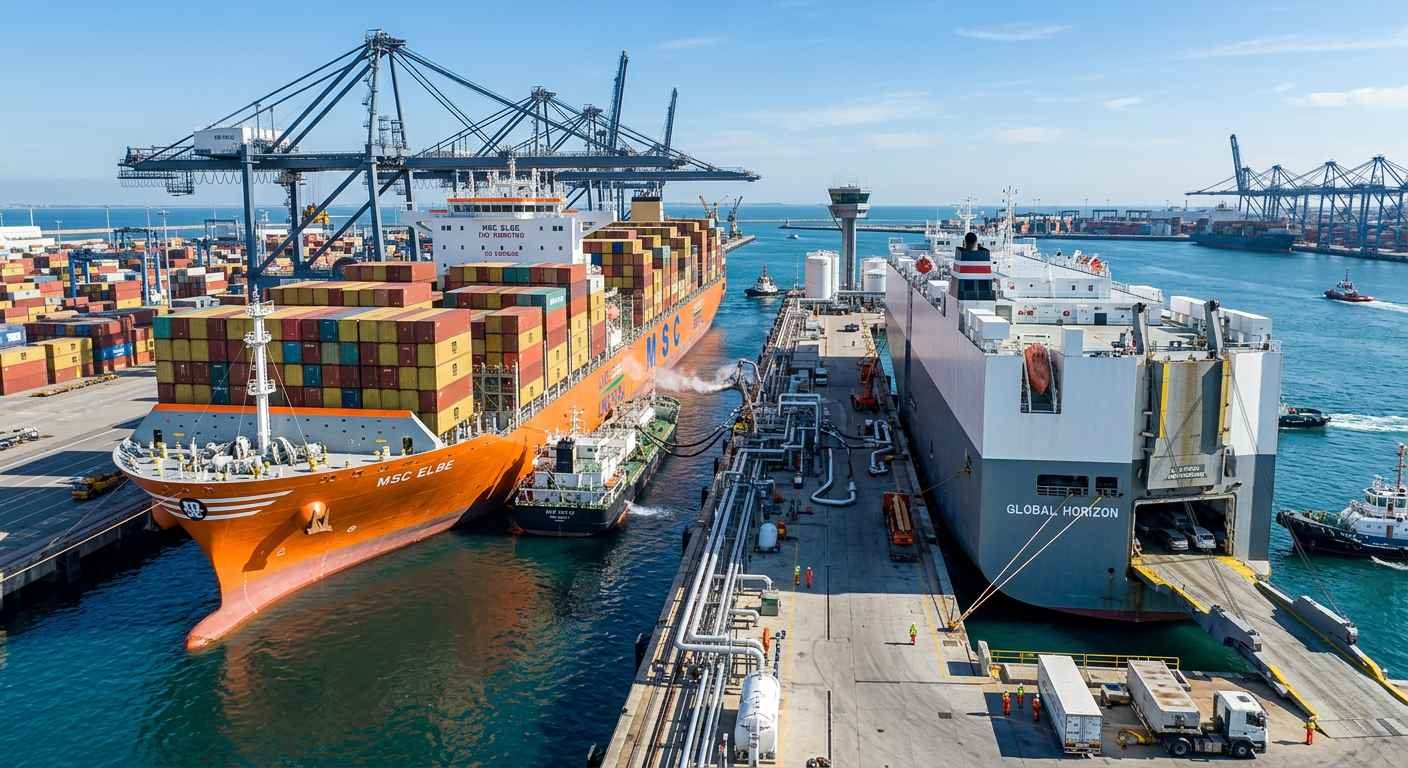
In October alone, shipowners placed orders for 53 alternative-fuel vessels, with 30 contracted to run on LNG. The October intake was concentrated heavily in two core commercial shipping segments: container ship newbuildings accounted for 18 orders, while vehicle carriers made up 12. The remaining alternative-fuel contracts in October included 19 LPG-powered carriers and four ammonia-fueled car carriers.
Year-to-date, LNG dual-fuel contracts reached 230 vessels. Container ships represent the largest single portion with 134 vessels, followed by 75 car carriers. Together, these two sectors account for roughly nine out of every ten LNG-fueled ships ordered in 2026.
Commenting on the trend, Jason Stefanatos, Global Decarbonization Director at DNV Maritime, noted that segments tied directly to consumer supply chains continue to lead the green shipping market. DNV attributed LNG’s persistent market dominance to its relatively mature infrastructure and established global supply chain compared to emerging zero-carbon fuels.
Port Infrastructure and Bunkering Realities
While LNG dual-fuel technology continues to secure most orderbook tonnage, industry experts highlight growing operational concerns about bunkering availability. According to DNV data, LNG bunkering is currently operational across more than 220 ports worldwide.
In contrast, alternative options such as methanol and ammonia face narrower supply networks. Recent benchmarking studies by Lloyd’s Register indicate that despite hundreds of methanol- and ammonia-capable vessels on global orderbooks, active methanol bunkering is offered at only 25 ports globally, while commercial ammonia bunkering remains limited. Consequently, shipowners navigating maritime decarbonization mandates are opting for LNG to secure immediate compliance and operational reliability, while retaining the flexibility to transition toward bio-LNG or synthetic e-LNG in the future.
For shipowners, vessel operators, and charterers, the 2026 orderbook data underscores that LNG-fueled ships remain the primary practical bridge solution for fleet renewal. The strong concentration of dual-fuel orders among major liner operators and specialized car carrier fleets suggests that cargo owners in consumer-facing sectors are actively demanding lower-emission ocean transport. However, as the global dual-fuel fleet expands beyond 500 operational vessels, port authorities and energy suppliers will face increasing pressure to address quayside bunkering bottlenecks to support broader supply chain decarbonization.
Why LNG is dominating orders
For a shipowner ordering a vessel in 2026, LNG solves several immediate problems:
- Technology is mature. Thousands of LNG engines are already operating.
- Bunkering infrastructure exists in hundreds of ports.
- Fuel availability is relatively predictable.
- Compliance benefits under FuelEU Maritime, EU ETS, and IMO GHG measures are available immediately.
- Most importantly, charterers can accept LNG vessels today without operational uncertainty.
For container lines such as MSC, CMA CGM, and Hapag-Lloyd, and for vehicle carriers such as Höegh, Wallenius Wilhelmsen, and MOL, operational reliability matters more than waiting for a perfect future fuel. But LNG is not a zero-carbon fuel.
- About 20-25% lower CO₂ emissions compared with conventional heavy fuel oil on a tank-to-wake basis.
- Reduced SOx and particulate emissions.
- Significant NOx reductions depending on engine technology.
However:
- Methane slip remains a concern.
- Methane is approximately 28 times more potent than CO₂ over 100 years and much higher over shorter periods.
- When full life-cycle emissions are considered, some LNG pathways may provide far less climate benefit than originally expected.
This is why environmental groups often call LNG a “transition fuel” rather than a green fuel.
The real reason owners choose LNG is risk management.
Consider the alternatives:
| Fuel | Technology Maturity | Infrastructure | Cost Certainty | Crew Familiarity |
|---|---|---|---|---|
| LNG | High | High | Moderate | High |
| Methanol | Medium | Growing | Low | Medium |
| Ammonia | Low | Very Limited | Unknown | Low |
| Hydrogen | Low | Very Limited | Unknown | Very Low |
If you are ordering a vessel costing:
- $80-100 million (car carrier)
- $120-250 million (large container ship)
you cannot base the investment on a fuel that may be unavailable in most trading ports.
Where I think the market is heading
I personally see a three-stage pathway:
Phase 1 (now to ~2035)
LNG dominates dual-fuel orders
Exactly what the article describes.
Owners gain:
- Immediate emissions reductions.
- Regulatory compliance.
- Bunkering confidence.
Phase 2 (2030-2045)
Bio-LNG and e-LNG become increasingly important
This is where many owners are placing their bets.
The attraction is that:
- Existing LNG engines can use bio-LNG.
- Existing LNG tanks remain useful.
- Existing LNG bunkering infrastructure remains useful.
This avoids stranded assets.
Phase 3 (after 2040)
The winner is less obvious:
- Green methanol
- Ammonia
- Synthetic methane (e-LNG)
- Hybrid combinations
I am less convinced hydrogen will become dominant in deep-sea shipping because of storage-volume challenges.