

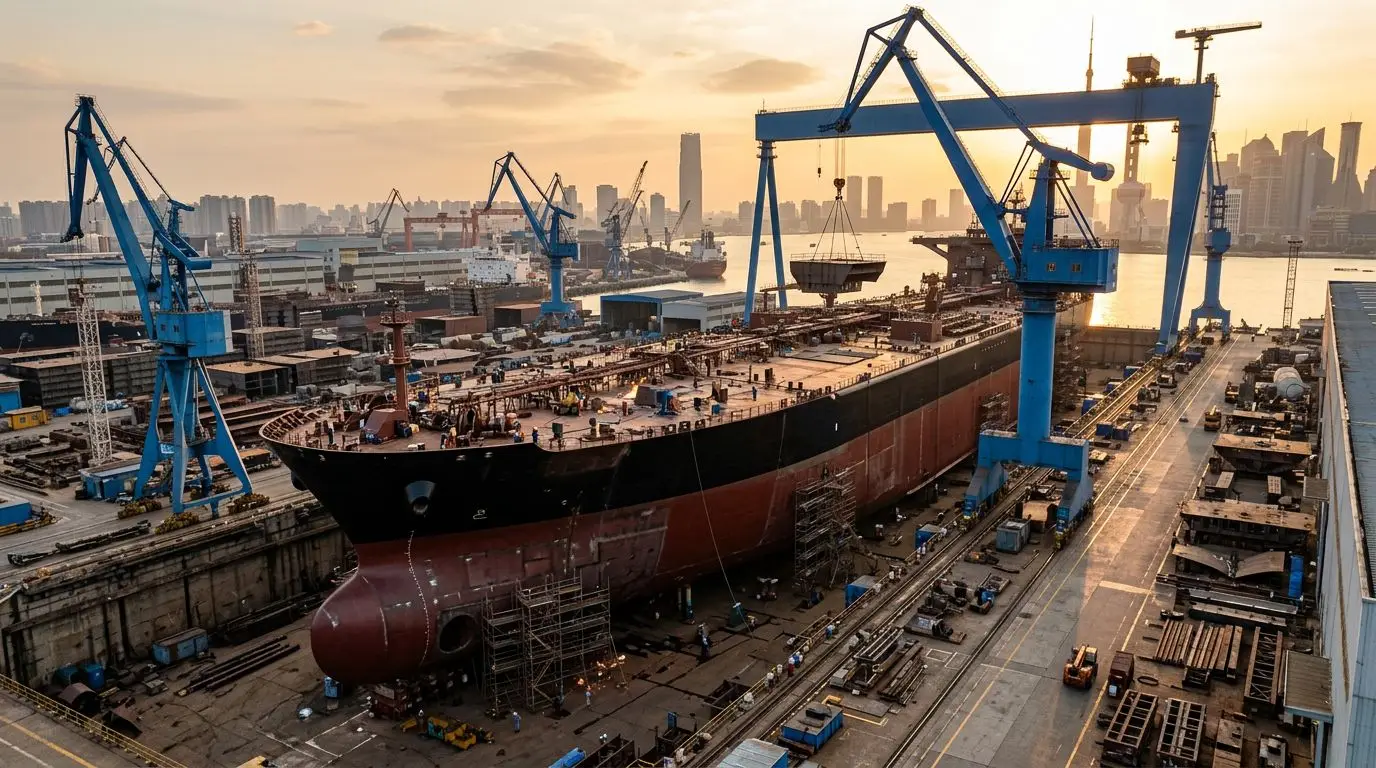
VLCC Newbuild Deliveries Surge in 2026 as Shipyard Deliveries Accelerate
Global tanker fleet growth is set to accelerate as VLCC newbuild deliveries increase significantly following a surge in crude oil tanker orders placed across major international shipyards.
Shipyard Vessel Delivery Acceleration
The global orderbook for Very Large Crude Carriers (VLCCs) has expanded rapidly, with VLCC newbuild deliveries picking up pace across key Asian shipyards. According to data from VesselsValue, global shipowners have placed orders for 219 VLCCs so far in 2026, a substantial increase from the 85 vessels ordered in all of 2025.
The wave of shipyard vessel delivery activity is heavily concentrated in China, where shipbuilders hold approximately 77% of total active VLCC orders.
Major facilities including Dalian Shipbuilding Industry Co., Hengli Shipbuilding, and Jiangsu New Hantong have secured the dominant share of new construction projects. Meanwhile, South Korean shipbuilders such as Hanwha Ocean continue to deliver high-specification crude oil tankers to international owners.
Expanding Tanker Fleet Growth and Commercial Shipping Supply
The wave of new orders has driven the orderbook-to-fleet ratio to approximately 33% to 38% of the existing active fleet. Strong demand for commercial shipping supply has also pushed newbuilding prices upward, with the unit cost for a VLCC reaching approximately $144.5 million—a 15% year-over-year increase.
Despite rising construction costs, tanker fleet growth continues as major shipping lines and energy traders modernise their fleets. Companies including Volare Shipping and COSCO Shipping Development have committed to major fleet expansion initiatives. COSCO Shipping Development recently finalised contracts for 16 dual-fuel-ready VLCCs as part of a broader conglomerate expansion program.
For maritime operators and chartering managers, the accelerating pace of VLCC newbuild deliveries marks a structural shift in global crude transport capacity. With vessels aged 15 years or older accounting for over 45% of the active fleet, the influx of new tonnage scheduled through 2029 will play a critical role in balancing fleet renewal against potential scrapping activity.
Looking ahead, the current VLCC orderbook represents more than one-third of the active global fleet, raising questions about tanker market balance beyond 2028. While strong earnings and tight vessel supply continue to support investment decisions, the industry could face a significant increase in available tonnage once most newbuilds enter service. The pace of fleet renewal, vessel scrapping and global crude trade growth will ultimately determine whether the market can absorb this new capacity without pressuring freight rates.